Clinical Report: Trends in Oral Cancer Mortality in the United States
Overview
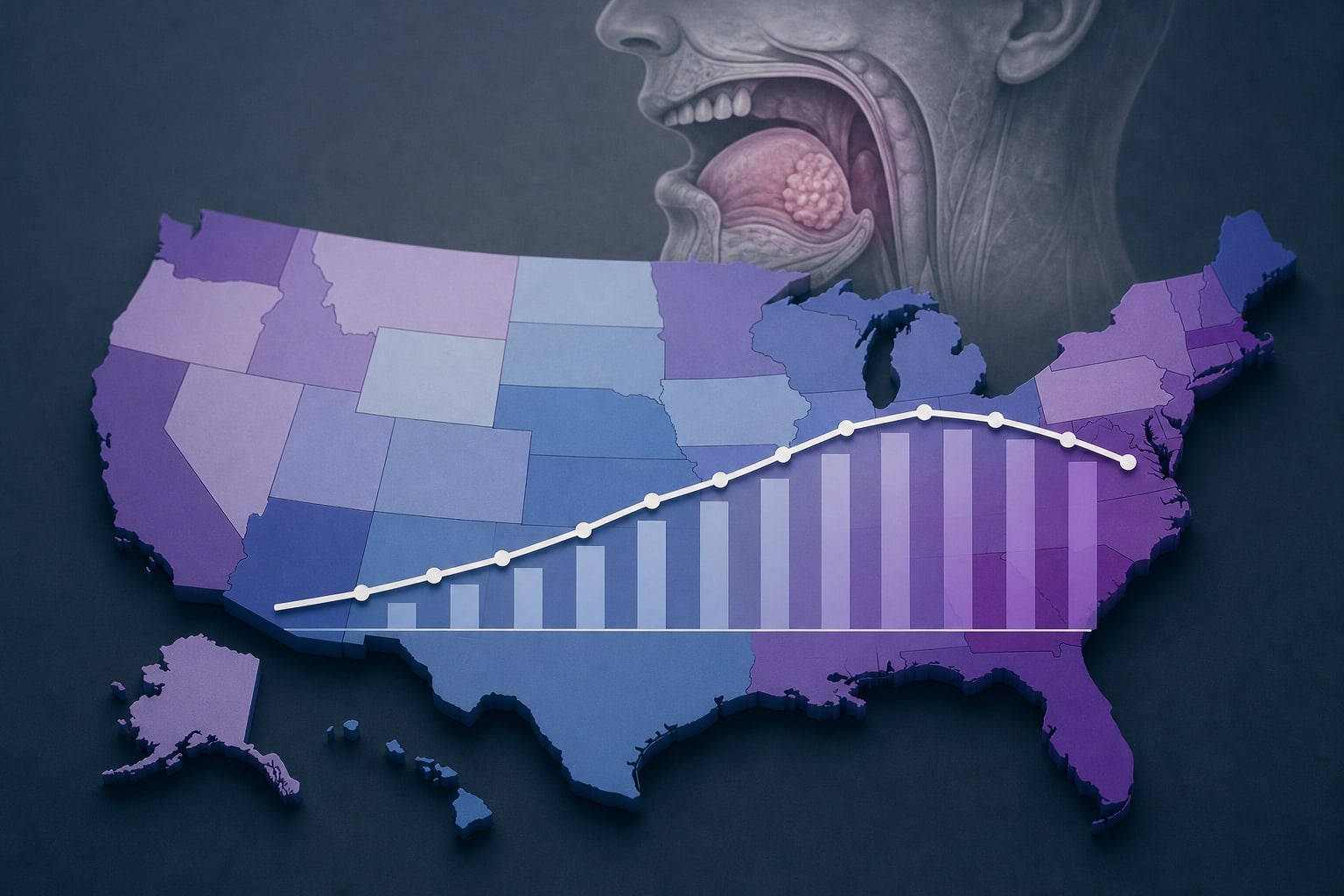
This study analyzes oral cancer mortality trends in the U.S. from 1999 to 2024, revealing an increase in total deaths despite stable age-adjusted mortality rates. Disparities were observed across sex, race, region, and age groups.
Background
Oral cancer contributes to significant mortality and socioeconomic challenges. Understanding mortality trends is important for evaluating public health interventions and identifying at-risk populations. This study provides an analysis of oral cancer mortality trends over a 25-year period.
Data Highlights
Year
Total Deaths
AAMR Change
1999
7,451
Stable
2024
12,368
Stable
Key Findings
Total oral cancer deaths increased by 65.99% from 1999 to 2024.
Age-adjusted mortality rates (AAMRs) remained stable overall (P > 0.05).
Females experienced a decrease in AAMR (P < 0.05), while males showed no significant change.
The Midwest region exhibited an increasing trend in mortality (P < 0.05).
Non-Hispanic Black individuals had a reduction in mortality (P < 0.05).
Adults aged 65 years and older showed an increase in mortality rates, particularly those aged 85 years and older.
Clinical Implications
The findings highlight the need for targeted interventions to address the increasing oral cancer mortality rates, particularly among older adults and in specific regions. Understanding these trends can help inform healthcare policies and resource allocation.
Conclusion
The study reveals increases in total deaths from oral cancer while age-adjusted rates remain unchanged. Disparities exist across sex, region, race/ethnicity, and age.
Dr. Michael Hassett of Dana-Farber Cancer Institute shared new findings showing deployment of eSyM, an ePRO-based, EHR-integrated symptom management program, was associated with statistically significant and potentially meaningful improvements in overall survival. Strategies to improve adoption of ePRO-based symptom management may be warranted.