Gut-derived memory T cells: key mediators of neuroinflammation via the gut-brain axis - Report - MDSpire
Coming Soon: Introducing MDSpire News. Learn more
Conexiant’s news site is now MDSpire News. Learn more

Memory T Cells from the Gut: Crucial Players in Neuroinflammation through the Gut-Brain Connection

  • By

  • Peiyi Liang

  • Songbai Xu

  • Xiying Fu

  • Qianchuang Sun

  • Yicun Wang

  • August 27, 2026

Share

Clinical Report: Memory T Cells from the Gut: Crucial Players in Neuroinflammation

Overview

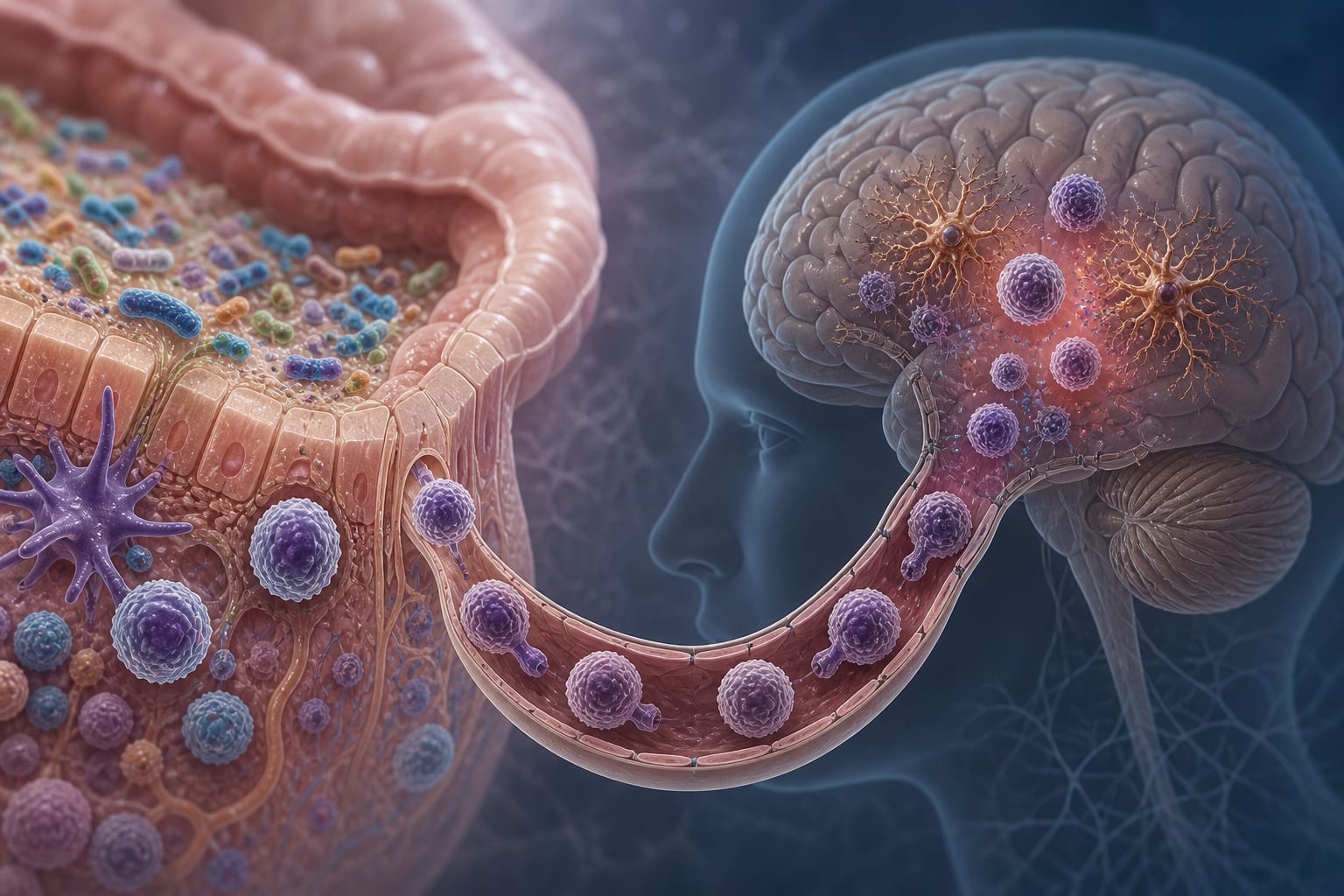
This review highlights the role of memory T cells in the gut-brain axis and their contribution to neuroinflammation. It discusses the mechanisms through which these cells influence neuroinflammatory disorders.

Background

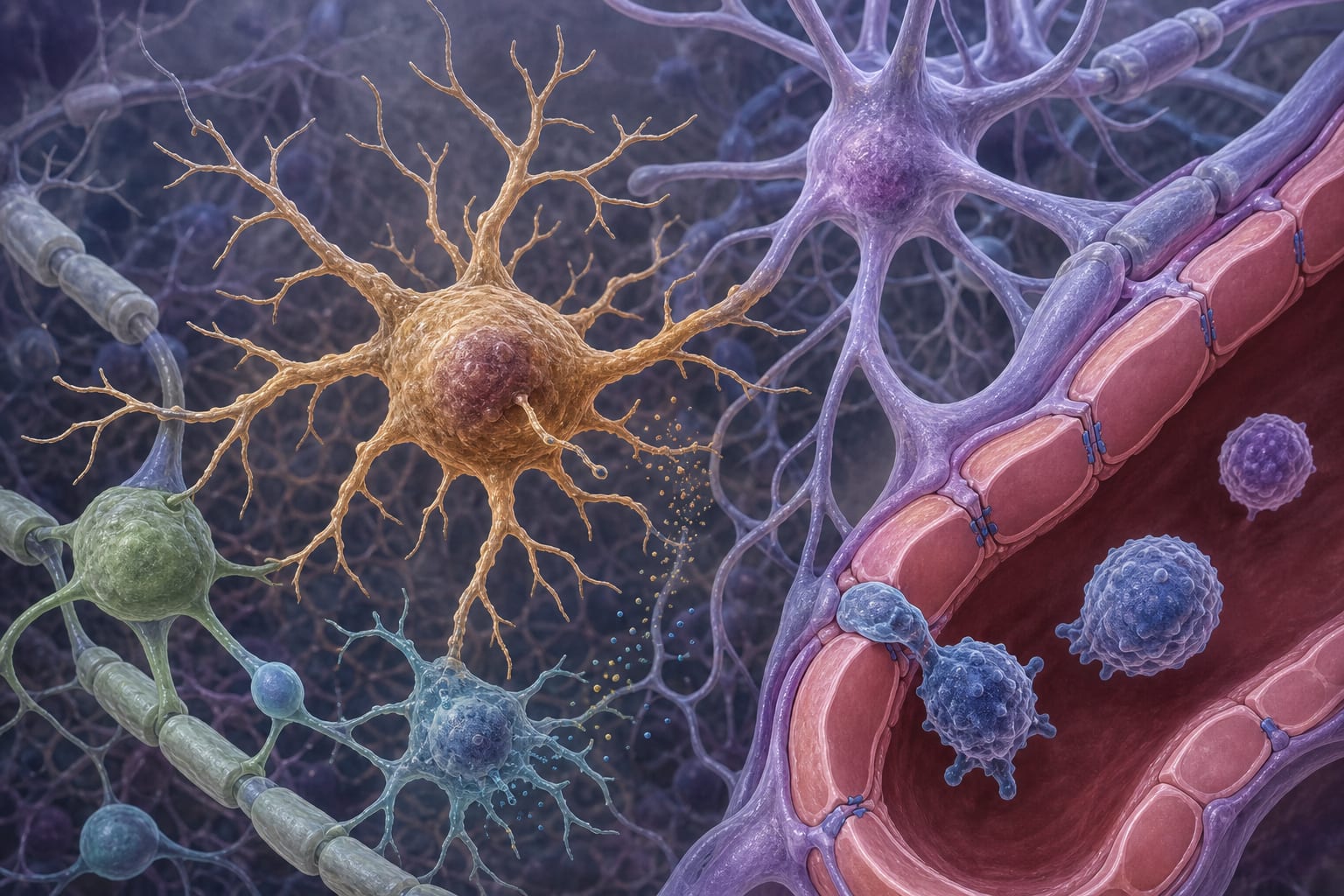
Neuroinflammation is a significant pathological feature in various neurological disorders, including Alzheimer's disease and multiple sclerosis. Understanding the gut-brain axis and the role of immune cells, particularly memory T cells, is crucial for elucidating the mechanisms underlying neuroinflammation.

Data Highlights

No numerical data or trial data available in the source material.

Key Findings

  • Memory T cells play a role in the gut-brain axis and neuroinflammation.
  • These cells can undergo functional reprogramming in the gut microenvironment.
  • Memory T cells may traverse the gut-brain barrier and promote neuroinflammation through mechanisms such as molecular mimicry and bystander activation.
  • Gut-derived microbial products, such as lipopolysaccharides, can contribute to neuroinflammatory processes.
  • Alterations in gut microbiota composition are associated with neuroinflammatory markers in conditions like Alzheimer's and Parkinson's diseases.

Clinical Implications

The findings indicate the importance of understanding memory T cells and gut microbiota in neuroinflammatory disorders.

Conclusion

Memory T cells from the gut are mediators of neuroinflammation, linking peripheral immune responses to central nervous system pathology.

Related Resources & Content

  1. Frontiers in Immunology, 2026 -- Mechanisms and therapeutic advances of gut metabolites in the regulation of neuroimmune inflammatory diseases
  2. Frontiers in Immunology, 2026 -- Editorial: The Relationship Between Gut Microbiota and Immune Modulation in Neurological Health
  3. Frontiers in Immunology, 2026 -- Macrophages dynamically integrate neuro-immune-microbial network signals: their role in gastrointestinal motility disorders and targeting potential
  4. Frontiers in Immunology — The Tango of Immune and Neural Cells: Orchestrating Neuroinflammation Mediated Brain Disorders
  5. Diagnosis of multiple sclerosis: 2024 revisions of the McDonald criteria - UCL Discovery
  6. Overview | Multiple sclerosis in adults: management | Guidance | NICE
  7. Ongoing Guidelines - ean.org
  8. AGA Clinical Practice Guideline on Fecal Microbiota-Based Therapies for Select Gastrointestinal Diseases
  9. FMT Patient Resources - American Gastroenterological Association
  10. Fecal Microbiota Transplantation for Treatment of Parkinson Disease: A Randomized Clinical Trial | Trials | JAMA Neurology | JAMA Network
  11. Gut microbiota modulation via repeated donor fecal transplantation improves motor and gastrointestinal symptoms in drug-naïve Parkinson’s disease: a randomized phase 2 trial - PMC
  12. Colonoscopic fecal microbiota transplantation for Mild-to-Moderate Parkinson’s Disease: A randomized controlled trial - ScienceDirect
  13. Fecal Microbiota Transplantation in Parkinson Disease | Neurology
  14. The potential effectiveness of probiotics in reducing multiple sclerosis progression in preclinical and clinical studies: A worldwide systematic review and meta-analysis
  15. Natalizumab Treatment Induces Proinflammatory CD4 T Cells Preferentially in the Integrin β7+ Compartment - PMC
  16. Gut inflammation promotes microbiota-specific CD4 T cell-mediated neuroinflammation | Nature

Original Source(s)

Related Content