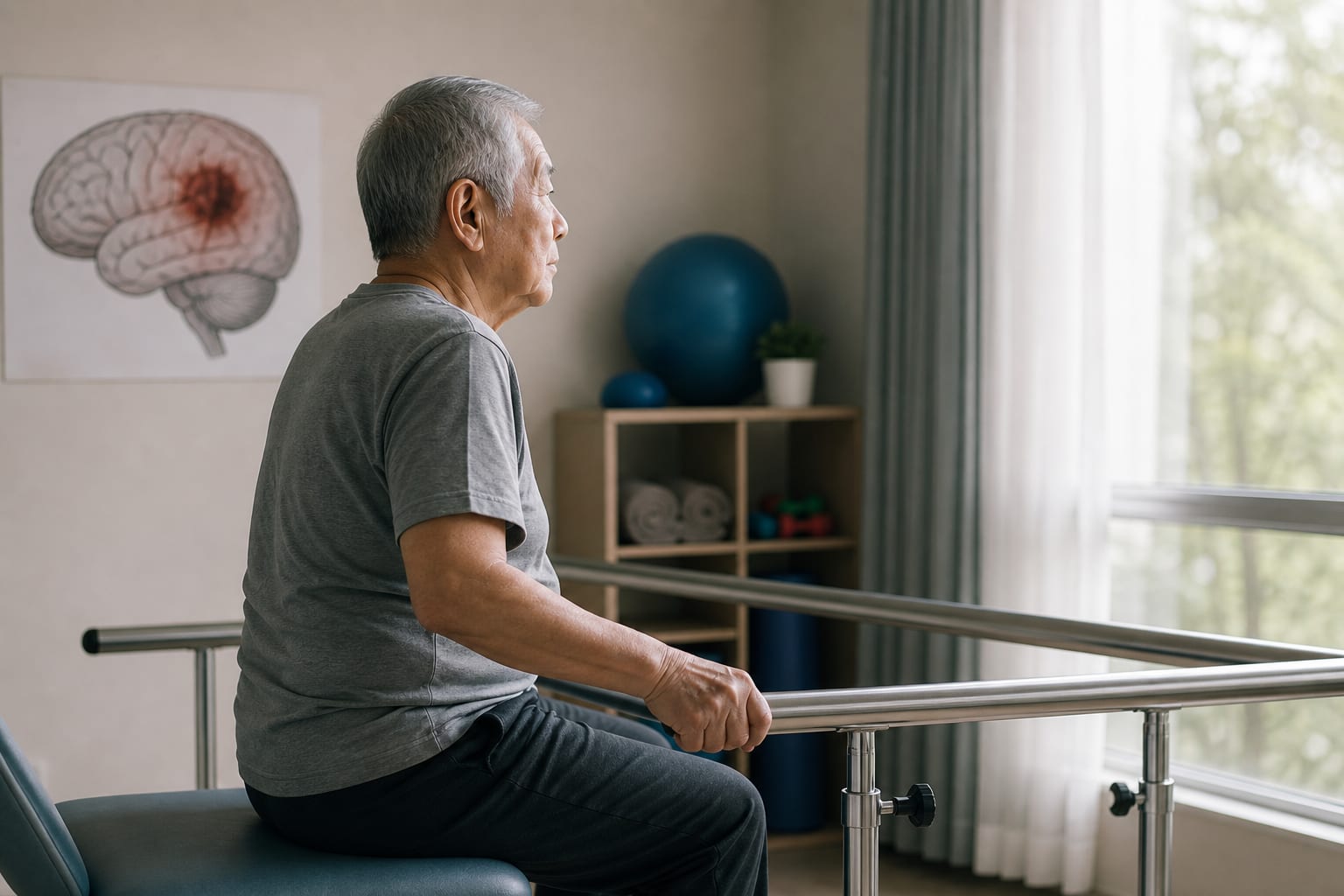
Factors Influencing Adherence to Exercise Rehabilitation in Patients Aged 75 and Older Following Hemorrhagic Stroke
Overview
This study investigates adherence to exercise rehabilitation among patients aged ≥75 years with hemorrhagic stroke, revealing that adherence levels are influenced by factors such as rehabilitation self-efficacy and illness uncertainty.
Background
Hemorrhagic stroke is a significant cause of mortality and disability, particularly among older adults. Effective rehabilitation through exercise is crucial for restoring physical function, yet adherence to such programs can be challenging in this age group. Understanding the factors that influence adherence is essential for improving rehabilitation outcomes.
Data Highlights
Adherence Level
Percentage
High
49.60%
Moderate
29.53%
Low
20.87%
Key Findings
Average adherence score was 37.97 ± 10.57 points.
49.60% of participants demonstrated high adherence to exercise rehabilitation.
Low adherence was associated with greater illness uncertainty and illness duration of ≤6 months.
Rehabilitation self-efficacy was inversely related to the likelihood of low adherence.
Qualitative themes included cognition and attitudes towards exercise, psychological disturbances, and the role of external support.
Clinical Implications
The study found that individual patient factors such as self-efficacy and illness uncertainty are associated with adherence to rehabilitation programs.
Conclusion
The study examined the multifaceted nature of adherence to exercise rehabilitation in older adults following hemorrhagic stroke.
Baptist Health will bring together leading physicians, researchers and healthcare professionals from South Florida and across the country for the 14th Annual Baptist Health Miami Neuroscience Symposium, taking place Nov. 4-6, 2026, at Hilton Miami Dadeland and virtually via Zoom.
New findings from CREST-2 are providing important evidence on the role of carotid artery stenting (CAS) in patients with severe asymptomatic carotid stenosis — while underscoring the importance of operator experience, patient selection and procedural technique in achieving favorable outcomes.