Osteoarthritis: Understanding Its Systemic Nature Through Multi-Organ Interactions
Overview
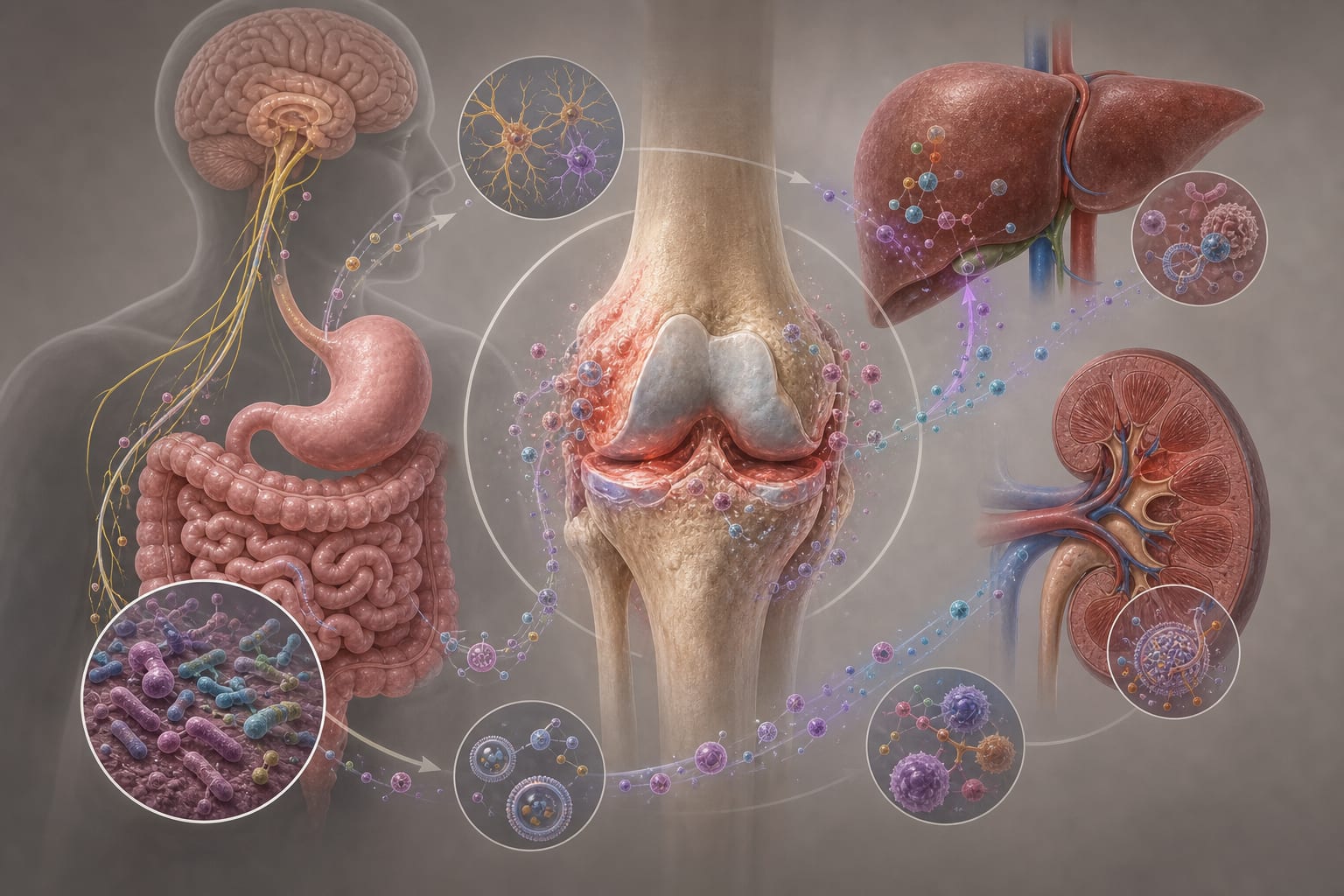
This review highlights the systemic nature of osteoarthritis (OA), emphasizing the role of multi-organ interactions in its pathogenesis.
Background
Osteoarthritis is traditionally viewed as a localized joint disorder, but recent evidence suggests it may also be influenced by systemic factors. The disease affects over 595 million individuals globally, leading to significant economic and health burdens.
Data Highlights
No numerical data or trial data provided in the source material.
Key Findings
Gut microbiota dysbiosis contributes to systemic inflammation and joint homeostasis disruption.
Central sensitization in the brain modulates pain perception, influencing OA progression.
Liver disorders related to iron and lipid metabolism promote chondrocyte ferroptosis.
Renal dysfunction impairs vitamin D metabolism and leads to the accumulation of uremic toxins.
Clinical Implications
Consideration of systemic factors may be important in understanding OA.
Conclusion
This perspective highlights the need for further research into multi-organ interactions in osteoarthritis.
In a small open-label randomized trial, 2 platelet-rich plasma injections were associated with greater 6-month improvements in pain and function than corticosteroid injection or oral aceclofenac among patients awaiting knee arthroplasty.