Clinical Report: Evaluation of One-Hole Split Endoscopy versus Unilateral Biportal Endoscopy for Lumbar Disc Herniation Management
Overview
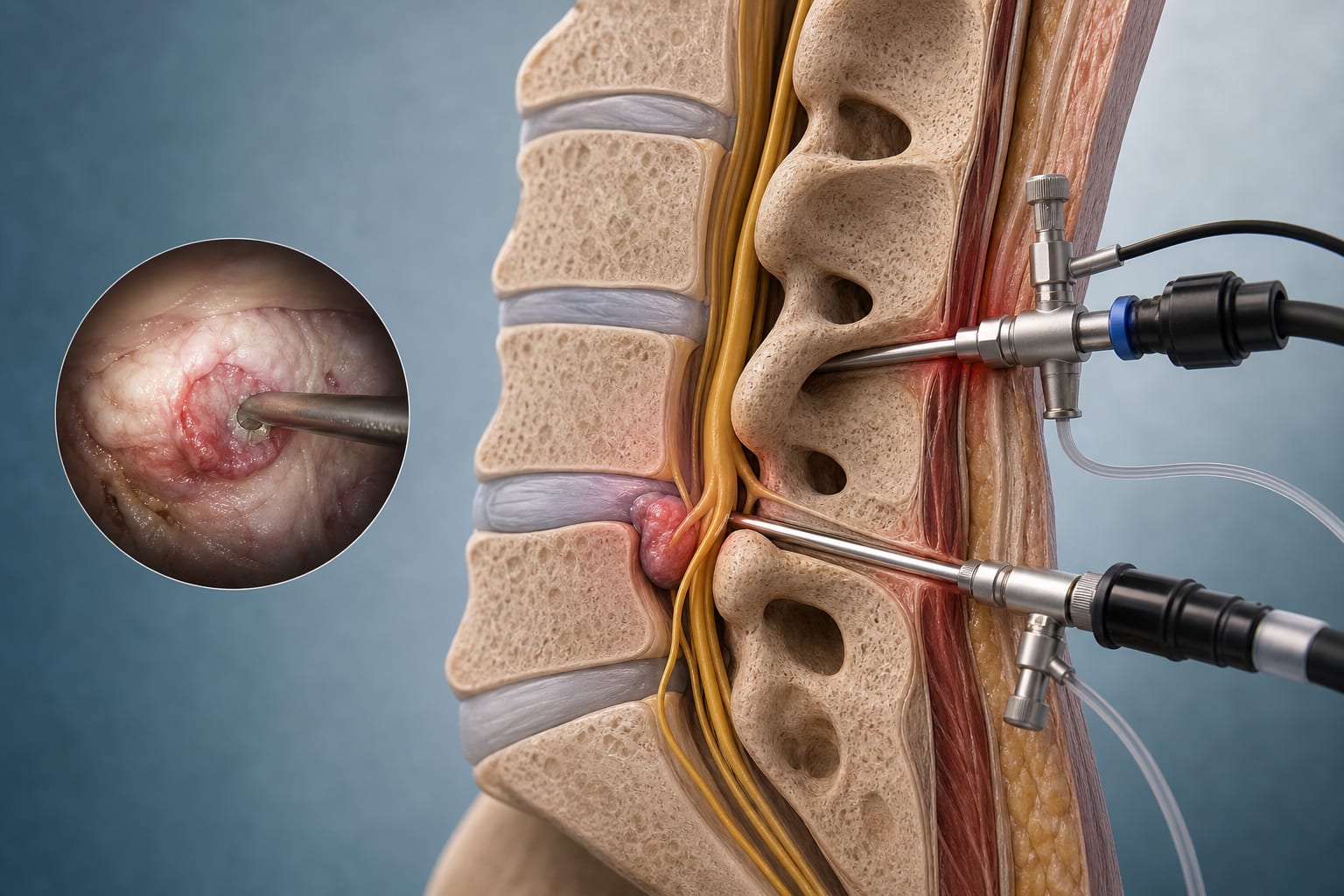
This study compares the efficacy of one-hole split endoscopy (OSE) and unilateral biportal endoscopy (UBE) in treating lumbar disc herniation (LDH). Results indicate that OSE has comparable clinical efficacy to UBE, with differences in postoperative hemoglobin levels and surgical duration.
Background
Lumbar disc herniation (LDH) is a prevalent condition in spinal surgery, often leading to significant pain and disability. Minimally invasive techniques like OSE and UBE have emerged as treatment options, potentially offering reduced trauma and quicker recovery.
Data Highlights
Outcome
OSE Group
UBE Group
Postoperative Hb Levels
Higher
Lower
Incision Length
Shorter
Longer
Total Blood Loss
Lower
Higher
Surgical Duration
Longer
Shorter
Postoperative Complications
No significant difference
No significant difference
VAS and ODI Scores
No significant difference
No significant difference
Key Findings
Postoperative Hb and Hct levels were significantly higher in the OSE group compared to the UBE group (P < 0.05).
Incision length and total blood loss were lower in the OSE group than in the UBE group.
Surgical duration was longer for the OSE group compared to the UBE group (P < 0.05).
No significant differences in postoperative complications were observed between the two groups (P > 0.05).
Both groups showed a decrease in VAS and ODI scores postoperatively, with no significant differences between groups at any follow-up time point (P > 0.05).
Clinical Implications
The choice between OSE and UBE should be guided by individual patient characteristics and clinical circumstances.
Conclusion
OSE demonstrates comparable clinical efficacy to UBE in treating LDH.