Bioelectronic modulation of the thymic “genetic mirror”: 448 kHz radiofrequency stimulation as a novel strategy for immune tolerance induction in type 1 diabetes - Report - MDSpire

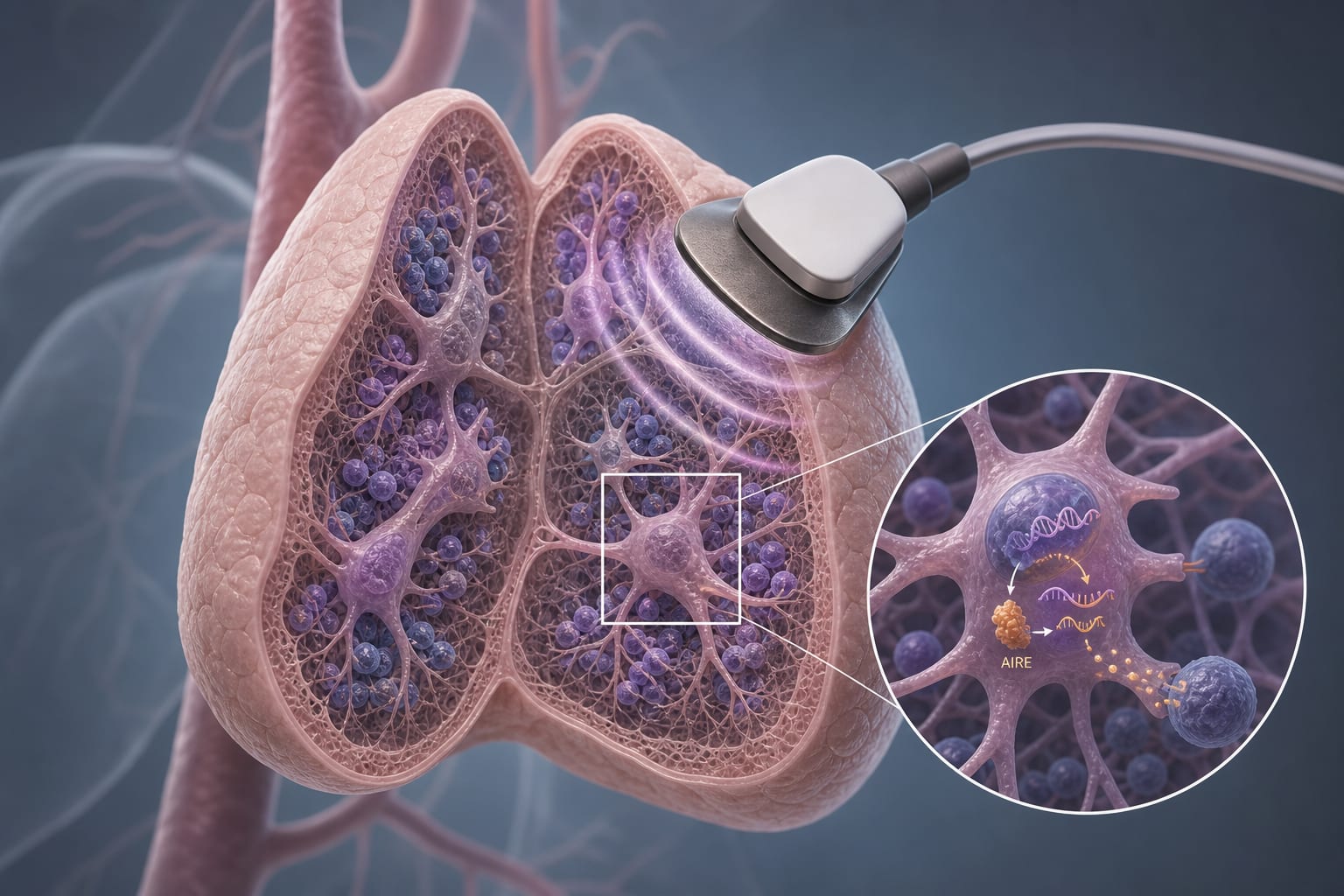
Bioelectronic modulation of the thymic “genetic mirror”: 448 kHz radiofrequency stimulation as a novel strategy for immune tolerance induction in type 1 diabetes

  • By

  • Natasha Yaneva

  • June 15, 2026

  • 0 min

Share

Clinical Report: Modulating the Thymic Genetic Mirror through Bioelectronic Techniques

Overview

This report explores the innovative use of 448 kHz radiofrequency stimulation to enhance immune tolerance in Type 1 Diabetes Mellitus (T1DM) by targeting the thymic microenvironment. The proposed method aims to restore central immune tolerance through the upregulation of insulin expression in medullary thymic epithelial cells.

Background

Type 1 Diabetes Mellitus is characterized by the autoimmune destruction of insulin-producing beta cells, leading to hyperglycemia. The disease is linked to a breakdown of central immune tolerance in the thymus, where autoreactive T-cells escape negative selection due to insufficient intrathymic insulin expression. Addressing this defect at its source could represent a significant advancement in T1DM management.

Data Highlights

No numerical data available in the source material.

Key Findings

  • The 448 kHz RF field may enhance AIRE-dependent insulin expression in mTECs.
  • Increased expression of insulin in the thymus could restore central tolerance mechanisms in T1DM.
  • The proposed mechanism involves Ca²+ influx through L-type voltage-gated calcium channels.
  • Enhanced negative selection and generation of regulatory T-cells are predicted outcomes of this intervention.
  • This approach offers a non-invasive, pediatric-compatible strategy for T1DM intervention.

Clinical Implications

The findings suggest that bioelectronic modulation of the thymus could provide a novel therapeutic avenue for restoring immune tolerance in T1DM. Clinicians may consider the implications of such interventions for early prevention and management of the disease.

Conclusion

The application of 448 kHz RF stimulation represents a promising strategy to address the underlying immunological defects in T1DM. Further preclinical studies are necessary to validate the efficacy and safety of this approach.

Related Resources & Content

  1. Frontiers in Endocrinology, 2026 -- miR-30d-5p promotes beta cell recovery and immunomodulation in type 1 diabetes
  2. Frontiers in Immunology, 2026 -- Multifaceted regulation of thymic tolerance by pattern recognition cascades
  3. Frontiers in Endocrinology, 2026 -- Editorial: Inflammatory biomarkers in type 1 diabetes
  4. The Journal of Clinical Endocrinology & Metabolism -- Correspondence from Papadimitriou: Advancing Beyond Stages: Assessing Individualized Time-Dependent Risk for Type 1 Diabetes
  5. Diabetes Care, 2026 -- Diagnosis and Classification of Diabetes: Standards of Care in Diabetes
  6. New England Journal of Medicine -- Teplizumab and β-Cell Function in Newly Diagnosed Type 1 Diabetes
  7. Nature Reviews Immunology -- Antigen presentation for central tolerance induction
  8. 2. Diagnosis and Classification of Diabetes: Standards of Care in Diabetes—2026 | Diabetes Care | American Diabetes Association
  9. Teplizumab and β-Cell Function in Newly Diagnosed Type 1 Diabetes | New England Journal of Medicine
  10. Antigen presentation for central tolerance induction | Nature Reviews Immunology

Original Source(s)

Related Content