Association of advanced therapies for intermediate- to high-risk pulmonary embolism with improved right ventricular function on outpatient follow-up among survivors - Report - MDSpire
Advertisement
Association of advanced therapies for intermediate- to high-risk pulmonary embolism with improved right ventricular function on outpatient follow-up among survivors
Impact of Advanced Treatment Modalities on Right Ventricular Function
Overview
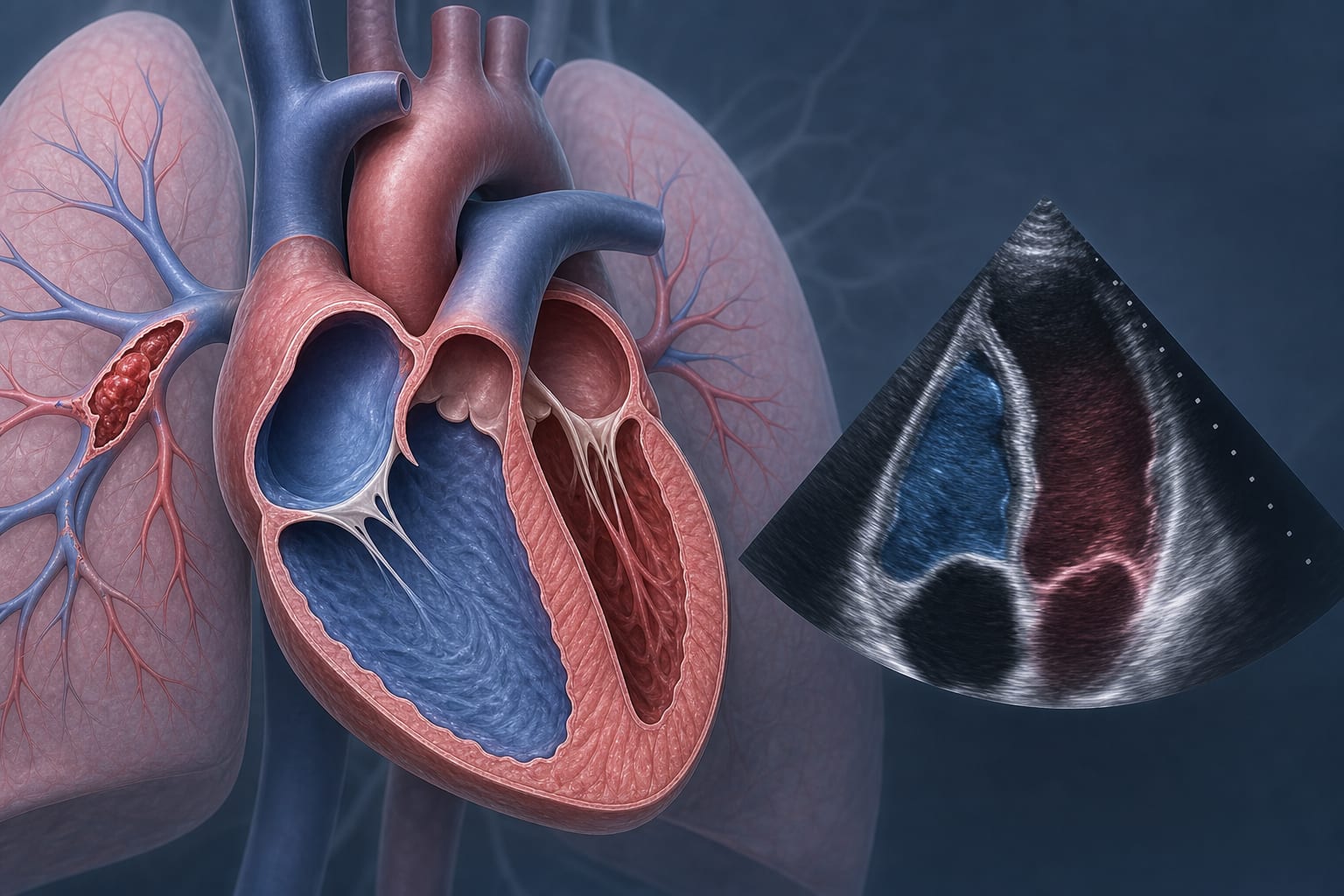
This study investigates the association between advanced therapies for acute pulmonary embolism (PE) and improvements in right ventricular (RV) function among survivors. Results indicate that advanced treatments are linked to significant echocardiographic enhancements compared to anticoagulation alone.
Background
Pulmonary embolism is a critical condition that can lead to significant morbidity and mortality. The long-term effects of acute PE on right ventricular function are increasingly recognized, necessitating effective treatment strategies. Advanced therapies such as catheter-directed thrombolysis and surgical embolectomy may offer benefits in RV function, which is crucial for patient recovery.
Data Highlights
Parameter
Advanced Therapy
p-value
RVOT VTI
4.6 cm
0.009
RV Ś
2.0 cm/s
0.006
TR Grade Improvement Odds
3.0
0.002
Key Findings
A total of 122 patients were analyzed, with a median age of 64.4 years.
Advanced therapies were performed in 17.2% (CDE), 9.0% (CDT), and 9.0% (SPE) of cases.
Receipt of any advanced therapy was associated with increased RVOT VTI and RV Ś.
Higher odds of TR grade improvement were observed in patients receiving advanced therapies.
Findings suggest significant echocardiographic improvements at a median follow-up of 26 weeks.
Clinical Implications
The study highlights the potential benefits of advanced therapies in improving RV function in patients with acute PE. Clinicians should consider these treatment options for appropriate patients to enhance long-term outcomes.
Conclusion
Advanced therapies for acute PE are associated with significant improvements in RV function among survivors. Further prospective studies are needed to confirm these findings.
by Hammad Sheikh, Avinash Singh, Connor Smith, Howard Freeman, Abdul Rehman, Jeeyune Bahk, Sakul, Keshav Dixit, Alvin Yang, Maria Riasat, Robert Lookstein, Edgar Argulian, David J. Steiger