The Impact of Housing Instability on New Geriatric Health Issues and Mortality
Overview
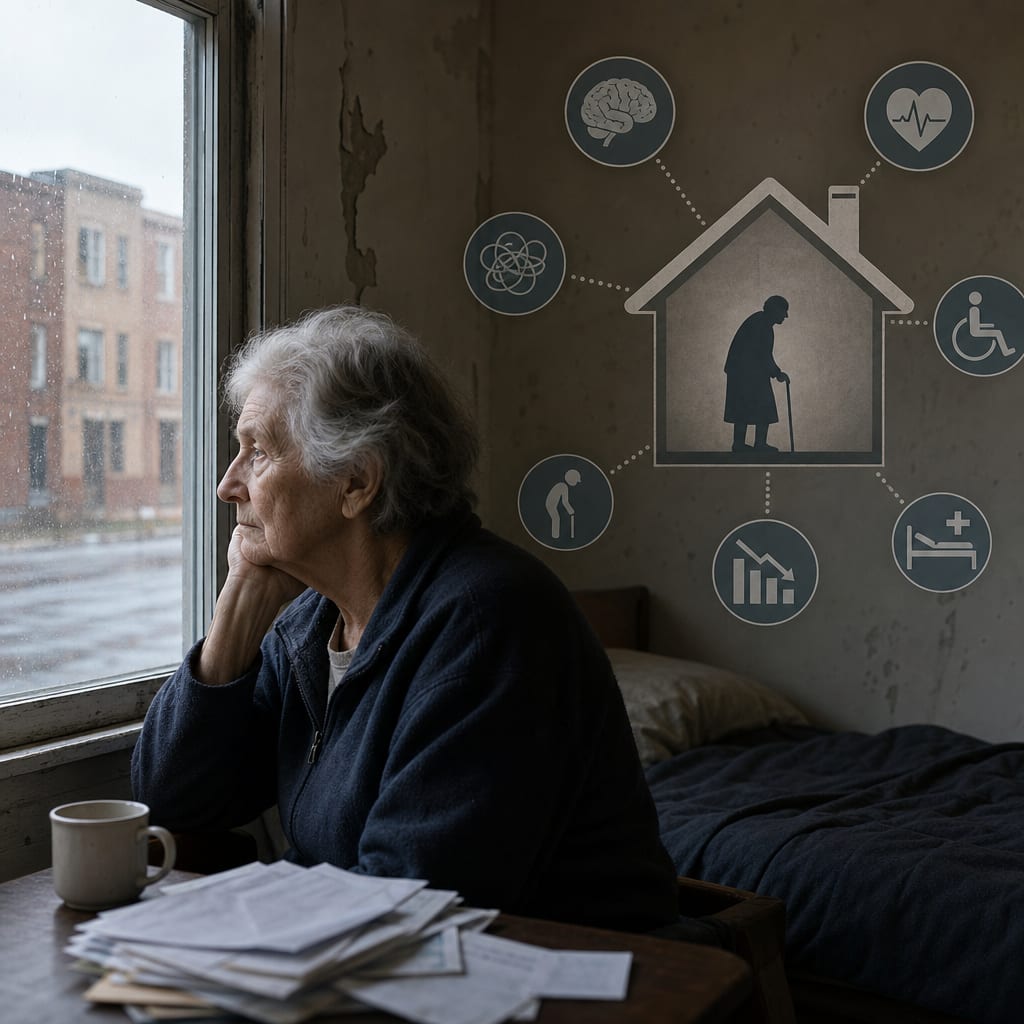
This study evaluates the association between housing instability and the development of geriatric conditions and mortality among older adults. Findings indicate that poor housing affordability, quality, and neighborhood conditions significantly correlate with increased frailty, disability, and dementia, as well as higher mortality rates over a five-year follow-up period.
Background
Housing insecurity is a critical social determinant of health, particularly affecting older adults who often face fixed incomes and increasing healthcare needs. Over one-third of community-living older individuals in the US are estimated to be housing insecure, which can lead to adverse health outcomes. Understanding the impact of housing instability on health is essential for guiding clinical practice and public health interventions.
Data Highlights
No numerical data available in the provided material.
Key Findings
Housing insecurity is linked to negative health outcomes, including frailty, disability, and dementia.
Older adults spend significantly more on out-of-pocket healthcare compared to younger populations.
Environmental stressors from poor housing conditions can exacerbate health issues in older adults.
Three forms of housing insecurity—affordability, quality, and neighborhood conditions—were evaluated for their impact on health outcomes.
Mortality serves as a key indicator of overall health in older adults and is influenced by housing conditions.
Clinical Implications
Healthcare providers should consider housing stability as a vital component of geriatric assessments. Addressing housing insecurity through policy interventions may improve health outcomes and quality of life for older adults. Routine screening for housing-related social needs is becoming increasingly important in clinical settings.
Conclusion
The study underscores the significant impact of housing instability on geriatric health outcomes and mortality. Addressing these issues through targeted interventions is crucial for improving the health and well-being of older adults.