Clinical Report: The Essential Role of the Plasminogen Pathway in Health and Disease
Overview
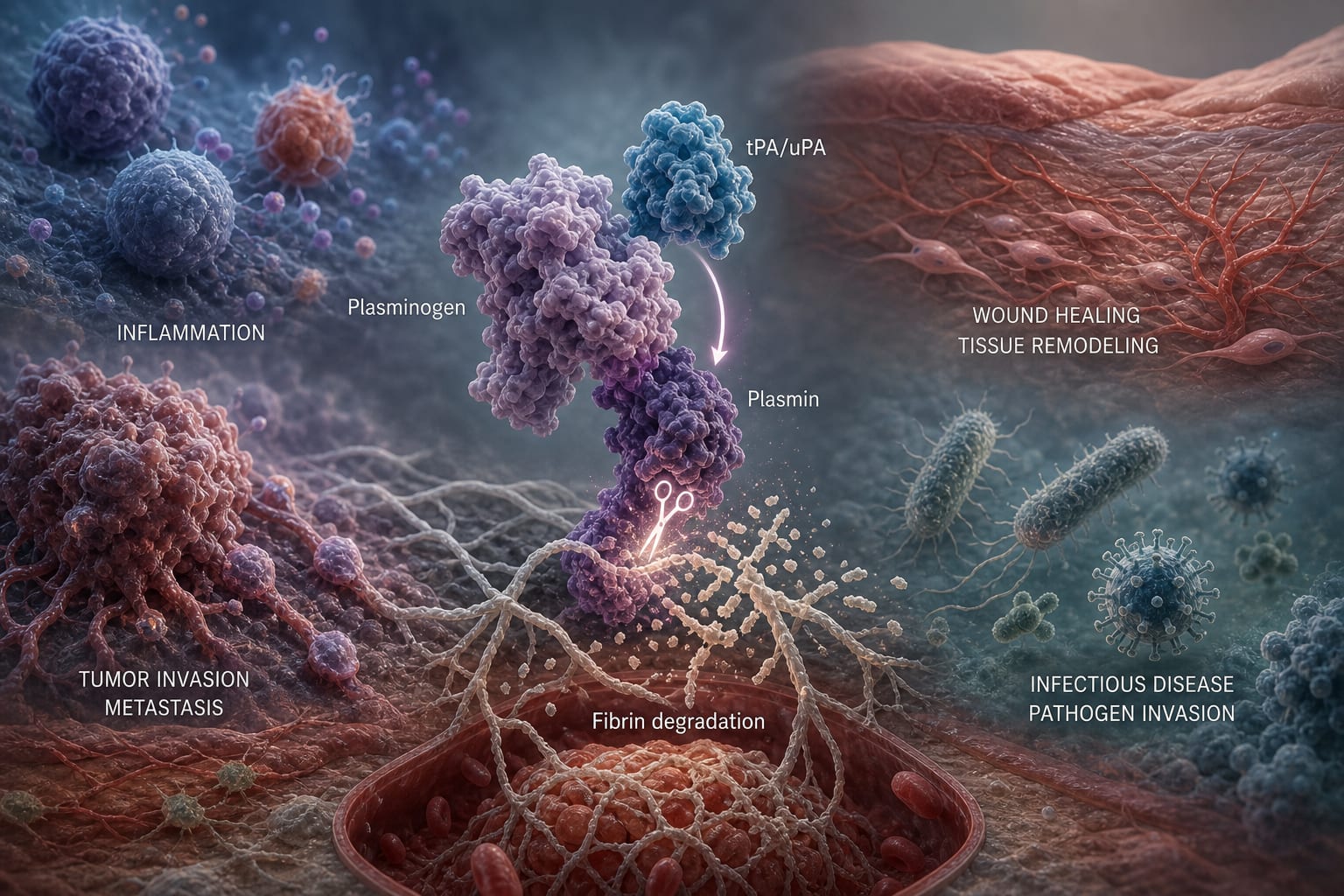
The plasminogen system is crucial for various physiological processes, including fibrinolysis and inflammation. Dysregulation of this system can lead to significant pathologies.
Background
Proteolysis is fundamental to biological processes, with the plasminogen system being a key player in maintaining homeostasis. Its involvement in diverse functions such as wound healing and inflammation resolution is important in health. Dysregulation can contribute to disorders like cancer and infections.
Data Highlights
No numerical data or trial data presented in the article.
Key Findings
The plasminogen system regulates fibrinolysis, inflammation, and tissue remodeling.
Dysregulation of the plasminogen system can lead to pathologies such as cancer and infections.
Human Fas Ligand's susceptibility to plasmin cleavage increases cancer risk compared to nonhuman primates.
The plasminogen system has functions independent of its proteolytic activity, influencing various molecular pathways.
Clinical Implications
Clinicians should consider the implications of plasminogen dysregulation in various diseases.
Conclusion
The plasminogen system serves as both a protector of physiological balance and a contributor to disease.