Predictive models for the occurrence of expansive intracranial hematomas and outcomes after surgical evacuation in patients with traumatic brain injury in Uganda: a prospective cohort study - Report - MDSpire
Conexiant’s news site is now MDSpire News. Learn more
Advertisement
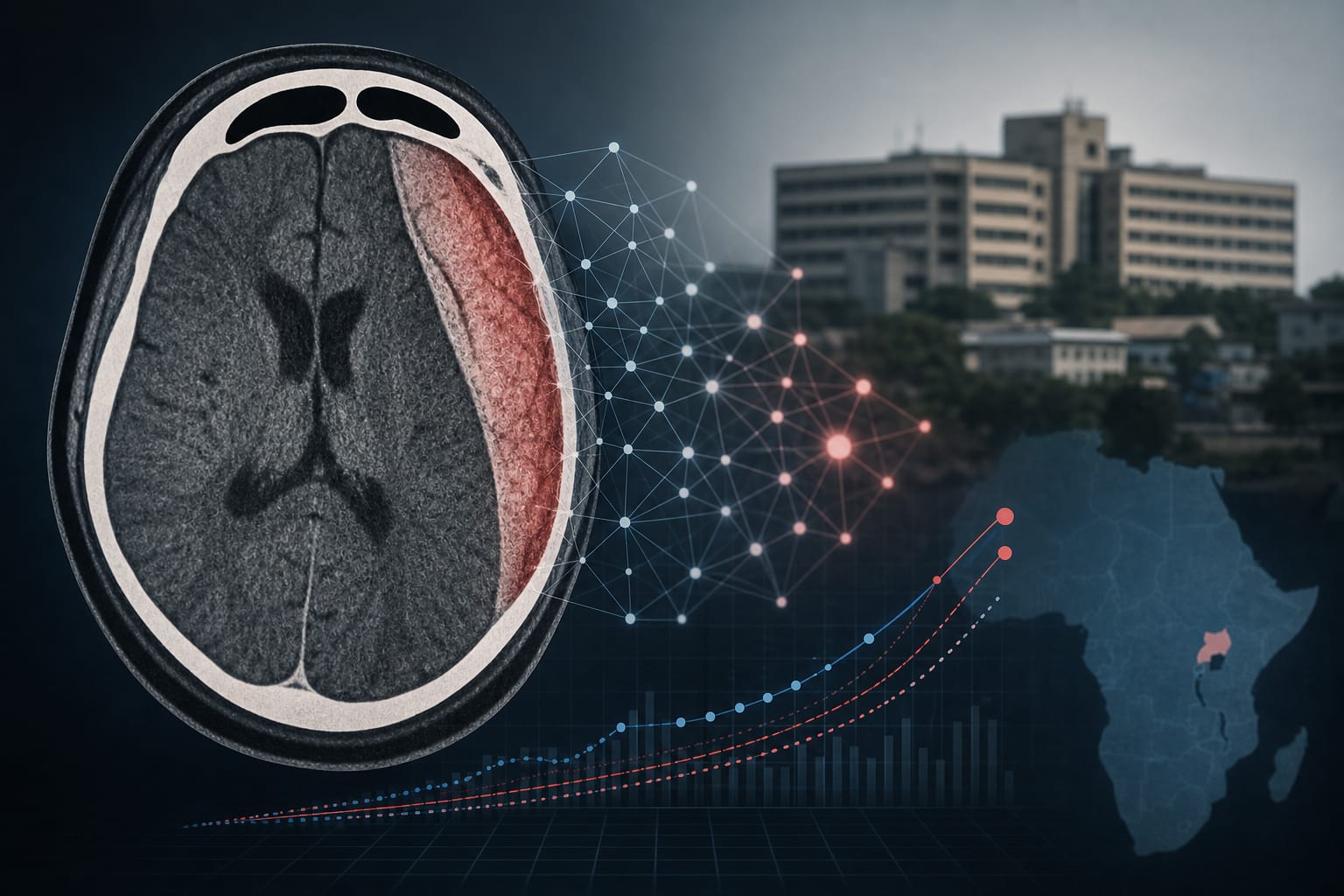
Exploratory Predictive Models for Expansive Intracranial Hematoma Development and Surgical Outcomes in Traumatic Brain Injury Patients in Uganda: A Prospective Cohort Analysis
Clinical Report: Predictive Models for Expansive Intracranial Hematoma in TBI
Overview
This study assessed the prevalence of expansive intracranial hematomas (EIH) in Ugandan TBI patients and developed predictive models for EIH occurrence and surgical outcomes.
Background
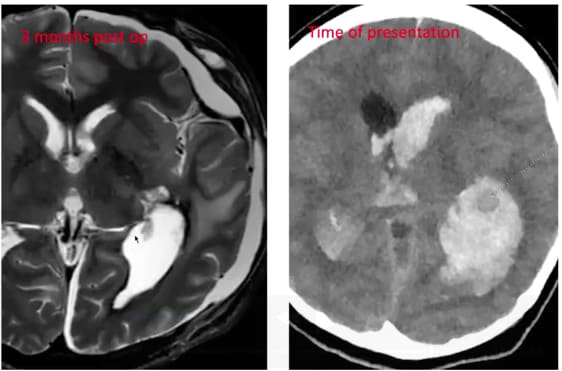
Traumatic brain injury (TBI) is a significant global health issue, particularly in low-resource settings like Uganda, where it leads to high mortality and disability rates. Expansive intracranial hematomas (EIH) are a critical complication of TBI, associated with increased intracranial pressure and worse functional outcomes. Early identification of patients at risk for EIH is essential for improving management in these settings.
Data Highlights
Metric
Value
Patients with EIH
192 (59.3%)
AUC for EIH prediction (Firth model)
0.854
Bootstrap optimism corrected AUC
0.845
Pooled out-of-fold AUC (LASSO)
0.835
Pooled out-of-fold AUC (Elastic Net)
0.837
Pooled out-of-fold AUC (Random Forest)
0.804
Key Findings
59.3% of TBI patients experienced expansive intracranial hematomas (EIH).
EIH was associated with significantly worse quality-of-life measures at 3 and 6 months postoperatively (p < 0.010).
The Firth bias-reduced model showed strong discrimination for EIH prediction with an AUC of 0.854.
Penalized logistic regression models (LASSO and elastic net) performed comparably to random forest in predicting EIH.
Predictive variables included subdural hematoma, diffuse axonal injury, and blood pressure measurements.
Clinical Implications
The prevalence of EIH in TBI patients in Uganda highlights the need for effective risk stratification tools in low-resource settings.
Conclusion
EIH is common among TBI patients in Uganda and correlates with poorer postoperative outcomes.
by Larrey Kasereka Kamabu, Godfrey S. Bbosa, Ronald Oboth, Ssenyondwa John Baptist, Martin N. Kaddumukasa, Daniel Deng, Hervé Monka Lekuya, Louange Maha Kataka, Joel Kiryabwire, Moses Galukande, Martha Sajatovic, Mark Kaddumukasa, Anthony T. Fuller, Michael M. Haglund
This Neuroscience Grand Rounds session, led by Muhammad Osama, MD, provides a pediatric neurosurgeon’s perspective on arteriovenous malformations (AVMs) in children, rare but high-risk vascular lesions that can lead to seizures, neurological deficits, or life-threatening hemorrhage.