Early Proteomic and Metabolomic Signatures in Diabetes Associated with Progression to Diabetic Retinopathy Over 1–2 Years - Report - MDSpire

Early Proteomic and Metabolomic Signatures in Diabetes Associated with Progression to Diabetic Retinopathy Over 1–2 Years

  • By

  • Zhao, Jing

  • Cao, Yitao

  • Chai, Zhi

  • Xie, Hanghang

  • Gu, Dandan

  • Yanchun, Zhang

  • Dongling, Niu

  • Liu, Hongli

  • Lei, Ting

  • May 29, 2026

  • 0 min

Share

Clinical Report: Initial Proteomic and Metabolomic Indicators in Diabetes

Overview

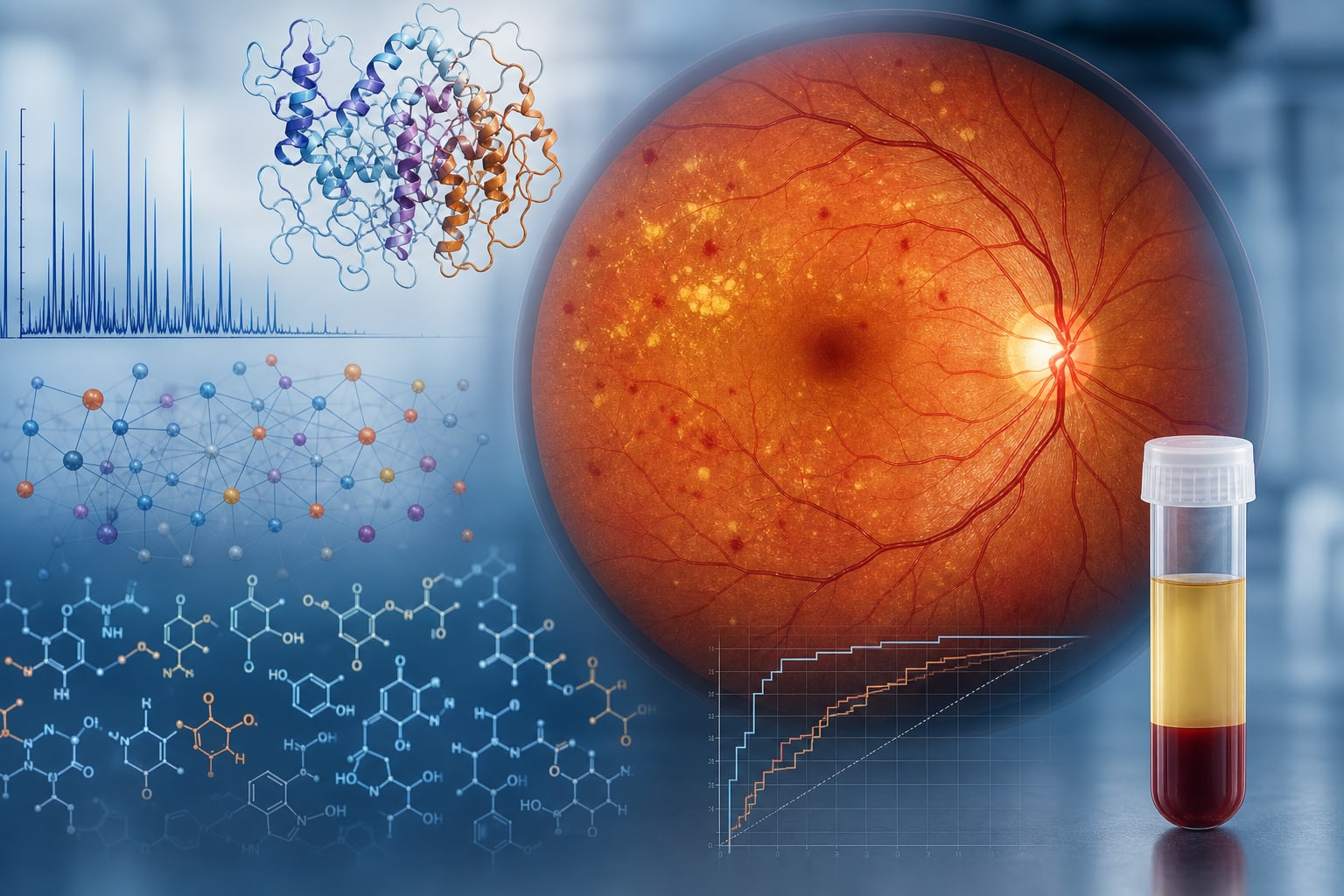
This study identifies proteomic and metabolomic changes in diabetes patients that correlate with the development of diabetic retinopathy (DR) within 1-2 years. Key proteins and metabolites were validated as potential biomarkers for early detection and risk stratification of DR.

Background

Diabetic retinopathy is a significant complication of diabetes mellitus, leading to vision impairment and blindness. Understanding the molecular changes during the transition from diabetes to DR is crucial for early identification and intervention. This study employs advanced proteomic and metabolomic techniques to uncover potential biomarkers associated with DR progression.

Data Highlights

Analysis TypeFindings
Proteomic57 differentially expressed proteins identified
Metabolomic168 differential metabolites identified
ROC AUCValues ranged from 0.853 to 0.945 for validated proteins

Key Findings

  • 57 proteins were differentially expressed, mainly involved in energy metabolism and detoxification.
  • 168 metabolites were identified, with significant roles in taurine metabolism and neuroactive ligand-receptor interaction.
  • Eight candidate proteins were validated, including three previously reported in DR.
  • Strong correlations were observed between proteins and metabolites in the integrated analysis.
  • ROC analysis demonstrated high discriminative performance for the identified proteins.

Clinical Implications

The identification of novel biomarkers may facilitate early detection and risk stratification of diabetic retinopathy in patients with diabetes. Clinicians should consider these biomarkers in the context of patient monitoring and intervention strategies.

Conclusion

This study highlights the potential of integrated proteomic and metabolomic analyses in identifying biomarkers for diabetic retinopathy, which could enhance early detection and management of this condition.
Related Resources & Content

  1. Author(s)/Org, Source, Year -- Title
  2. Author(s)/Org, Source, Year -- Title
  3. Delia Cabrera Debuc, Retinal Physician, 2015 -- Novel Methods and Diagnostic Tools in Diabetic Retinopathy
  4. American Diabetes Association, Diabetes Care, 2026 -- Standards of Care in Diabetes—2026
  5. University of Miami, Diabetic Retinopathy Preferred Practice Pattern, 2025 -- Diabetic Retinopathy Preferred Practice Pattern
  6. Retinal Physician — Using Biomarkers for Retinal Disease Risk Assessment and Management
  7. 12. Retinopathy, Neuropathy, and Foot Care: Standards of Care in Diabetes—2026 | Diabetes Care | American Diabetes Association
  8. Diabetic Retinopathy Preferred Practice Pattern - University of Miami
  9. Which treatment modality offers the best outcomes for diabetic retinopathy? A systematic review and network meta-analysis - ScienceDirect
  10. Anti–Vascular Endothelial Growth Factor Options and Questions for Diabetic Eye Disease Treatment | Diabetic Retinopathy | JAMA Ophthalmology | JAMA Network
  11. Long-term Effects of Anti-VEGF Therapy versus Panretinal Photocoagulation on Retinal Vessel Caliber in Eyes with Proliferative Diabetic Retinopathy - PMC
  12. Oral Tonabersat Connexin-43 Modulator for Diabetic Macular Edema with Good Vision (DRCR Retina Network Protocol AN) - ScienceDirect
  13. Diabetic retinal disease | Nature Reviews Disease Primers
  14. Mass spectrometry-based metabolomic and lipidomic profiling stratifies stages of diabetic retinopathy - ScienceDirect
  15. https://www.nature.com/articles/s41598-025-19223-z.pdf
  16. Causal roles of lipids and mediating proteins in diabetic retinopathy: insights from metabolomic and proteomic Mendelian randomization | Diabetology & Metabolic Syndrome | Springer Nature Link
  17. Circulating microRNAs as biomarkers for diabetic retinopathy stage identification: A DTA systematic review and meta-analysis - PubMed
  18. Prognostic value of advanced imaging biomarkers for the progression of diabetic retinopathy: a systematic review | Diabetology & Metabolic Syndrome | Springer Nature Link

Original Source(s)

Related Content