Convergent mitochondrial toxicity of fluorinated agents in oncological anaesthesia: sevoflurane, 5-fluorouracil, and the ACOD1/itaconate immune axis - Report - MDSpire
Advertisement
Convergent mitochondrial toxicity of fluorinated agents in oncological anaesthesia: sevoflurane, 5-fluorouracil, and the ACOD1/itaconate immune axis
Mitochondrial Toxicity from Fluorinated Compounds in Cancer Anesthesia
Overview
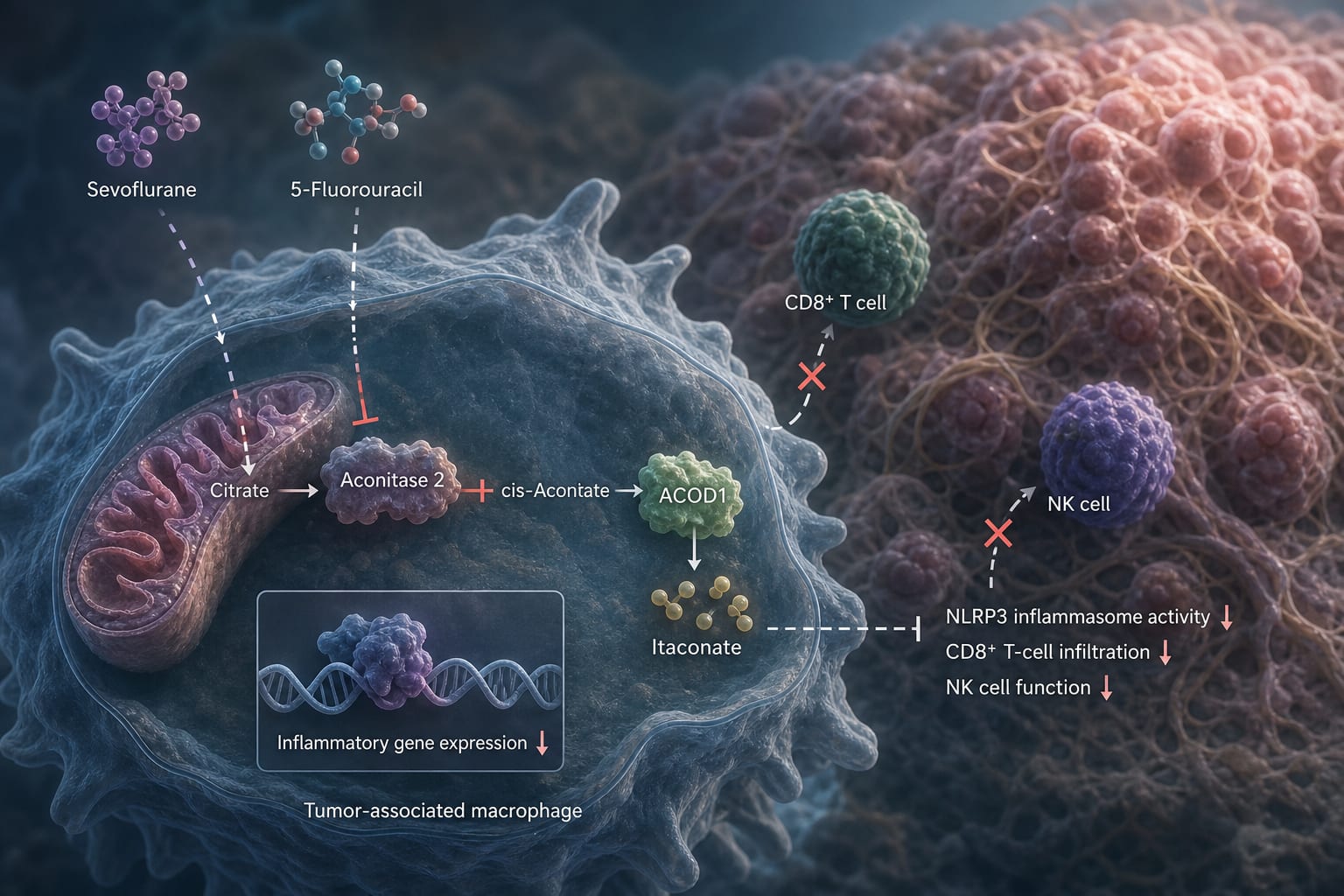
This report discusses the potential mitochondrial toxicity associated with sevoflurane and 5-fluorouracil (5-FU) in cancer patients, highlighting the role of the ACOD1/itaconate immune pathway. The findings suggest that these agents may inhibit aconitase 2, leading to immune dysregulation during the perioperative period.
Background
Understanding the interactions between anesthetic agents and cancer treatments is crucial for optimizing patient outcomes. The ACOD1/itaconate pathway plays a significant role in immune regulation, particularly in the context of tumor immunity. Disruption of this pathway during surgery may have implications for tumor progression and patient recovery.
Data Highlights
No numerical data or trial data were provided in the source material.
Key Findings
Sevoflurane and 5-FU may inhibit aconitase 2, affecting the ACOD1/itaconate immune pathway.
ACOD1-derived itaconate regulates tumor immune surveillance and modulates inflammatory responses.
Inhibition of aconitase leads to decreased cis-aconitate, impacting itaconate synthesis.
The perioperative period is critical for maintaining anti-tumor immune surveillance in cancer patients.
Pre-operative genotyping for DPYD and ACOD1 variants may guide anesthetic technique selection.
Clinical Implications
Clinicians should consider the potential immunological effects of sevoflurane and 5-FU during cancer surgeries. Pre-operative assessments, including genetic testing, may help tailor anesthetic approaches to mitigate risks associated with mitochondrial toxicity.
Conclusion
The interplay between anesthetic agents and cancer therapies warrants further investigation to optimize perioperative care and improve patient outcomes in oncological settings.