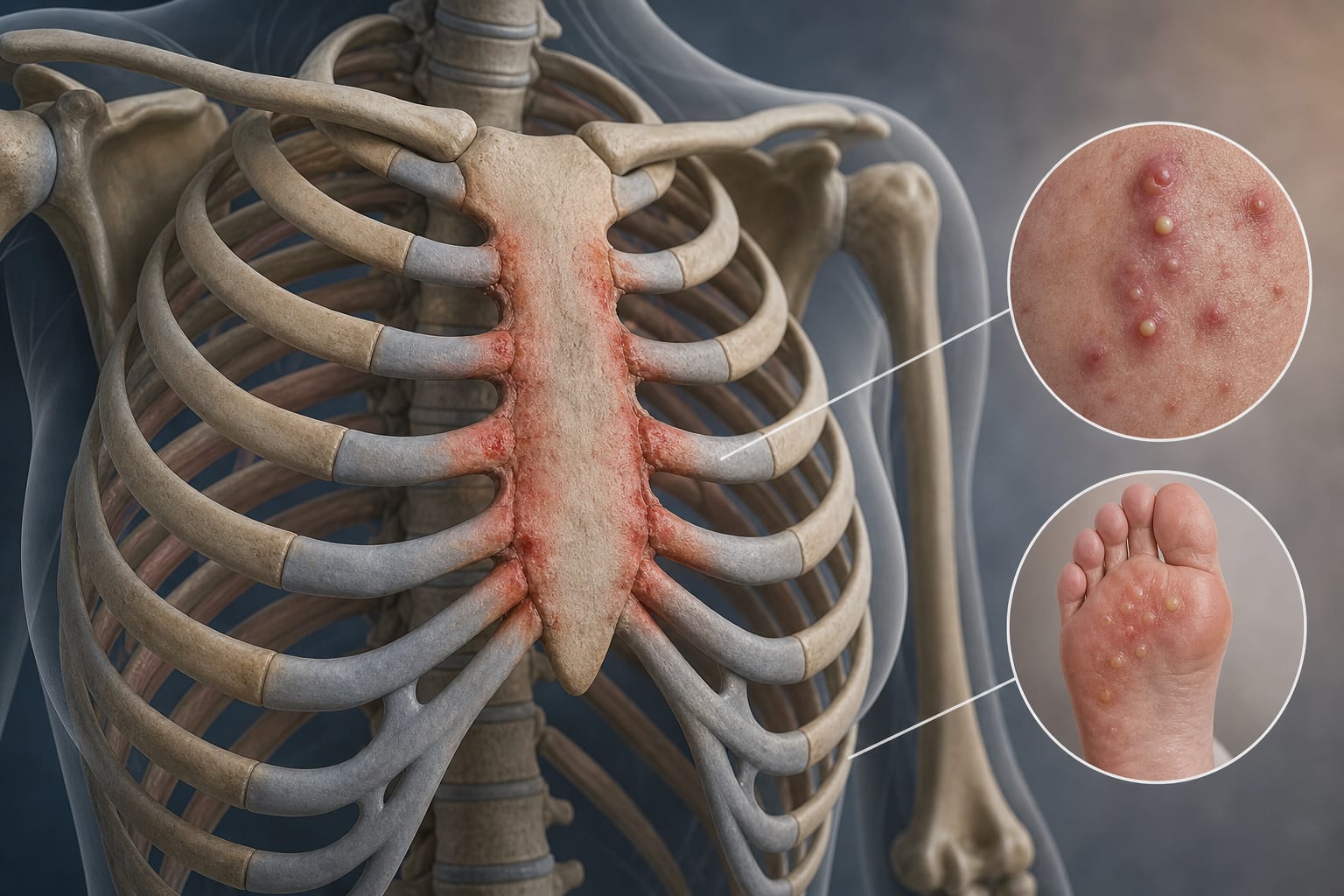
Clinical Report: Successful Management of Chest Pain in SAPHO Syndrome
Overview
This case study presents a 60-year-old female with SAPHO syndrome who experienced recurrent chest pain and plantar pustules. Following relocation to a drier environment and iodophor disinfection, her symptoms significantly improved, highlighting the potential role of environmental factors in managing this condition.
Background
SAPHO syndrome is a rare chronic autoinflammatory disease characterized by skin and osteoarticular manifestations, making diagnosis and treatment challenging. The condition's etiology is not fully understood, but it may involve genetic, immunological, and environmental factors. Understanding these factors is crucial for developing effective management strategies.
Data Highlights
No numerical data or trial data presented in the article.
Key Findings
The patient was diagnosed with SAPHO syndrome based on clinical history and imaging findings.
Environmental factors, such as dampness, may contribute to the exacerbation of symptoms in SAPHO syndrome.
Relocation to a drier, better-ventilated environment resulted in significant symptom relief for the patient.
The case suggests a potential adjunctive role of environmental modification in the management of SAPHO syndrome.
The patient's husband had ankylosing spondylitis, indicating possible shared environmental exposures contributing to immune disease development.
Clinical Implications
Healthcare providers should consider environmental factors when managing patients with SAPHO syndrome. Relocation therapy may serve as a complementary approach to traditional treatments, potentially improving patient outcomes.
Conclusion
This case underscores the importance of considering environmental influences in the management of SAPHO syndrome. Further research may be warranted to explore the role of environmental modifications in treatment strategies.