Ginseng-mulberry (medicine-food homologous) pair mitigates cadmium-induced anxiety: a clinical proteomics-guided network pharmacology with rat validation - Report - MDSpire
Advertisement
Ginseng-mulberry (medicine-food homologous) pair mitigates cadmium-induced anxiety: a clinical proteomics-guided network pharmacology with rat validation
Ginseng and Mulberry Combination Reduces Anxiety Induced by Cadmium
Overview
Revise to emphasize the significance of clinical proteomics in identifying anxiety-related proteins.
Background
Cadmium exposure is linked to anxiety disorders, which affect millions globally. Current treatments for anxiety may have limitations, and traditional Chinese medicine (TCM) offers a multi-target approach that could address complex environmental toxicology issues. Understanding the mechanisms of cadmium-induced anxiety is crucial for developing effective interventions.
Data Highlights
Finding
Details
Proteins Identified
120 differentially expressed proteins associated with anxiety
Core Nodes
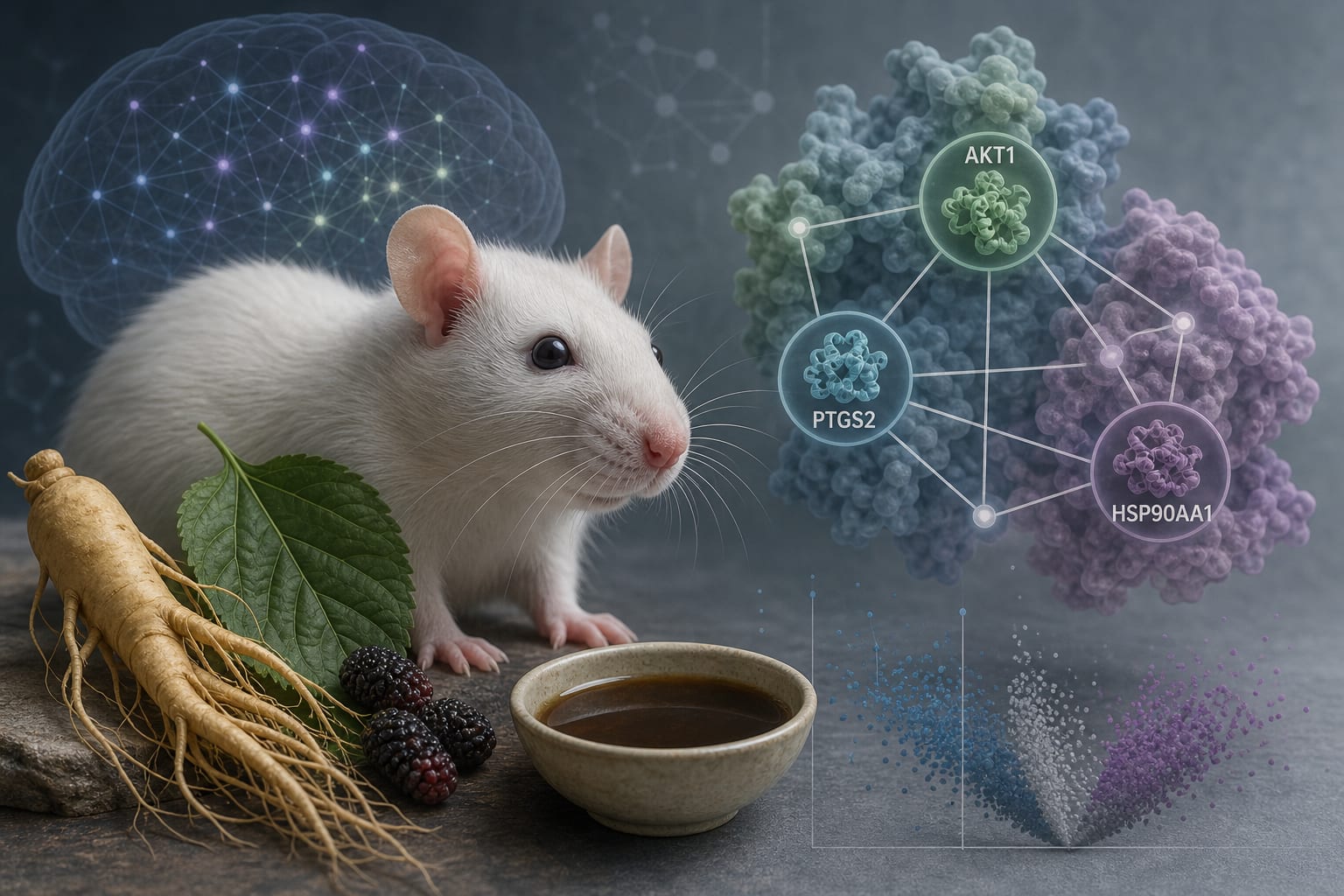
AKT1, PTGS2, HSP90AA1 identified through network pharmacology
Behavioral Changes
Increased open-field center exploration in rats
Pathology Reversal
Attenuation of prefrontal perivascular enlargement and glial dysmorphology
Key Findings
Proteomics identified a cadmium-associated anxiety signature with 120 differentially expressed proteins.
Network pharmacology prioritized ginseng and mulberry leaf as effective interventions.
Quercetin and kaempferol showed strong binding to key proteins AKT1, PTGS2, and HSP90AA1.
The ginseng-mulberry decoction reversed anxiety-like behavior in a rat model.
The decoction restored immunofluorescence levels of AKT1 and PTGS2 in the prefrontal cortex.
Clinical Implications
The findings suggest that ginseng and mulberry may serve as a complementary treatment for anxiety related to cadmium exposure. Clinicians should consider the potential of traditional herbal combinations in managing anxiety disorders, particularly in populations with environmental toxin exposure.
Conclusion
The study supports the use of a ginseng-mulberry leaf decoction as a promising multi-target intervention for cadmium-induced anxiety, warranting further research into its clinical applications.