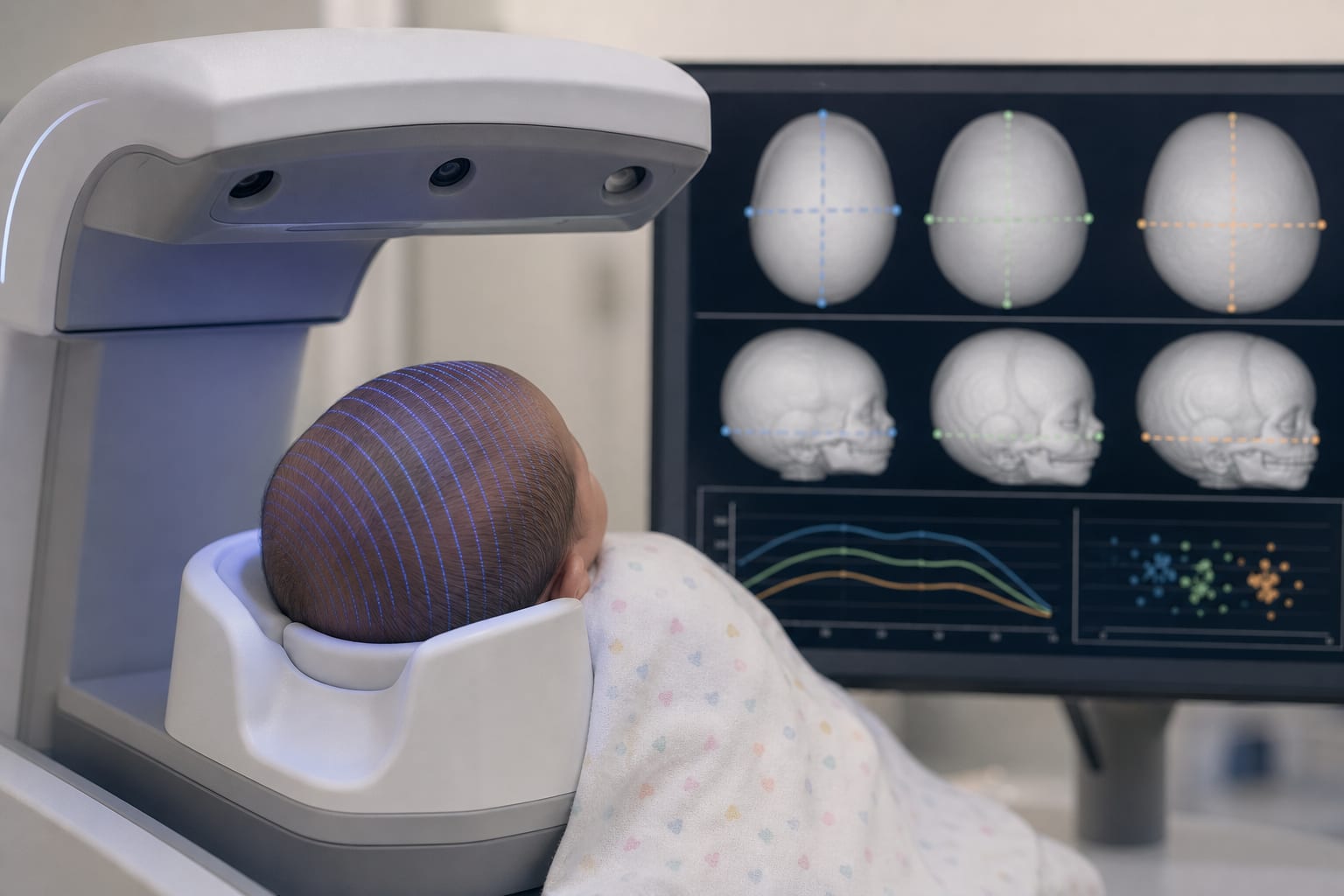
Clinical Report: Cranial Shape Measurement Analysis in Preterm Infants
Overview
This study analyzed cranial shape data from 2,165 preterm infants, revealing a high incidence of postural cranial abnormalities, particularly plagiocephaly. The findings underscore the importance of early detection and intervention for cranial shape abnormalities in this vulnerable population.
Background
Postural cranial abnormalities are prevalent in preterm infants and can lead to facial asymmetry and developmental concerns. Early identification and intervention are crucial, as cranial shape issues can be corrected more effectively when addressed promptly. This study provides essential epidemiological data to inform clinical practices regarding cranial shape screening in preterm infants.
Data Highlights
Age Group (Months)
Detection Rate of Postural Cranial Abnormality
Plagiocephaly Rate
Brachycephaly Rate
Scaphocephaly Rate
0–2
81.2%
42.2%
12.7%
17.5%
3–4
53.2%
33.3%
9.0%
8.5%
5–6
74.2%
37.3%
19.8%
8.5%
Key Findings
1,420 out of 2,165 preterm infants exhibited postural cranial abnormalities.
The highest detection rate was in the 0–2 month age group (81.2%).
Plagiocephaly was the most common type of cranial abnormality detected.
The detection rate of brachycephaly increased with age, while scaphocephaly decreased.
Early and continuous intervention is necessary for effective management of cranial shape abnormalities.
Clinical Implications
Healthcare providers should incorporate routine cranial shape screening into follow-up care for preterm infants, particularly during the first two months of life. Early identification of cranial abnormalities can facilitate timely interventions, potentially improving developmental outcomes.
Conclusion
The study highlights the significant prevalence of postural cranial abnormalities in preterm infants and emphasizes the need for early screening and intervention strategies to optimize cranial shape outcomes.
Federal prosecutors allege that a Florida physician and research staff fabricated clinical trial records that were submitted into database systems used to evaluate investigational drugs.