Exploring the feasibility of modeling next-day fatigue and sleepiness using digital sleep tracker data in neurodegenerative and immune-mediated inflammatory diseases - Report - MDSpire
Advertisement
Exploring the feasibility of modeling next-day fatigue and sleepiness using digital sleep tracker data in neurodegenerative and immune-mediated inflammatory diseases
Clinical Report: Utilizing Digital Sleep Tracker Data to Predict Fatigue
Overview
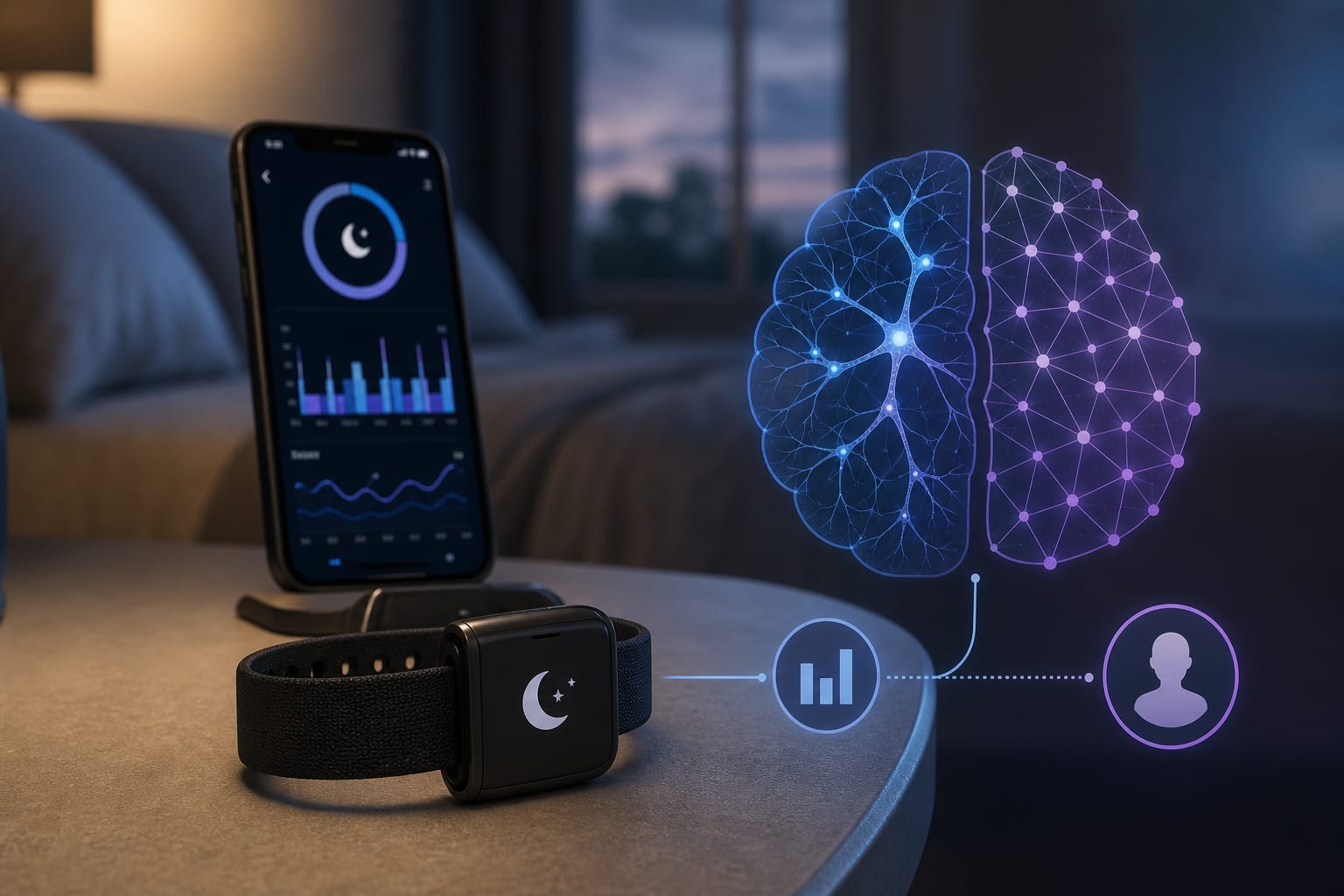
This study evaluates the feasibility of using digital sleep trackers to predict next-day fatigue and sleepiness in individuals with neurodegenerative diseases (NDDs) and immune-mediated inflammatory diseases (IMIDs). Preliminary findings suggest moderate predictive capacity for physical fatigue, particularly in healthy adults, while performance in chronic disease cohorts remains limited.
Background
Fatigue and sleep disturbances are common and debilitating symptoms in NDDs and IMIDs, significantly impacting patients' quality of life and daily functioning. Traditional methods of assessing these symptoms rely heavily on subjective patient-reported outcomes, which can be biased and inconsistent. The integration of digital health technologies, such as wearable sleep trackers, offers a promising avenue for objective and continuous monitoring of sleep and fatigue.
Data Highlights
Group
Physical Fatigue AUC
Mental Fatigue AUC
Daytime Sleepiness AUC
Healthy Adults
0.75
0.66
N/A
NDD
0.62
N/A
0.66
Key Findings
Sleep trackers showed moderate agreement with polysomnography (PSG).
Machine learning models demonstrated an AUC of 0.75 for predicting next-day physical fatigue in healthy adults.
In NDD, the AUC for physical fatigue prediction reached 0.62, with REM latency and deep sleep identified as key features.
Mental fatigue prediction in healthy adults achieved an AUC of 0.66.
Daytime sleepiness prediction in NDD also reached an AUC of 0.66.
Findings are exploratory and highlight the need for larger studies to validate digital fatigue endpoints.
Clinical Implications
The findings suggest that wearable sleep trackers may provide valuable insights into sleep physiology and its relationship with fatigue, potentially enhancing monitoring in clinical settings. However, the limited predictive performance in chronic disease populations indicates that further research is necessary to develop tailored digital endpoints for fatigue assessment.
Conclusion
Wearable sleep trackers show promise for objective monitoring of sleep and fatigue, but their predictive capabilities in chronic disease cohorts require further investigation to establish clinical utility.
by Bing Zhai, Luan Chen, Xujun Ma, Clémence Pinaud, Meenakshi Chatterjee, Juha M. Kortelainen, Rana Zia Ur Rehman, Teemu Ahmaniemi, Stefan Avey, Yu Guan, Victoria Macrae, Chloe Hinchliffe, Silvia Del Din, Nikolay V. Manyakov, Robert Göder, Robbin Romijnders, Walter Maetzler, Ralf Reilmann, Svenja Aufenberg, Robin Schubert, C. Janneke van der Woude, Daqing Zhang, Wan-Fai Ng