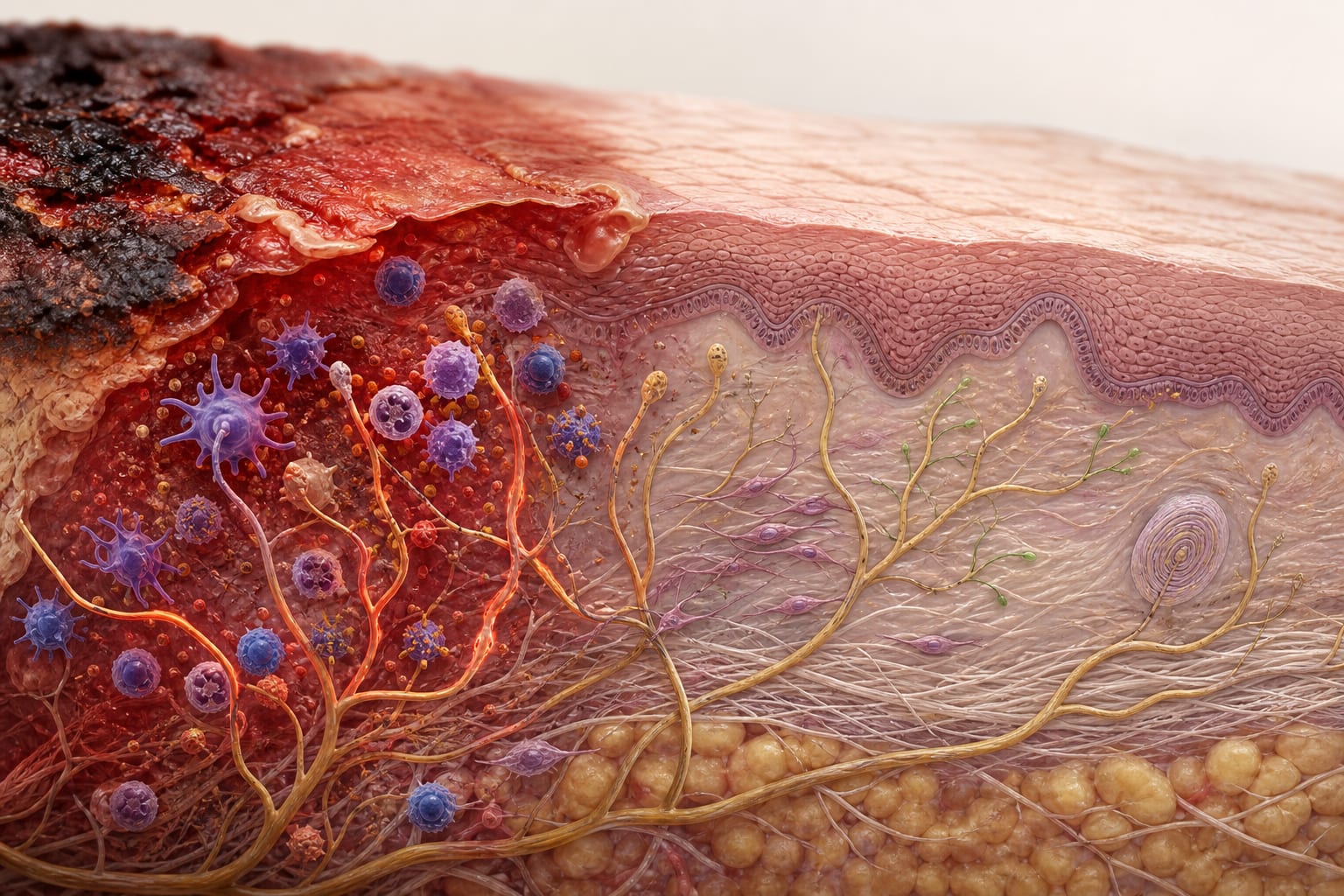
Clinical Report: Interaction of Mechanical Forces and Inflammatory Immunity in Keloids
Overview
Keloids are chronic inflammatory fibroproliferative disorders characterized by excessive growth beyond wound margins and high recurrence rates. The interplay between mechanical forces and inflammatory pathways is crucial in keloid pathogenesis, suggesting new therapeutic avenues.
Background
Keloids significantly impair patients' quality of life due to their invasive growth and high recurrence rates. Understanding the mechanisms behind keloid formation, particularly the roles of mechanical forces and inflammation, is essential for developing effective treatments. Current management strategies face challenges, highlighting the need for innovative approaches.
Data Highlights
No numerical data provided in the article.
Key Findings
Keloids exhibit invasive growth beyond the original wound margins, indicating a chronic fibroproliferative state.
Mechanical forces contribute to keloid development through a positive feedback loop involving inflammation and fibrosis.
Infiltrating immune cells, such as M2 macrophages and Th2/Th17 cells, play a significant role in sustaining chronic inflammation in keloids.
Current management strategies include multimodal approaches, but high recurrence rates remain a challenge.
Emerging therapies focus on mechanomodulation and targeting inflammatory pathways to improve treatment outcomes.
Clinical Implications
Clinicians should consider the mechanical environment and inflammatory status when managing keloids. Incorporating tension-reduction strategies and targeted therapies may enhance treatment efficacy and reduce recurrence rates.
Conclusion
The interaction between mechanical forces and inflammatory responses is pivotal in keloid pathogenesis, offering new insights for individualized clinical management. Further research into these mechanisms may lead to more effective therapeutic strategies.