Pulmonary Artery Diameters in Children, Teenagers and Young Adults Derived from Quiescent Interval Slice Selective (QISS) Magnetic Resonance Angiography - Report - MDSpire
Advertisement
Pulmonary Artery Diameters in Children, Teenagers and Young Adults Derived from Quiescent Interval Slice Selective (QISS) Magnetic Resonance Angiography
Assessment of Pulmonary Artery Dimensions in Pediatric and Young Adult Populations Using QISS Magnetic Resonance Angiography
Overview
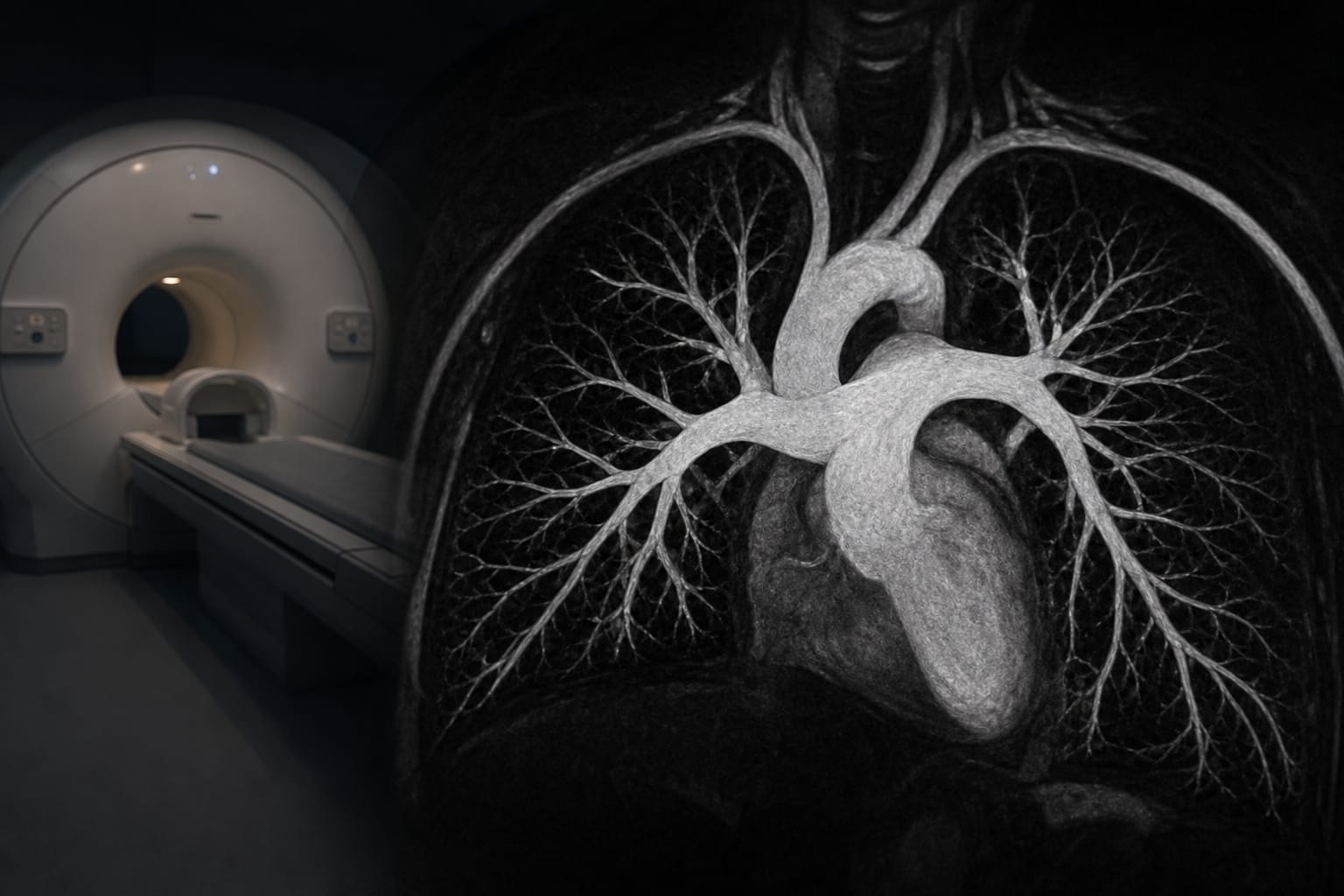
This study evaluates the dimensions of the main and branch pulmonary arteries in pediatric patients using the Quiescent Interval Slice Selective (QISS) magnetic resonance angiography technique.
Background
Cardiovascular magnetic resonance (CMR) imaging is essential for diagnosing congenital heart diseases, providing detailed images of thoracic vessels. The QISS method enhances non-contrast vascular imaging, particularly for assessing pulmonary artery dimensions.
Data Highlights
No numerical data or trial data provided in the source material.
Key Findings
The QISS method optimizes visualization of arterial blood flow while minimizing signal interference.
Radial QISS is noted for its clinical utility, simplicity, and adaptability in non-invasive vascular pathology diagnosis.
Precise reference values for pulmonary artery dimensions are necessary due to size changes with age in children.
Only two previous studies have investigated pulmonary artery dimensions in children using CMR.
Variations in pulmonary artery size may relate to sex, age, body height, weight, and body surface area.
Clinical Implications
Establishing reference values for pulmonary artery dimensions using QISS can enhance the accuracy of CMR assessments in pediatric populations. Understanding variations related to demographic factors is essential for appropriate clinical evaluations.
Conclusion
The study highlights the importance of using QISS for measuring pulmonary artery dimensions in children.