Tau Oligomers Induce Nuclear Lamina Invagination and Chromatin Changes in Alzheimer's Disease
Overview
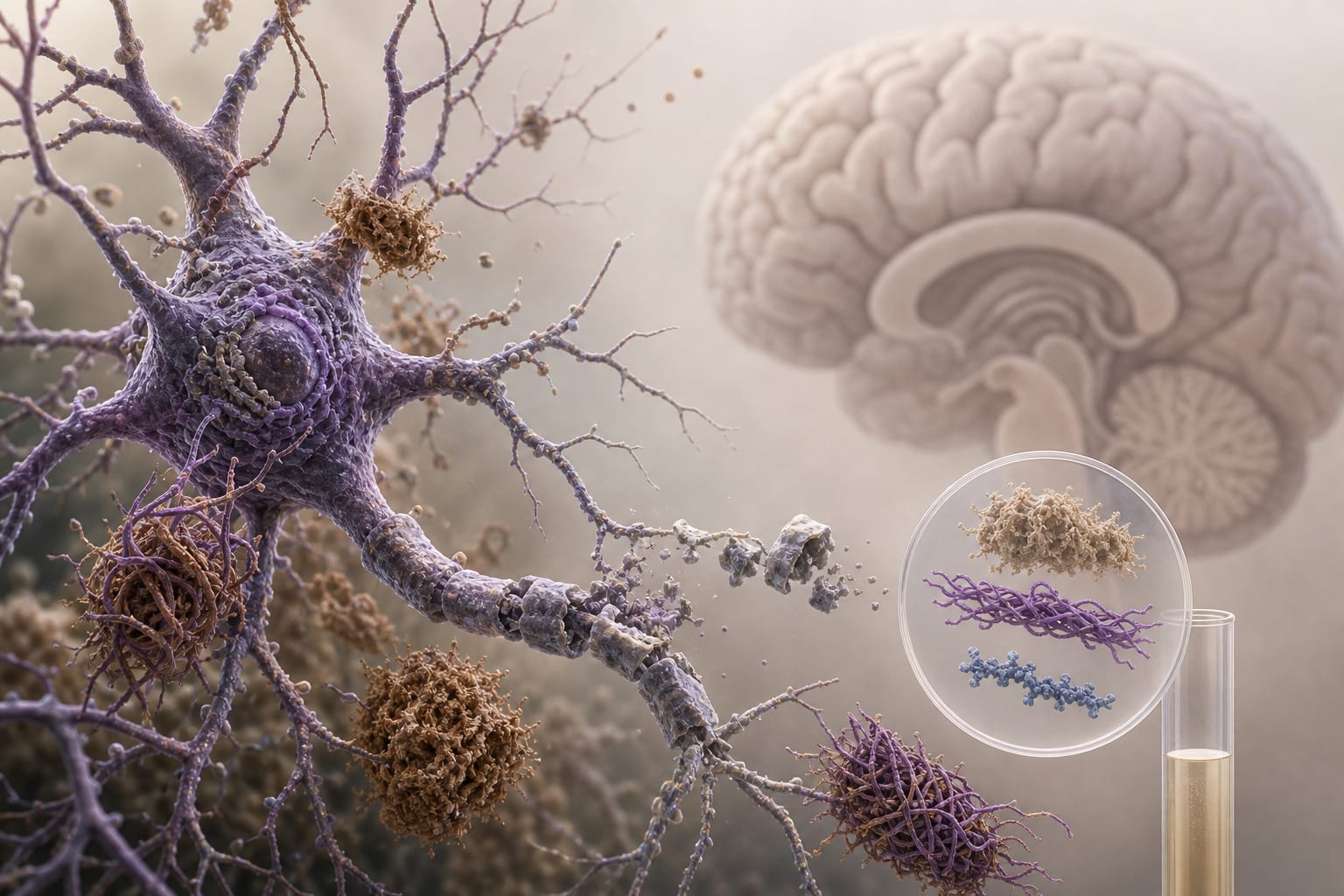
This study demonstrates that tau oligomers promote nuclear lamina disruption and chromatin decompaction in Alzheimer's disease (AD). These nuclear alterations correlate with tau aggregation stages in human AD brains, tauopathy mouse models, and iPSC-derived neurons, implicating tau oligomers as early toxic drivers of neuronal dysfunction.
Background
Alzheimer’s disease is characterized by extracellular β-amyloid plaques and intracellular tau neurofibrillary tangles, leading to neurodegeneration. Tau normally stabilizes microtubules but becomes hyperphosphorylated and aggregates in AD, with oligomeric tau species identified as particularly toxic. Nuclear membrane disruption, including nuclear lamina invagination and chromatin disorganization, has been observed in tauopathies, but mechanisms remain unclear. This study investigates how tau oligomers interact with nuclear lamina components and contribute to nuclear pathology across AD progression.
Data Highlights
Model
Age/Stage
Findings
Human AD brains
Braak stages I-VI
Progressive nuclear lamina disruption and Lamin B loss correlated with tau aggregation severity
PS19 Tauopathy mice
5 and 9 months
Pathological tau accumulation at nuclear membrane correlated with lamina disruption
iPSC-derived neurons
Induced tau oligomerization
Tau granules aggregate at nuclear membrane causing nuclear invaginations
Key Findings
Tau oligomers bind Lamin B2 and Lamin B receptor proteins, causing their insolubility and mislocalization.
Nuclear lamina disruption and invagination correlate with early tau aggregation stages in human AD brains.
PS19 transgenic mice show age-dependent nuclear lamina disruption linked to tau pathology.
Electron microscopy reveals progressive nuclear invagination and chromatin decompaction under tauopathy conditions.
Optogenetically induced tau oligomerization in neurons causes tau aggregation at the nuclear membrane and nuclear intrusions.
Tau oligomer-induced nuclear lamina disruption precedes and likely contributes to neuronal dysfunction in AD.
Clinical Implications
These findings highlight tau oligomers as critical mediators of nuclear structural damage in AD, suggesting that targeting early tau oligomer formation or their interaction with nuclear lamina components could preserve nuclear integrity. Therapeutic strategies aimed at preventing nuclear lamina disruption may help mitigate downstream chromatin alterations and neuronal dysfunction in tauopathies.
Conclusion
Tau oligomers promote nuclear lamina invagination and chromatin alterations that correlate with disease progression in AD. This nucleo-toxic effect likely contributes to neuronal dysfunction and represents a potential therapeutic target.
References
Goizuetta Alzheimer’s Disease Center -- Human brain tissue source
PS19 Tauopathy mouse model -- Jackson Laboratories
Prior studies on tau oligomers and nuclear disruption (multiple refs)