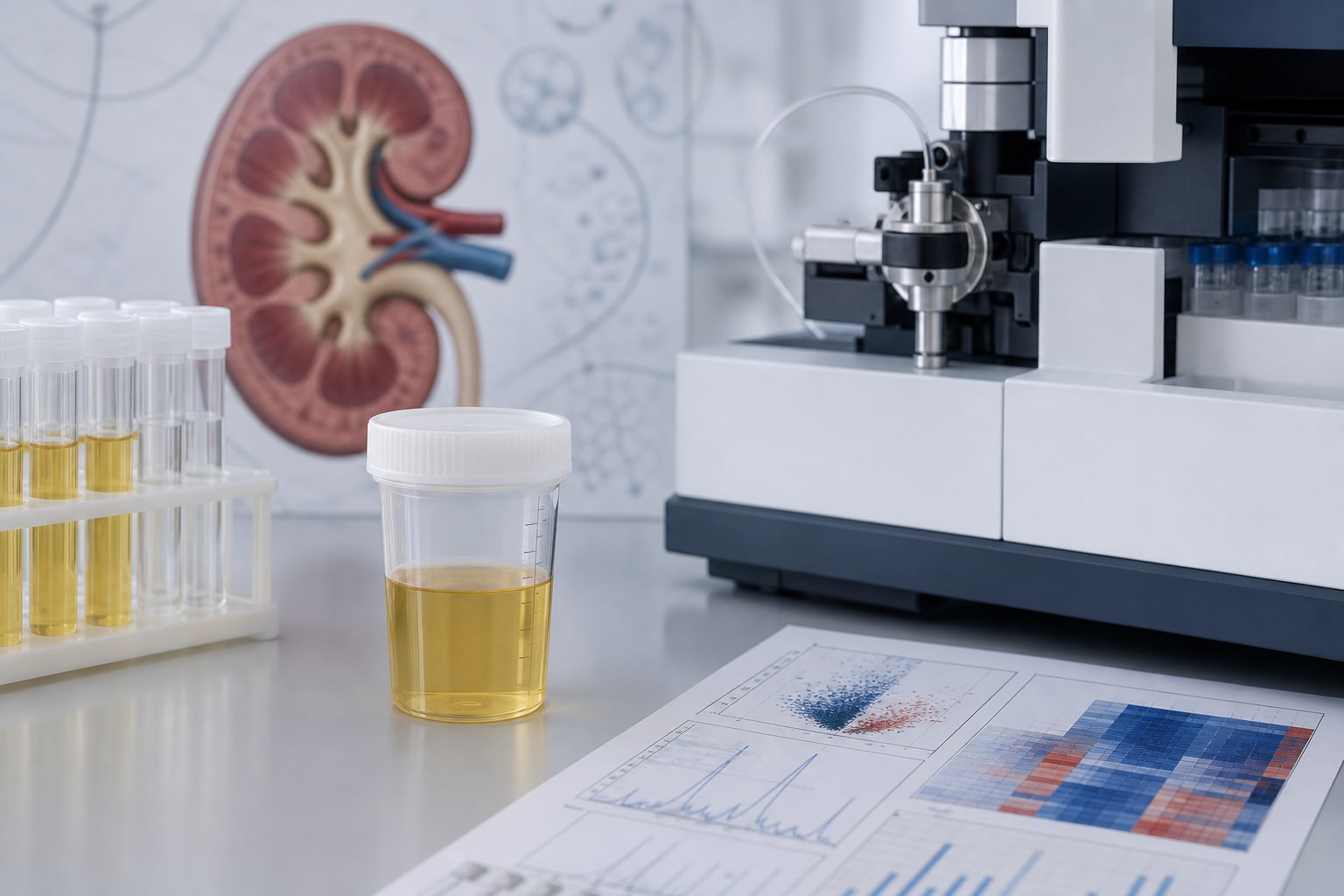
Clinical Report: Identifying Urinary Biomarkers for Diabetic Nephropathy
Overview
This study identifies urinary biomarkers for early diagnosis of diabetic kidney disease (DKD) in type 2 diabetes patients. Key findings include the diagnostic value of urinary amino acids and SERPINA1.
Background
Diabetic kidney disease (DKD) is a prevalent complication of diabetes, affecting 30%-40% of diabetic patients and leading to significant morbidity. Current diagnostic methods, primarily based on urinary albumin excretion, have limitations in sensitivity and specificity.
Data Highlights
Biomarker
AUC
UTRF
0.926
UIgG
0.916
20-Amino Acid Combination
0.928
SERPINA1
0.964
Key Findings
UTRF and UIgG showed diagnostic value with AUCs of 0.926 and 0.916, respectively.
The combination of 20 urinary amino acids demonstrated diagnostic performance with an AUC of 0.928.
SERPINA1 was identified as a key protein biomarker with an AUC of 0.964.
Traditional diagnostic methods based on albuminuria have limitations in sensitivity.
Non-proteinuric DKD is present in 15-45% of type 2 diabetes patients.
Clinical Implications
The findings suggest that incorporating urinary biomarkers like SERPINA1 and amino acid profiles may improve early diagnosis of DKD. This could lead to better management strategies for patients with type 2 diabetes.
Conclusion
The study identifies urinary biomarkers that may enhance the early diagnosis of diabetic kidney disease, particularly through the identification of SERPINA1 and amino acid combinations.
A pharmacovigilance analysis of FDA adverse event reports finds the strongest ischemic optic neuropathy reporting signal with high-dose semaglutide formulations, with higher adjusted odds reported in men.