Clinical Report: Understanding Resistance Mechanisms to Initial Therapy in DLBCL
Overview
Revise to specify the percentage of patients achieving long-term remission with standard therapies.
Background
Diffuse large B-cell lymphoma (DLBCL) is the most prevalent subtype of malignant lymphoma in adults, accounting for a significant portion of non-Hodgkin lymphoma cases. Despite the efficacy of first-line therapies like R-CHOP and pola-R-CHP, a substantial number of patients experience treatment resistance, leading to poor clinical outcomes. Understanding the underlying mechanisms of resistance is crucial for developing more effective therapeutic strategies.
Data Highlights
No numerical data available in the source material.
Key Findings
30-40% of DLBCL patients develop refractory disease or relapse after initial treatment.
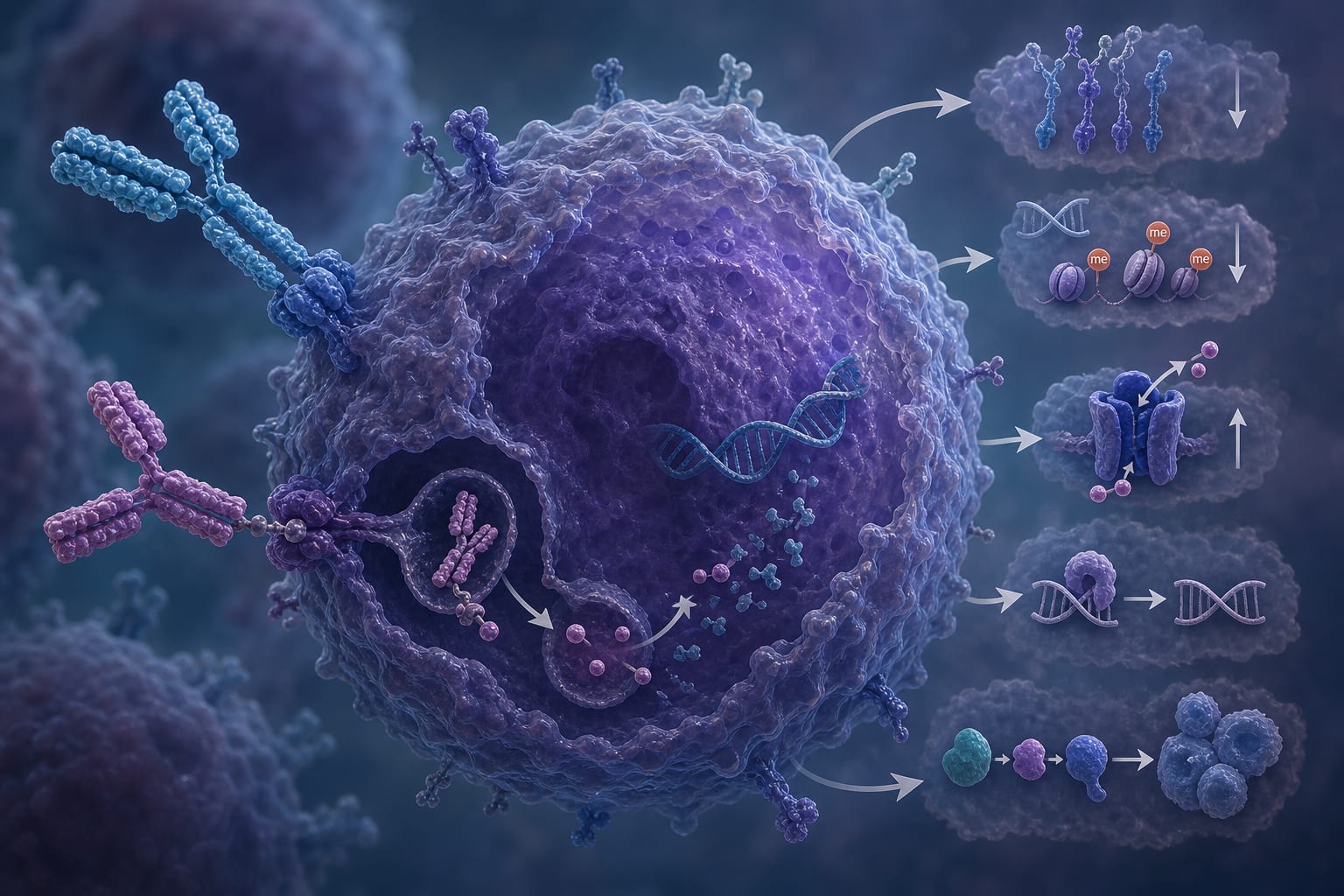
Polatuzumab vedotin resistance is primarily linked to downregulation of CD79b expression.
High expression of ATP-binding cassette (ABC) transporters contributes to multidrug resistance in DLBCL.
Dehydrogenase 1 Family Member L1 (ALDH1L1) is upregulated in polatuzumab vedotin-resistant cells, affecting B cell receptor signaling.
Genetic and epigenetic factors, such as KLHL6 expression, influence susceptibility to polatuzumab vedotin.
Clinical Implications
Clinicians should be aware of the potential for treatment resistance in DLBCL and consider genetic profiling to identify high-risk patients. Understanding the mechanisms of resistance can guide the selection of alternative therapies and improve patient management strategies.
Conclusion
Addressing treatment resistance in DLBCL is essential for improving patient outcomes. Continued research into the molecular mechanisms of resistance will facilitate the development of innovative therapeutic approaches.