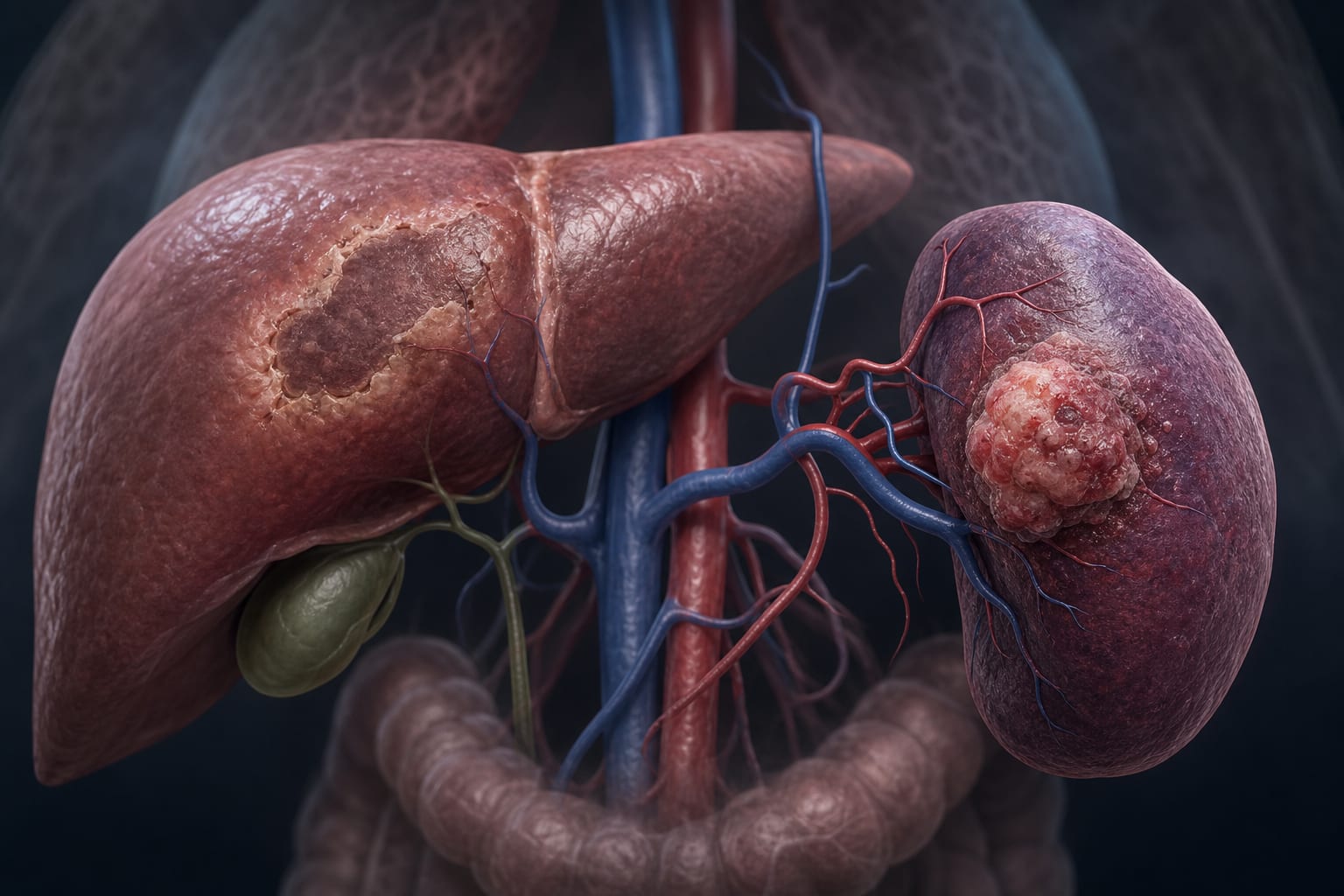
Clinical Report: Efficacy and Safety Comparison of First-Line Therapies for Advanced HCC
Overview
This meta-analysis evaluates the efficacy and safety of first-line treatments for advanced hepatocellular carcinoma (HCC), highlighting the superiority of hepatic arterial infusion chemotherapy (HAIC) and selected immunotherapy combinations. The findings suggest significant survival benefits without increased severe adverse events.
Background
Advanced hepatocellular carcinoma (HCC) is a leading cause of cancer-related mortality, with a poor prognosis and limited treatment options historically dominated by sorafenib. The emergence of combination therapies, including HAIC and immunotherapy, presents new opportunities for improving patient outcomes. Understanding the comparative effectiveness of these therapies is crucial for optimizing treatment strategies.
Data Highlights
Trial
Patients
OS
PFS
Grade ≥ 3 AEs
16 Trials
8,753
HAIC-based regimens showed highest OS
HAIC-based regimens showed highest PFS
Immunotherapy combinations had manageable AEs
Key Findings
HAIC-based regimens, particularly sorafenib plus HAIC, ranked highest for overall survival (OS) and progression-free survival (PFS).
Immunotherapy combinations demonstrated significant survival benefits across various clinical subgroups.
Subgroup analyses indicated consistent benefits across age, sex, macrovascular invasion, and ECOG performance status.
Grade ≥ 3 adverse events were not significantly increased with immunotherapy combinations.
The findings support the need for future head-to-head trials to refine treatment strategies.
Clinical Implications
Clinicians should consider HAIC-based strategies and selected immunotherapy combinations as first-line treatments for advanced HCC due to their superior survival outcomes. Ongoing evaluation of treatment efficacy and safety is essential as new therapies emerge.
Conclusion
HAIC and selected immunotherapy combinations represent promising first-line options for advanced HCC, warranting further investigation to optimize treatment protocols.