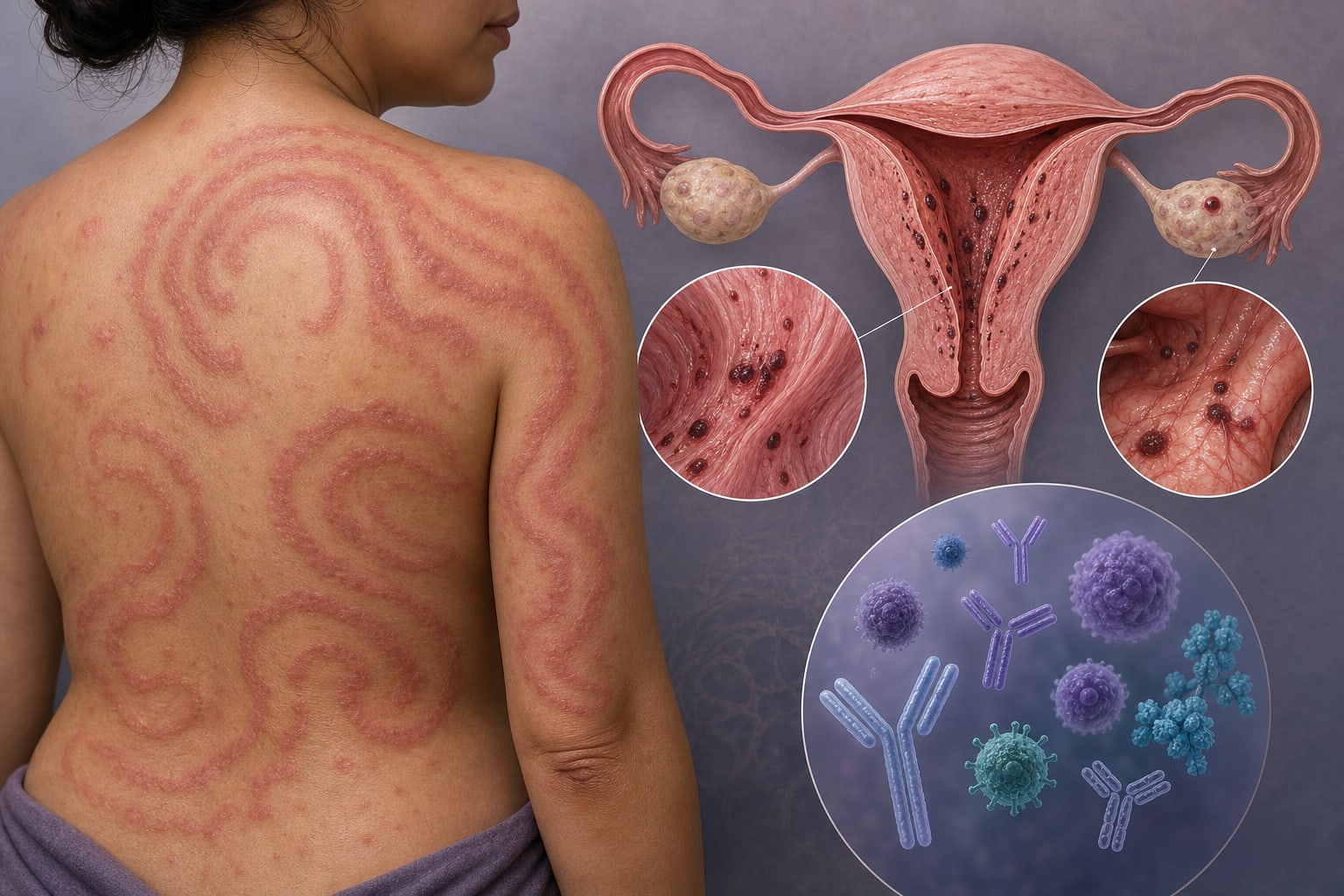
Clinical Report: Erythema Gyratum Repens Linked to Adenomyosis and Endometriosis
Overview
This case study presents a 37-year-old woman with erythema gyratum repens (EGR) associated with severe adenomyosis and endometriosis. Following a total hysterectomy, the patient's cutaneous symptoms resolved completely within two months.
Background
Erythema gyratum repens (EGR) is a rare dermatosis often linked to paraneoplastic syndromes, but it can also occur in non-paraneoplastic contexts. Understanding potential non-paraneoplastic triggers, such as chronic inflammatory gynecological diseases, is crucial for accurate diagnosis.
Data Highlights
No numerical or trial data available in the source material.
Key Findings
A 37-year-old woman presented with a 2-year history of pruritic concentric erythematous plaques.
Her clinical presentation was suggestive of EGR, typically associated with paraneoplastic conditions.
Laboratory tests revealed an elevated CA-125 level, prompting further gynecological assessment.
Severe adenomyosis and concomitant endometriosis were diagnosed, leading to a total hysterectomy.
The cutaneous eruption resolved completely within 2 months post-surgery without additional dermatologic treatment.
This case expands the understanding of non-paraneoplastic conditions associated with EGR.
Clinical Implications
Clinicians should consider both paraneoplastic and non-paraneoplastic causes when evaluating patients with EGR.
Conclusion
This case highlights the association of EGR with chronic gynecological conditions.
These 10 states have paid family or medical leave programs and health, wellness, peer support, or monitoring resources available to physicians or other health professionals.