Echocardiographic assessment of left atrioventricular coupling index: technical approaches and clinical implementation strategies - Report - MDSpire

Echocardiographic assessment of left atrioventricular coupling index: technical approaches and clinical implementation strategies

  • By

  • Hengxiao Liu

  • Quan Li

  • Wenjie Han

  • Ziyao Shu

  • Peizhe Gao

  • Li Tian

  • July 3, 2026

  • 0 min

Share

Clinical Report: Evaluation of the Left Atrioventricular Coupling Index via Echocardiography

Overview

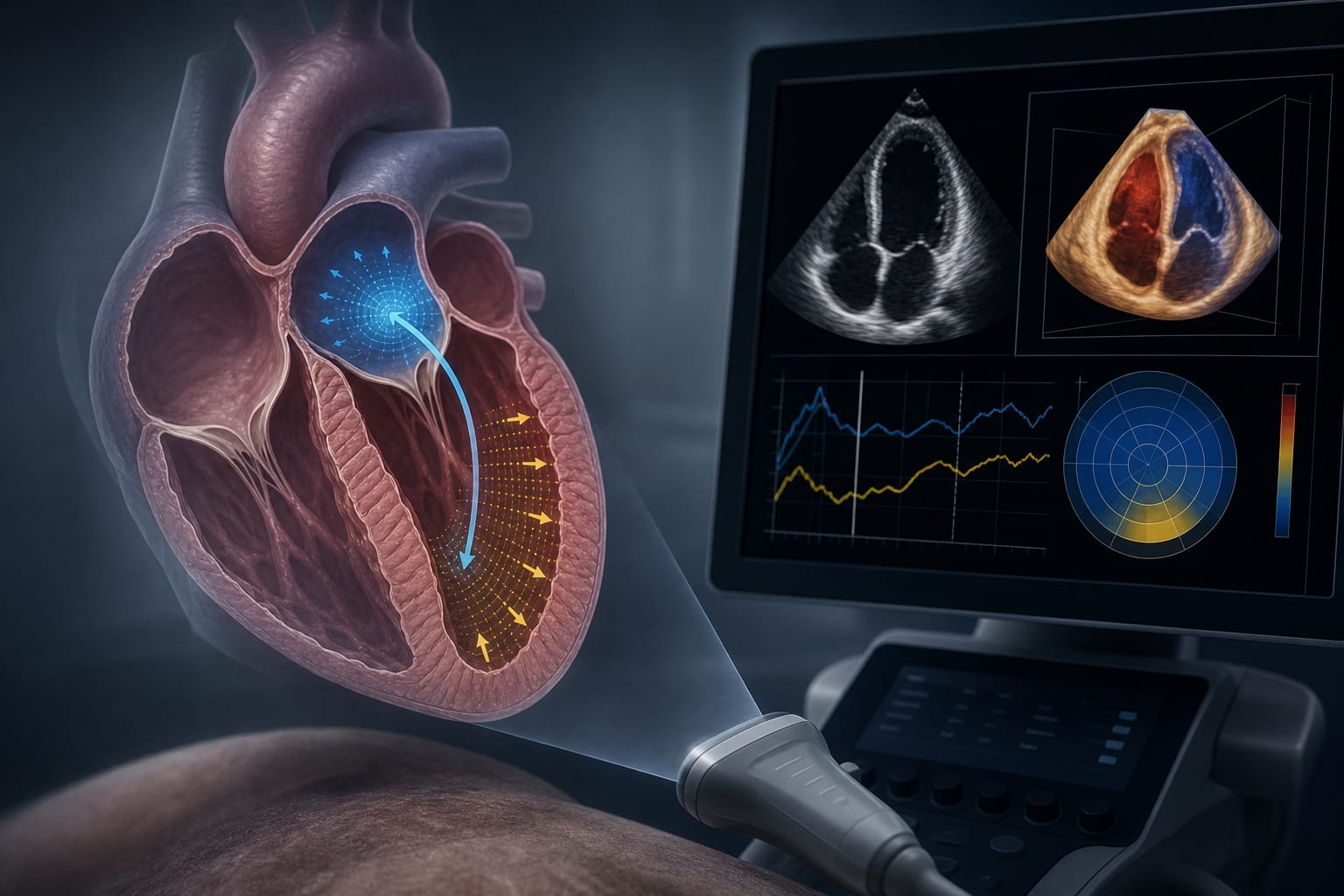
The Left Atrioventricular Coupling Index (LACI) is an echocardiographic parameter for assessing diastolic function. Challenges in technical standardization and implementation hinder its clinical application.

Background

The assessment of cardiac function traditionally relies on left ventricular ejection fraction (LVEF), which may not adequately detect diastolic dysfunction, especially in heart failure with preserved ejection fraction (HFpEF). The LACI offers a new approach by evaluating inter-chamber interactions rather than single-chamber function. Clinical adoption of LACI is limited by technical variability and a lack of standardized measurement protocols.

Data Highlights

No numerical or trial data provided in the source material.

Key Findings

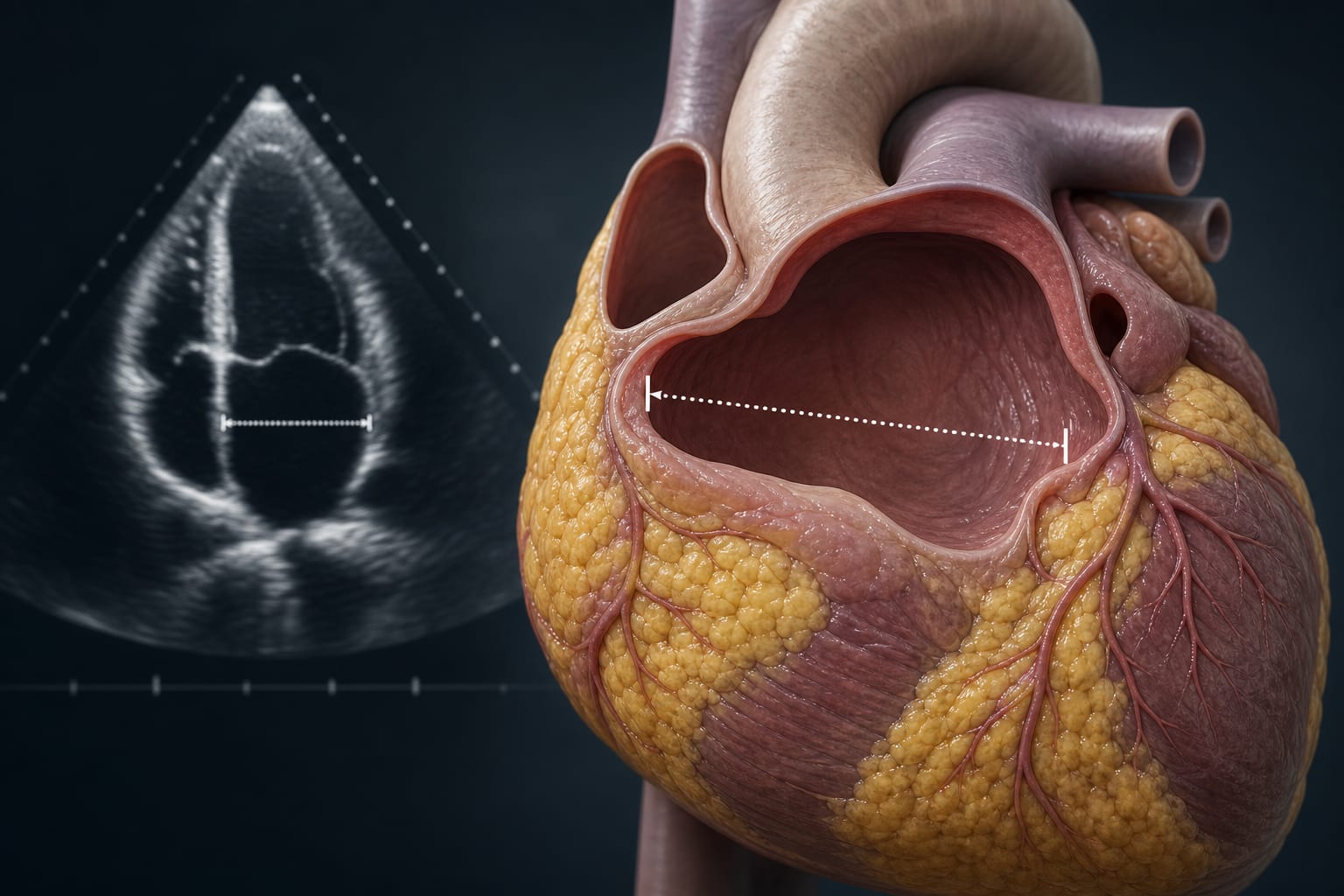
  • LACI is defined as the ratio of left atrial end-diastolic volume to left ventricular end-diastolic volume.
  • Two-dimensional echocardiography is optimal for screening, while real-time three-dimensional echocardiography (RT-3DE) provides the highest consistency with cardiovascular magnetic resonance.
  • 3DE-LACI has shown independent prognostic value in cardiac amyloidosis.
  • Speckle-tracking echocardiography (STE) aids in mechanistic exploration but requires standardization of algorithms.
  • AI-assisted analysis shows potential but needs multicenter validation.
  • Key limitations include the absence of cross-platform calibration and fragmented reference values.

Clinical Implications

Clinicians should be aware of the limitations in the standardization and clinical application of LACI.

Conclusion

LACI's clinical utility is currently limited by technical challenges that need to be addressed for broader implementation.
Related Resources & Content

  1. Zornitzki et al., Clinical Research in Cardiology, 2025 -- Improved Risk Assessment in Chronic Coronary Syndrome Through the Left Atrioventricular Coupling Index
  2. German Cardiovascular Ultrasound Working Group, Clinical Research in Cardiology, 2025 -- Strategies to Prevent Common Mistakes in Left Heart Echocardiography
  3. German Cardiovascular Ultrasound Working Group, Clinical Research in Cardiology, 2024 -- Echocardiographic Evaluation of Atrial, Ventricular, and Valvular Function in Atrial Fibrillation Patients
  4. American Society of Echocardiography, 2025 -- Recommendations for the Evaluation of Left Ventricular Diastolic Function by Echocardiography
  5. Clinical Research in Cardiology — Evaluating the Prognostic Utility of a Combined Clinical and Echocardiographic Risk Score for Predicting Cardiovascular Outcomes in Patients with Ischemic Heart Failure and Reduced Ejection Fraction
  6. 2025 ASE Guideline on Left Ventricular Diastolic Function
  7. Normal reference values of left atrioventricular coupling index on two-Dimensional echocardiography | The International Journal of Cardiovascular Imaging | Springer Nature Link
  8. Left atrioventricular coupling index measured by echocardiography in heart failure with preserved ejection fraction | Scientific Reports

Original Source(s)

Related Content