Editorial: Advancements in Biomarkers and Their Role in Forecasting and Personalizing Treatment for Inflammatory Bowel Diseases
-
By
-
Arianna Dal Buono
-
Olga Maria Nardone
-
Rocio Ferreiro-Iglesias
-
June 17, 2026
Clinical Report: Advancements in Biomarkers for Inflammatory Bowel Diseases
Overview
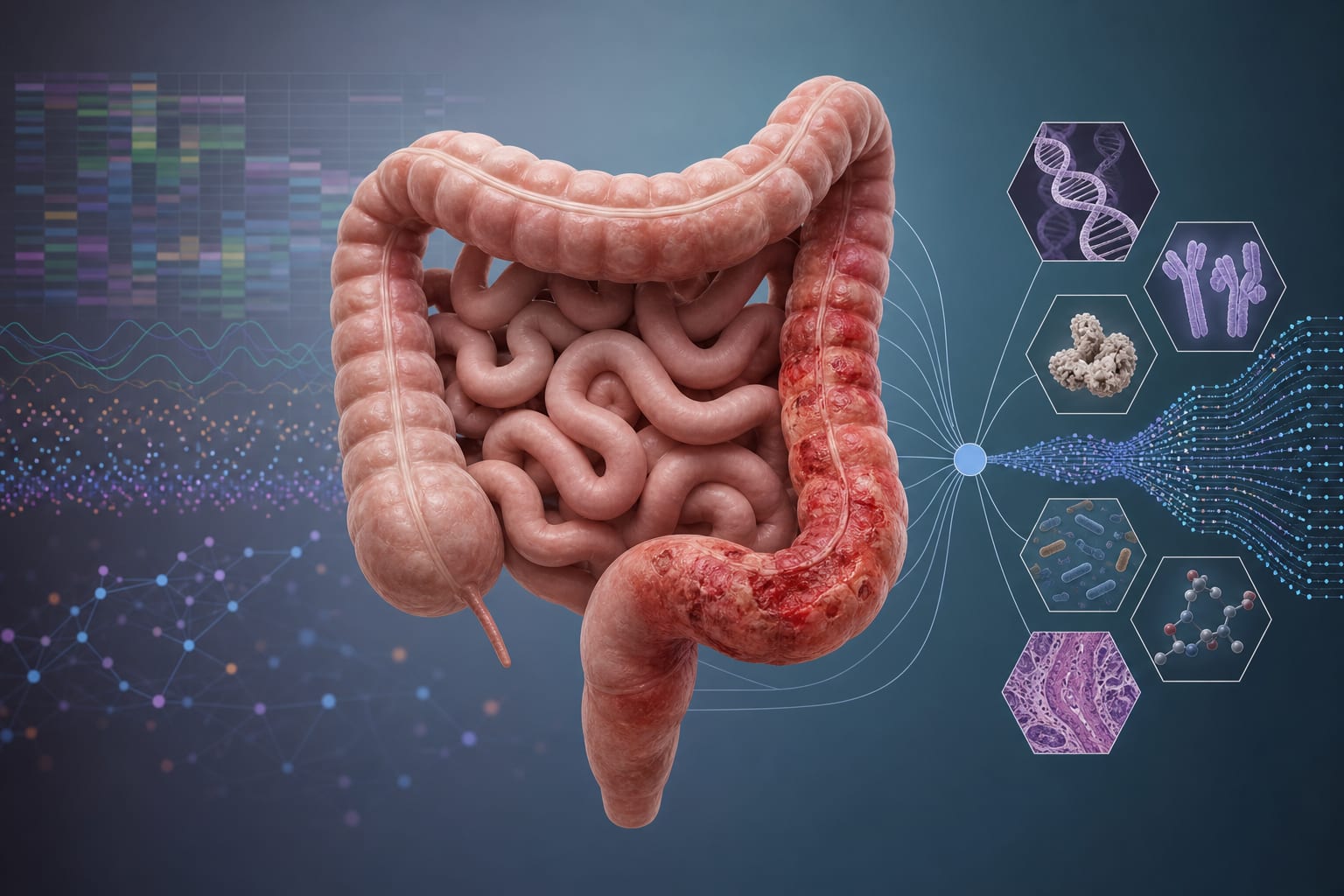
This editorial discusses the significant advancements in biomarkers for diagnosing and predicting treatment responses in inflammatory bowel diseases (IBD). It highlights the transition towards precision medicine through multi-omic approaches and artificial intelligence-driven strategies.
Background
Inflammatory bowel diseases (IBD) are complex disorders with diverse clinical presentations and treatment responses. The ability to predict disease progression and therapeutic efficacy is critical for optimizing patient management. Current strategies often lack the biological insight needed for personalized care, underscoring the importance of developing reliable biomarkers.
Data Highlights
No specific numerical data provided in the editorial.
Key Findings
- Antibodies targeting integrin αvβ6 show high diagnostic accuracy for ulcerative colitis.
- The triglyceride-glucose index is associated with increased IBD risk, indicating metabolic pathways' relevance in disease pathogenesis.
- Peripheral inflammatory markers like NLR, PLR, and LMR may serve as prognostic tools in Crohn’s disease and ulcerative colitis.
- Baseline stool TIMP-2 levels can predict stricturing and penetrating disease progression in Crohn’s disease.
- Multi-omic analyses reveal efferocytosis-related hub genes linked to ustekinumab response in colitis.
- Integration of biomarkers with therapeutic response signatures supports proactive management strategies in IBD.
Clinical Implications
The identification of reliable biomarkers can enhance early diagnosis and risk stratification in IBD, leading to more personalized treatment approaches. Clinicians should consider integrating multi-omic data and inflammatory markers into routine practice to optimize patient outcomes.
Conclusion
The ongoing research into biomarkers for IBD represents a promising shift towards more individualized and effective treatment strategies. Continued validation and standardization of these biomarkers are essential for their implementation in clinical practice.
Related Resources & Content
- The New Gastroenterologist, 2025 -- Novel Biomarkers Discovered Linked to Treatment Efficacy in Inflammatory Bowel Disease
- The New Gastroenterologist, 2025 -- Tailored Medicine Strategy Enhances Infliximab Efficacy in Chronic Inflammatory Bowel Disease
- Journal of Crohn's and Colitis -- Decoding the proteomic landscape of inflammatory bowel disease
- Journal of Crohn's and Colitis -- ECCO Topical Review on Predictive Models on Inflammatory Bowel Disease Disease Course and Treatment Response
- ECCO Guidelines on Therapeutics in Crohn’s Disease: Medical Treatment | Journal of Crohn's and Colitis | Oxford Academic
- Risankizumab versus Ustekinumab for Moderate-to-Severe Crohn’s Disease | New England Journal of Medicine
- Multi‐Omics Biomarkers for Predicting Efficacy of Biologic and Small‐Molecule Therapies in Adults With Inflammatory Bowel Disease: A Systematic Review - PMC
- ECCO Guidelines on Therapeutics in Crohn’s Disease: Medical Treatment | Journal of Crohn's and Colitis | Oxford Academic
- Risankizumab versus Ustekinumab for Moderate-to-Severe Crohn’s Disease | New England Journal of Medicine
- Multi‐Omics Biomarkers for Predicting Efficacy of Biologic and Small‐Molecule Therapies in Adults With Inflammatory Bowel Disease: A Systematic Review - PMC
Based on findings from:
Editorial: Biomarkers and beyond: predicting course and tailoring treatment in inflammatory bowel diseases
Arianna Dal Buono, Olga Maria Nardone, Rocio Ferreiro-Iglesias. Frontiers In Immunology, 2026.
https://www.frontiersin.org/journals/immunology/articles/10.3389/fimmu.2026.1898347/full
This content is an AI-generated, fully rewritten summary based on a published scholarly article. It does not reproduce the original text and is not a substitute for the original publication. Readers are encouraged to consult the source for full context, data, and methodology.