RHOA's Role in Inflammation-Related and Sporadic Colorectal Cancer
Overview
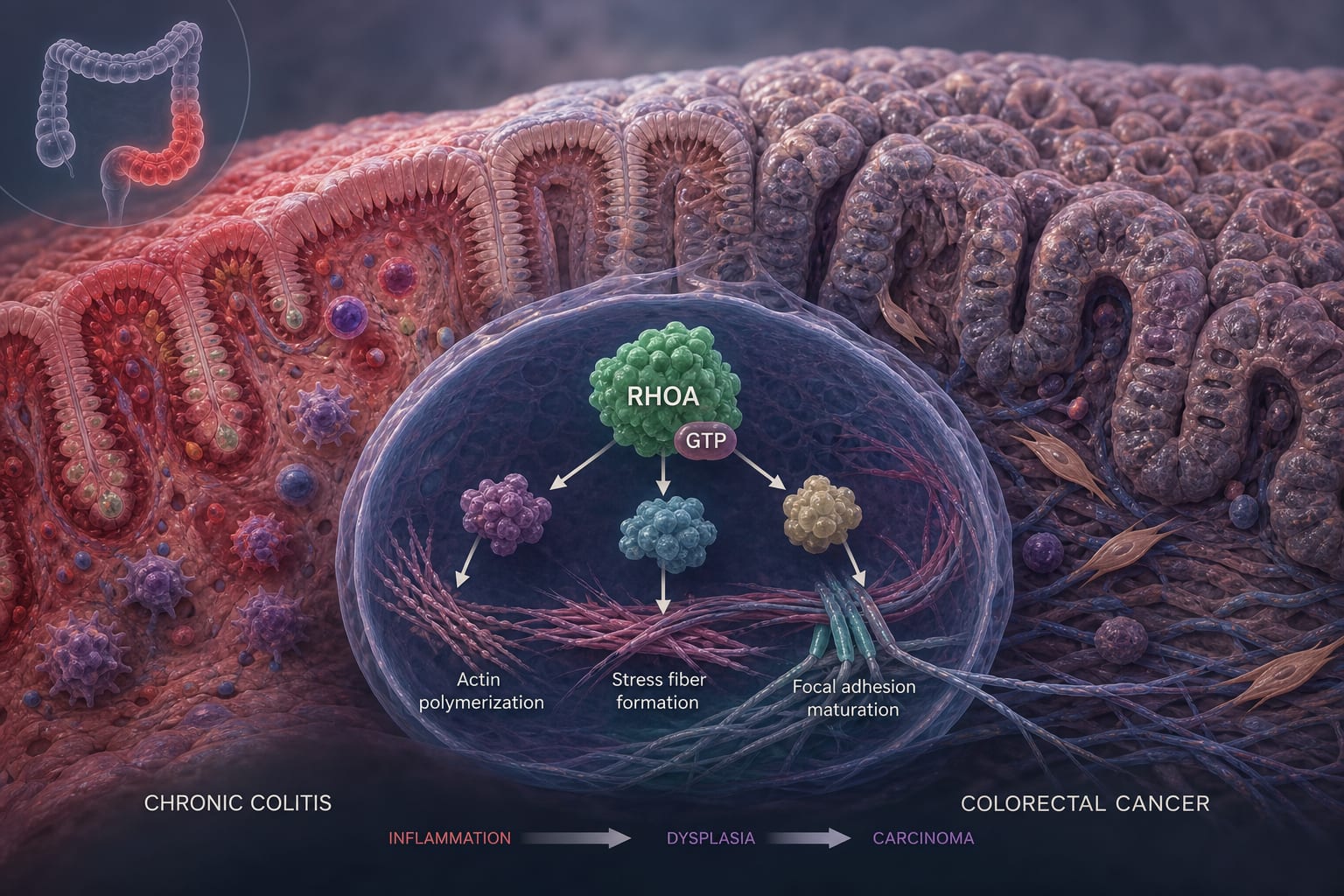
This review discusses the dual role of RHOA in colorectal cancer (CRC), highlighting its involvement in both sporadic and colitis-associated cancer (CAC).
Background
Colorectal cancer (CRC) is a significant global health issue, being the second leading cause of cancer-related deaths. The increasing incidence of CRC, particularly among younger patients and those with inflammatory bowel diseases (IBD), underscores the importance of understanding its underlying mechanisms, including the role of RHOA in tumorigenesis.
Data Highlights
No numerical data or trial data presented in the article.
Key Findings
RHOA is implicated in both sporadic CRC and CAC, with its function modulated by the inflammatory microenvironment.
The role of RHOA in cancer can vary, acting as both a tumor promoter and suppressor depending on the context.
Colitis-associated cancer (CAC) has distinct genetic features compared to sporadic CRC.
RHOA's regulation of cytoskeleton dynamics is crucial for intestinal epithelial cell function and barrier integrity.
Clinical Implications
Understanding the dual role of RHOA in CRC could aid in the identification of specific biomarkers for diagnosis and treatment.
Conclusion
The review emphasizes the complexity of RHOA's role in CRC.