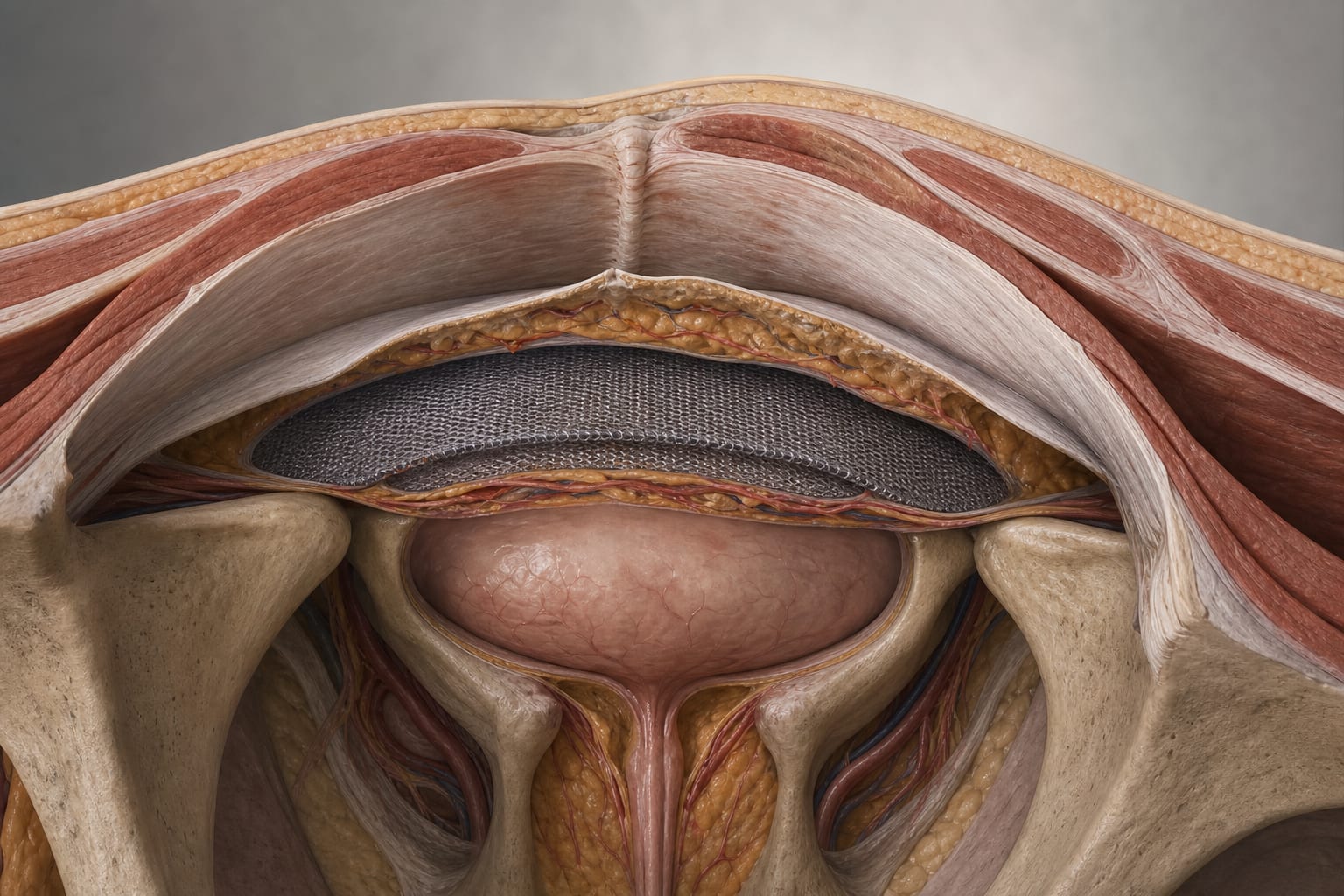
Long-Term Outcomes of Complex Ventral Hernia Repair Using Urinary Bladder Matrix Graft
Overview
This retrospective cohort study evaluated complex ventral incisional hernia repairs reinforced with porcine urinary bladder matrix (UBM) grafts. Findings demonstrated durable repair with low recurrence rates, favorable radiologic and histologic remodeling, and acceptable patient-reported outcomes over extended follow-up.
Background
Ventral incisional hernias occur frequently after laparotomy, with recurrence rates exceeding 60% after primary repair. Synthetic mesh is commonly used but carries risks such as infection and erosion, especially in contaminated fields. Biologically derived grafts like UBM offer potential advantages including reduced chronic inflammation, infection resistance, and facilitation of site-appropriate tissue remodeling. However, long-term data on UBM use in complex ventral hernia repair remain limited.
Data Highlights
Parameter
Value/Outcome
Number of patients reviewed
Not specified (single surgeon, 2012-2017)
Follow-up duration
Up to 6 years; last cases monitored through 2018
Recurrence rate
Not explicitly stated; implied low with Kaplan–Meier analysis
3 patients had full-thickness biopsies during unrelated surgeries
Key Findings
UBM grafts demonstrated durable reinforcement in complex ventral incisional hernia repairs with low recurrence rates over extended follow-up.
Radiologic imaging showed favorable remodeling and integrity of the repaired myofascial layer.
Histologic analysis from biopsies revealed incorporation of UBM grafts with site-appropriate connective tissue remodeling.
Patient-reported symptom scores via the Carolina Comfort Scale indicated acceptable postoperative comfort and function.
UBM grafts were used successfully in both retrorectus and intraperitoneal repair techniques.
No significant complications related to UBM grafts such as infection or erosion were reported.
Clinical Implications
UBM grafts represent a promising biologically derived reinforcement material for complex ventral hernia repairs, particularly in contaminated or high-risk cases where synthetic mesh complications are a concern. Their use may reduce recurrence and postoperative complications while promoting tissue remodeling. Clinicians should consider UBM as an alternative to synthetic mesh, especially in challenging surgical environments.
Conclusion
Porcine urinary bladder matrix grafts provide a durable, biologically compatible reinforcement option for complex ventral incisional hernia repair, supporting long-term repair integrity and favorable patient outcomes. Further prospective studies could solidify their role in hernia surgery.
References
Muysoms et al. 2016 -- Consensus Conference Reporting Recommendations for Hernia Repair Outcomes
ACell, Inc. -- Gentrix® Surgical Matrix Product Information