Intraoperative desaturation in pediatric patients at high altitude: incidence, risk factors, and a non-linear body weight safety threshold - Report - MDSpire
Intraoperative Hypoxemia in Children at High Altitude: Prevalence and Factors
Overview
This study investigates the incidence and risk factors of intraoperative hypoxemia in pediatric patients at high altitude, revealing a 3.5% incidence rate. Key independent risk factors identified include younger age, severe underweight, lower hemoglobin levels, female sex, and prolonged mechanical ventilation. The study utilized a retrospective cohort design involving 1,793 pediatric patients undergoing elective non-cardiothoracic surgery at an altitude of 3,650 m.
Background
Pediatric patients are particularly vulnerable to intraoperative hypoxemia, a risk that is exacerbated at high altitudes due to reduced oxygen availability. Understanding the incidence and contributing factors of desaturation in this population is crucial.
The overall incidence of intraoperative desaturation was 3.5%.
Younger age was associated with a decreased risk of desaturation (adjusted OR 0.80 per year).
Severe underweight increased the risk of desaturation (adjusted OR 4.57).
Lower preoperative hemoglobin levels correlated with higher desaturation risk (adjusted OR 0.85 per 1 g/dL increase).
Prolonged mechanical ventilation was linked to increased desaturation risk (adjusted OR 1.46 per hour).
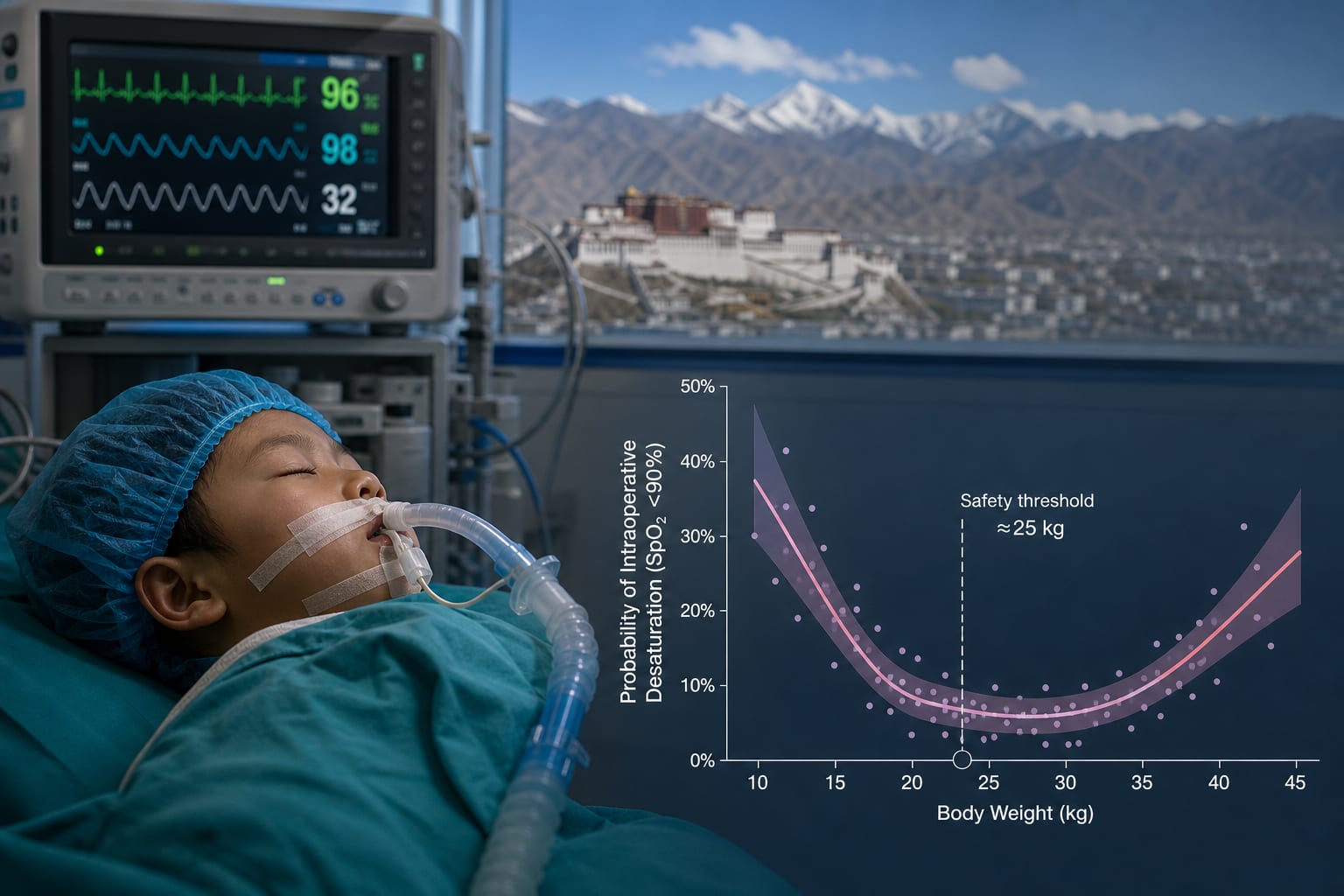
A non-linear safety threshold for body weight was identified at 26.95 kg.
Clinical Implications
The findings highlight the importance of considering age, body weight, and hemoglobin levels when assessing pediatric patients for anesthesia at high altitudes. These factors should inform preoperative risk stratification and management strategies.
Conclusion
Intraoperative desaturation in pediatric patients at high altitude is influenced by several independent risk factors.