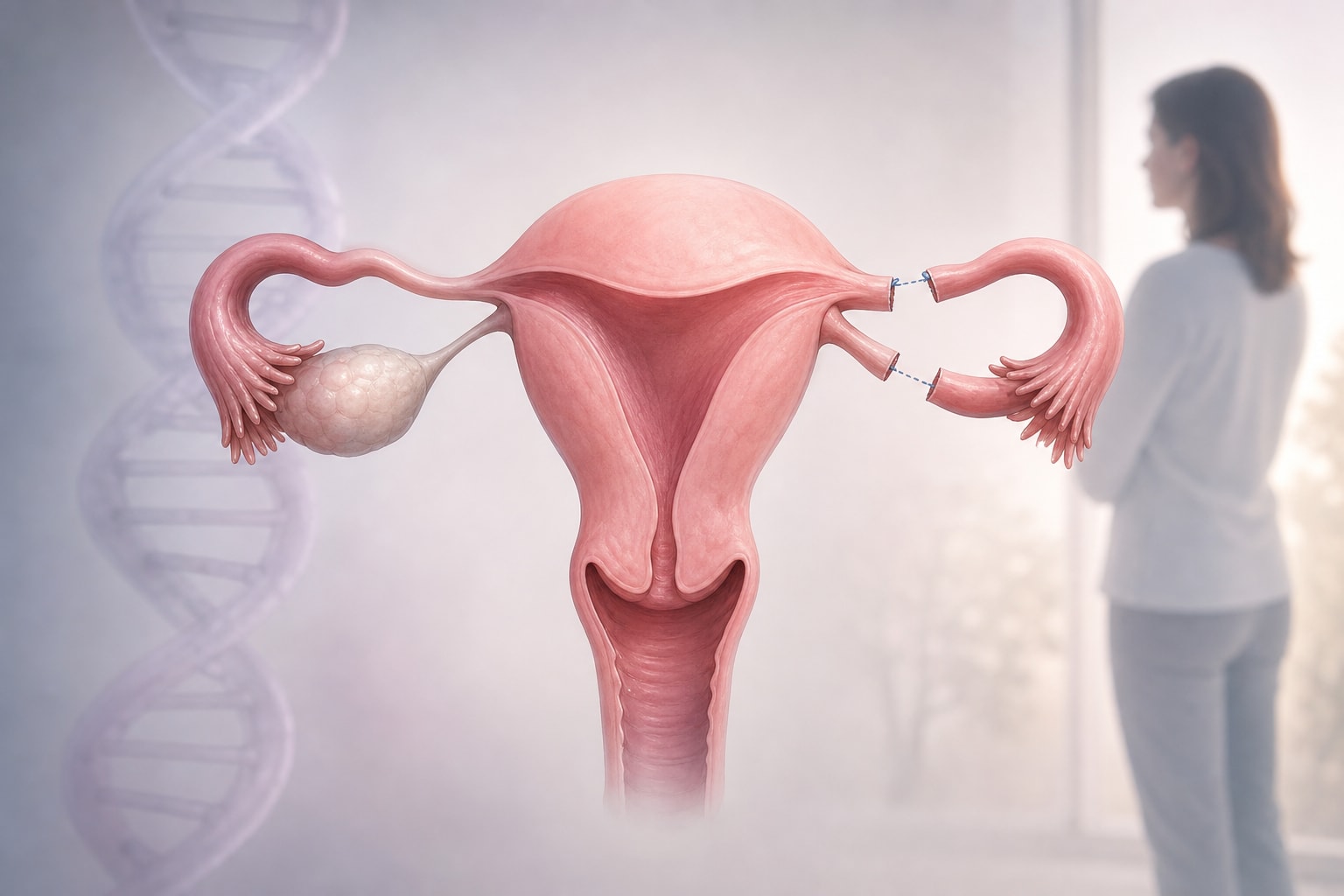
Clinical Report: Interval Salpingectomy: Is It Possible to Achieve Optimal Outcomes?
Overview
The WISP study indicates that interval salpingectomy with delayed oophorectomy (ISDO) may lead to better sexual function outcomes compared to traditional risk-reducing salpingo-oophorectomy (RRSO).
Background
Ovarian cancer, often originating in the fallopian tubes, poses significant risks, particularly for women with hereditary predispositions. Understanding the implications of different surgical strategies, such as RRSO and ISDO, is crucial for optimizing patient outcomes and quality of life. Recent studies have begun to compare these approaches, focusing on sexual function and overall well-being.
Data Highlights
Outcome
ISDO
RRSO
Worsening Sexual Function at 6 Months
17%
33%
Worsening Sexual Function at 12 Months
18%
39%
Occult Cancer Detection Rate
1.8%
N/A
No Interval Cancers (73 months)
Yes
N/A
Key Findings
ISDO was associated with improved sexual function compared to RRSO at 6 and 12 months.
At 24 months, the difference in sexual function between ISDO and RRSO was not significant.
Only 1.8% of participants undergoing surgery had occult cancer.
No interval cancers were reported during 73 months of follow-up.
Clinical Implications
The findings indicate that further studies are warranted to explore the outcomes of ISDO and RRSO.
Conclusion
Further studies are warranted to solidify the findings regarding ISDO and RRSO.