Predictive model for in-hospital acute cerebral infarction in patients with acute gastrointestinal bleeding: a retrospective cohort study - Report - MDSpire
Advertisement
Predictive model for in-hospital acute cerebral infarction in patients with acute gastrointestinal bleeding: a retrospective cohort study
Clinical Report: Predictive Model for In-Hospital Acute Cerebral Infarction
Overview
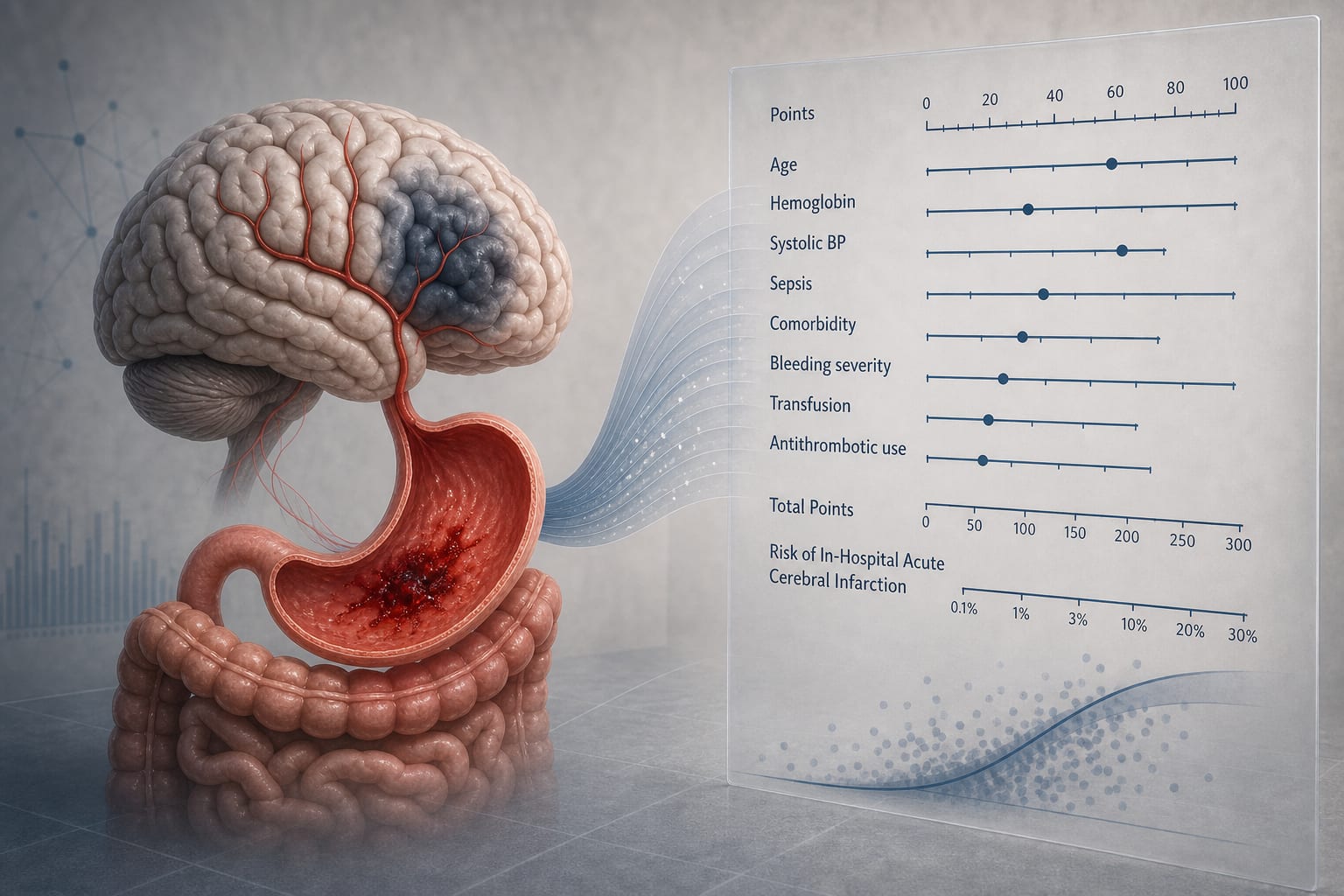
This study identifies a significant association between acute gastrointestinal bleeding (GIB) and increased rates of in-hospital acute cerebral infarction (ACI). A nomogram developed from clinical variables demonstrates strong predictive capability for assessing ACI risk in patients with GIB.
Background
Acute gastrointestinal hemorrhage is a common emergency that can lead to severe complications, including anemia and hemodynamic instability. Understanding the relationship between GIB and acute cerebral infarction is crucial, as both conditions can significantly impact patient outcomes. This study aims to fill the gap in knowledge regarding the risk factors associated with in-hospital ACI in patients experiencing GIB.
Data Highlights
Group
In-Hospital ACI Incidence
GIB Cohort
7.8%
Non-GIB Cohort
5.2%
Key Findings
In-hospital ACI was significantly more common in the GIB cohort (7.8%) compared to the non-GIB cohort (5.2%, p < 0.001).
Independent predictors of in-hospital ACI in the GIB cohort included antecedent cerebral infarction (OR 13.47), sepsis/infection (OR 2.43), and cerebral hemorrhage (OR 3.48).
Age and duration of hospital admission were also significant predictors, with odds ratios of 1.05 and 1.04 per year/day, respectively.
The developed nomogram showed strong internal validation with an AUC of 0.864.
Further external validation of the nomogram is necessary before clinical implementation.
Clinical Implications
Healthcare providers should be aware of the increased risk of acute cerebral infarction in patients with acute gastrointestinal bleeding. The nomogram developed in this study can assist in identifying high-risk patients, enabling targeted monitoring and intervention strategies.
Conclusion
The findings highlight the critical link between gastrointestinal bleeding and acute cerebral infarction, emphasizing the need for effective risk stratification tools in clinical practice.