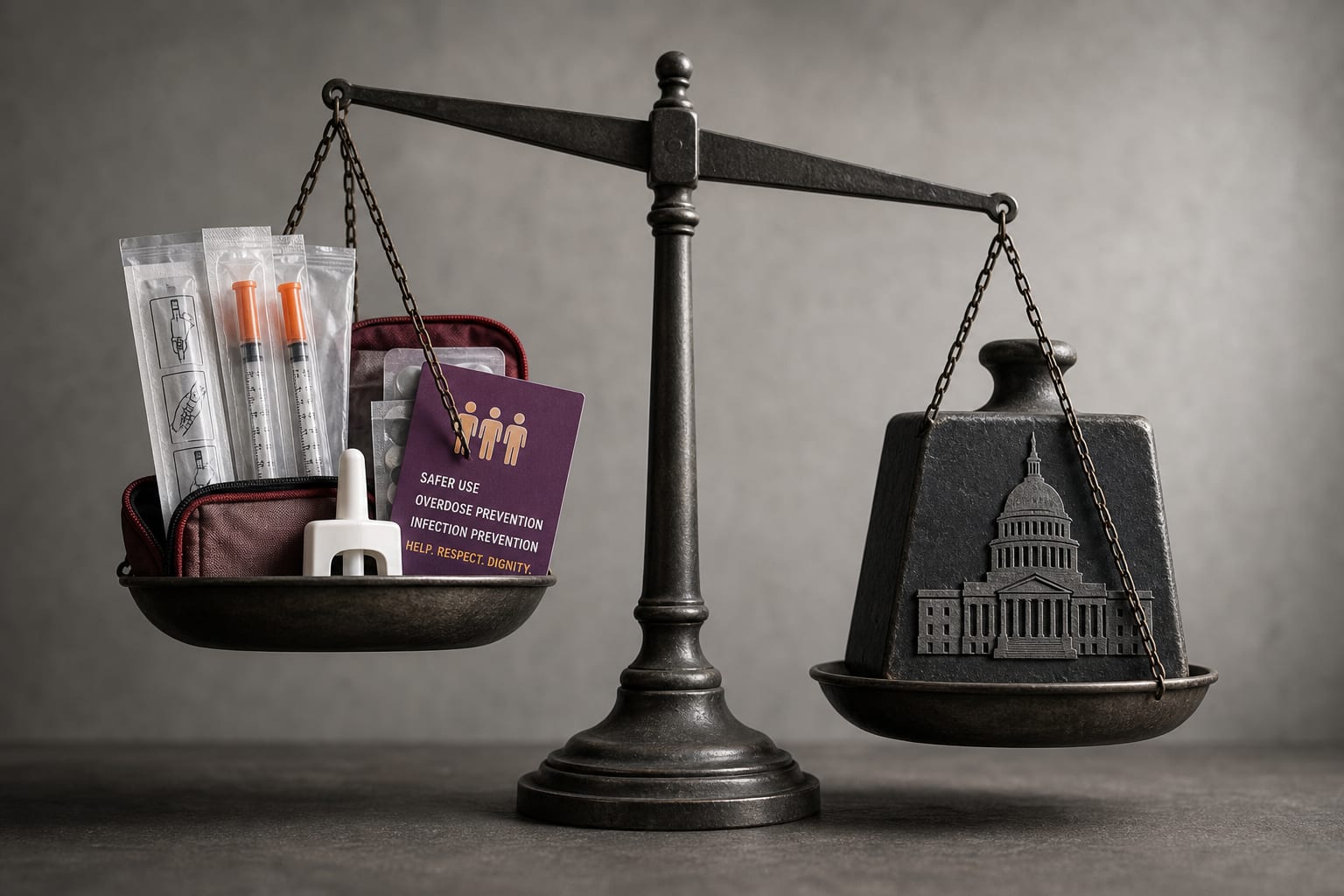
Anticipated Effects of Decreasing Federal Support for Syringe Exchange Programs
Overview
This report examines the potential impact of reduced federal funding for syringe exchange programs (SSPs) on overdose mortality among persons who inject drugs in the U.S. Using a microsimulation model, the study explores various scenarios of funding disruption and its implications for public health.
Background
The opioid epidemic has led to significant morbidity and mortality in the U.S., necessitating effective harm reduction strategies. Syringe service programs (SSPs) play a critical role in reducing overdose risks and infectious disease transmission among people who inject drugs. However, these programs face funding challenges that could be exacerbated by recent federal policy changes.
Data Highlights
The study utilized a validated microsimulation model to assess the outcomes of federal funding reductions for SSPs over a five-year period, comparing scenarios of low and high service disruptions.
Key Findings
SSPs are underfunded, with only 41 syringes distributed per person who injects drugs annually in North America.
Elimination of federal funding could lead to significant service reductions, particularly in rural areas.
Simulation modeling indicated that even a modest reduction in SSP services could adversely affect mortality rates among persons who inject drugs.
Historical context shows that federal funding bans have previously led to increased HIV outbreaks among this population.
Current federal support for SSPs has been crucial in maintaining access to harm reduction services.
Clinical Implications
Healthcare providers should be aware of the potential consequences of reduced federal funding for SSPs, as it may limit access to critical harm reduction services. Continued advocacy for funding and support of SSPs is essential to mitigate the risks of overdose and infectious diseases.
Conclusion
The anticipated effects of decreased federal support for SSPs could significantly impact public health outcomes related to the opioid epidemic. Maintaining robust funding for these programs is vital to ensure continued access to harm reduction services.
by Kirk B. Fetters, Pranav Padmanabhan, Kristina Yamkovoy, Xiaoyu Guan, Sarah E. Scott, Lauren Kerr, Kathleen Joseph, Gwenyth L. Day, Marina Plesons, Tyler S. Bartholomew, Hansel E. Tookes, Alia Al-Tayyib, Joshua A. Barocas