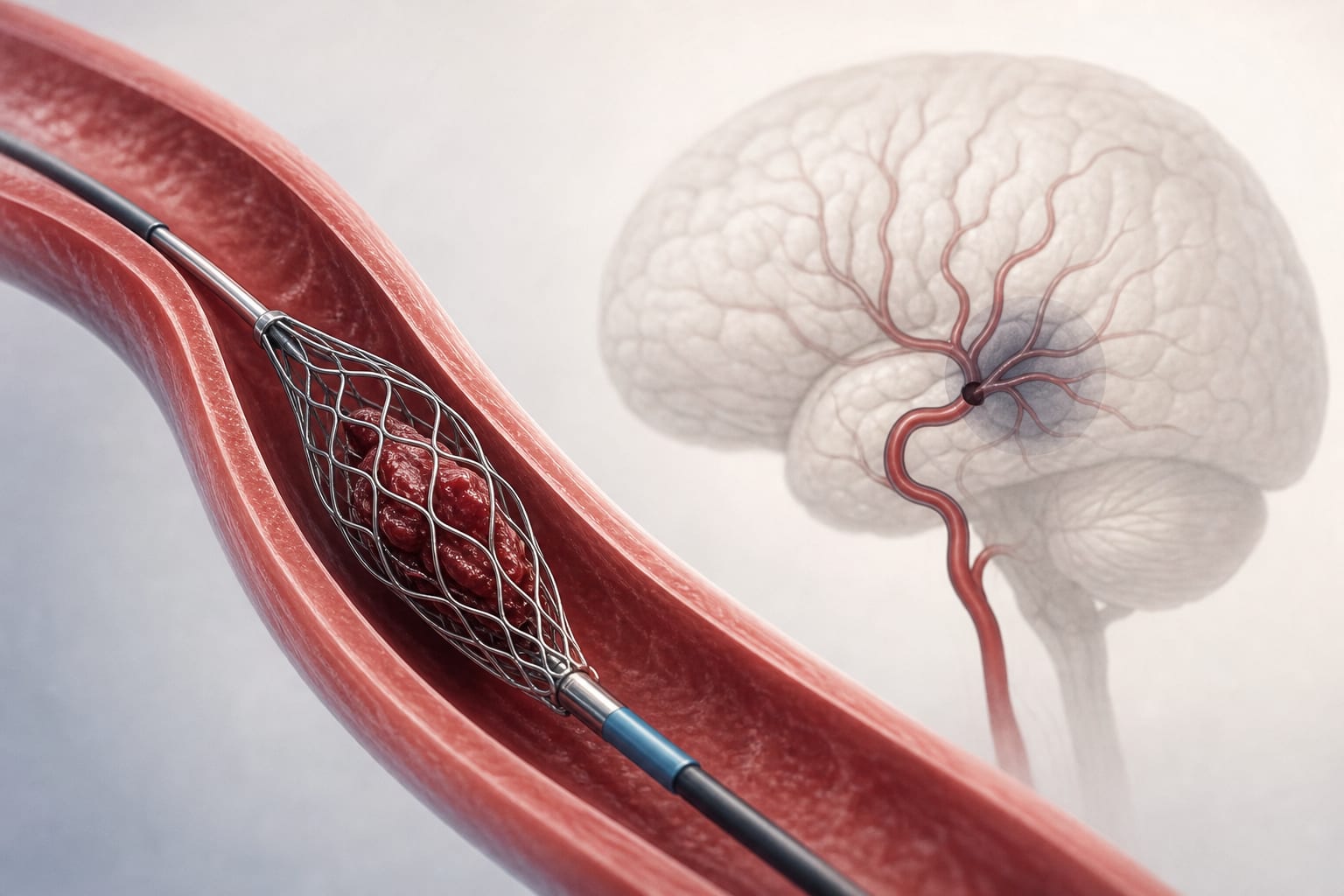
Clinical Report: Robotic Telerehabilitation for Upper Limb Recovery Following Stroke
Overview
The TRUST trial aims to evaluate the feasibility and effectiveness of home-based robotic telerehabilitation for upper limb recovery in stroke patients. This innovative approach seeks to address the rehabilitation gap post-discharge, potentially transforming stroke care delivery.
Background
Stroke is a leading cause of long-term disability, with upper limb impairment affecting 39% of survivors at six months. The decline in therapy intensity after hospital discharge poses significant challenges to recovery. Home-based robotic therapy could provide an effective solution to enhance rehabilitation access and outcomes for stroke survivors.
Data Highlights
No numerical data available in the provided source material.
Key Findings
The TRUST trial will recruit 54 adults with moderate upper limb impairment post-stroke.
Participants will undergo four weeks of intensive home-based training with the H-Man robot.
Weekly telemonitoring will complement the robotic training and conventional occupational therapy sessions.
Primary outcome measures include compliance rates and secondary outcomes assess motor impairment, functional capacity, and quality of life.
Preliminary feasibility testing indicates acceptable device usability and caregiver support requirements.
Clinical Implications
The TRUST trial highlights the potential for integrating robotic telerehabilitation into standard post-stroke care, addressing the critical rehabilitation gap. Successful outcomes could lead to broader implementation of technology-enabled therapies in resource-limited settings.
Conclusion
The TRUST trial represents a significant step towards enhancing stroke rehabilitation through innovative home-based robotic therapy. Results will inform future strategies for integrating such interventions into routine care.
by Ravi Shankar, Silvana Xinyi Choo, Zhenzhen Chen, Christopher Wee Keong Kuah, Tegan Kate Plunkett, Chwee Yin Ng, Sijie Lin, Kim Huat Goh, Emily Yee, Xiaojia Ge, Doris Zhang, Wei Binh Chong, Jaclyn Ai Mei Low, Megan Si En Lau, Xin Yi Lim, Saung Yupar Naing, Lian Ting Wong, Bernardo Noronha, Gabriel Aguirre-Ollinger, Asif Hussain, Poo Lee Ong, Karen Sui Geok Chua