Clinical Report: Contact Lenses as Optical Interventions for Myopia Management
Overview
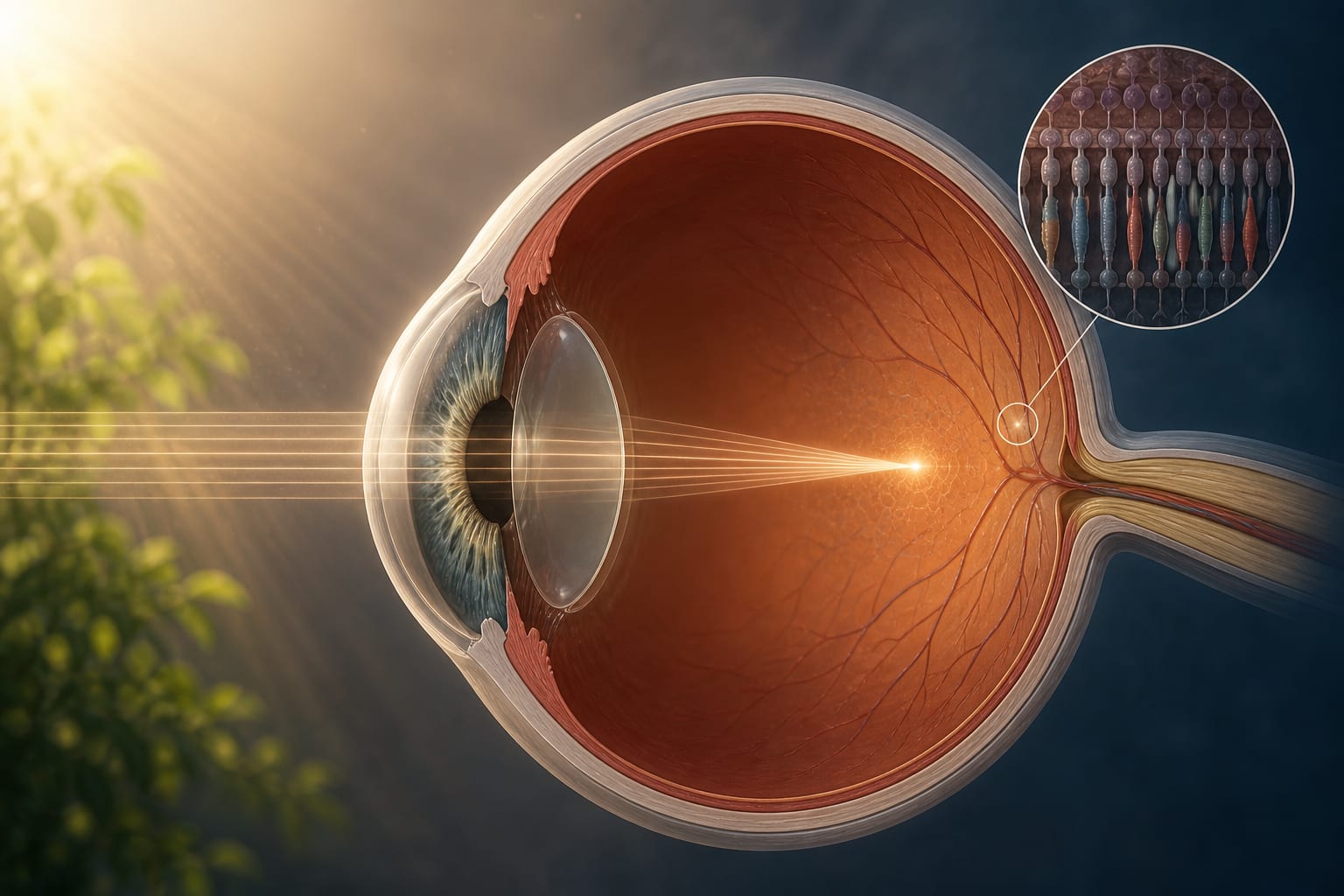
Modern contact lenses for myopia management aim to slow axial elongation by modifying the optical environment of the eye. These lenses are designed to influence retinal cues that regulate ocular growth, making them more than just corrective devices.
Background
The management of myopia is crucial as it is associated with significant ocular complications, including retinal detachment and macular degeneration. Traditional methods primarily focused on correcting refractive errors, but recent advancements in contact lens technology offer new strategies to address the underlying mechanisms of myopia progression.
Data Highlights
No specific numerical data provided in the source material.
Key Findings
Modern contact lenses are designed to influence retinal cues involved in ocular growth regulation.
Orthokeratology reshapes the cornea to provide clear vision while slowing axial elongation.
Randomized trials show orthokeratology can slow axial elongation by approximately 40-60% over two years (source needed).
Choroidal thickness may serve as an early biomarker for treatment response in myopia management.
Different optical designs of lenses can lead to varying clinical performance and treatment efficacy.
Clinical Implications
Clinicians should consider the optical treatment profile of contact lenses in addition to traditional fitting parameters.
Conclusion
The evolution of contact lenses as optical interventions represents a significant advancement in myopia management.