Chemotherapy combined with immunotherapy vs. chemotherapy: comparison of safety and efficacy in adjuvant therapy for intrahepatic cholangiocarcinoma - Report - MDSpire
Advertisement
Chemotherapy combined with immunotherapy vs. chemotherapy: comparison of safety and efficacy in adjuvant therapy for intrahepatic cholangiocarcinoma
Comparison of Safety and Effectiveness of Chemotherapy with Immunotherapy
Overview
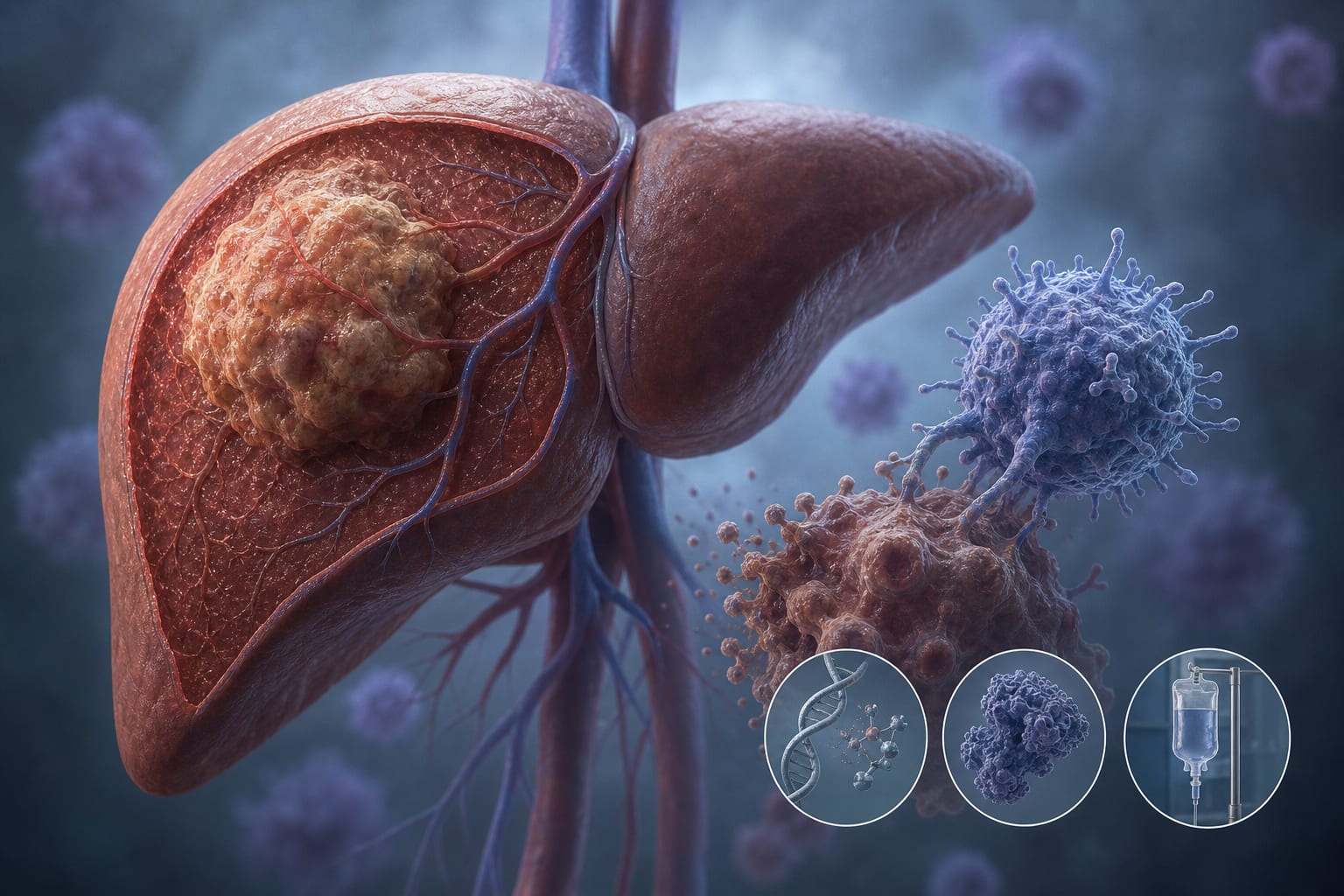
This study evaluates the efficacy and safety of various adjuvant treatment regimens for intrahepatic cholangiocarcinoma (ICC) based on a retrospective analysis of 232 patients. Significant differences in recurrence-free survival (RFS) and overall survival (OS) were noted between the chemotherapy groups and those undergoing surgical treatment alone, with capecitabine showing a more favorable safety profile compared to GEMOX.
Background
Intrahepatic cholangiocarcinoma (ICC) is a highly aggressive liver malignancy with high recurrence rates post-surgery. Current guidelines recommend adjuvant chemotherapy, but data specific to ICC remain limited. This study aims to investigate the efficacy and safety of chemotherapy and immunotherapy combinations in improving patient outcomes.
Data Highlights
Group
RFS (p-value)
OS (p-value)
Grade 3-4 Adverse Reactions
CH group (GEMOX and capecitabine)
0.045
0.0084
17.1% (n=7)
Capecitabine vs GEMOX
0.73
0.47
N/A
Key Findings
Significant differences in RFS and OS were observed between the CH group and non-AT group.
No significant difference in RFS or OS between capecitabine and GEMOX.
The GEMOX group had a higher incidence of grade 3-4 adverse reactions.
No significant differences in RFS or OS between chemotherapy combined with immunotherapy and chemotherapy alone.
Subgroup analysis indicated that patients with CA19-9 >39 U/ml and ALP >100 U/L may have different outcomes with chemotherapy combined with immunotherapy.
Clinical Implications
The findings suggest that while capecitabine may offer a safer profile compared to GEMOX, the addition of immunotherapy does not provide overall benefit in the studied cohort. Clinicians should consider individual patient markers such as CA19-9 and ALP levels when determining treatment strategies.
Conclusion
This study presents findings regarding the efficacy of adjuvant therapies in ICC, particularly in specific patient subgroups, and highlights the need for further investigation.