Clinical Report: Therapeutic Roles and Clinical Effectiveness of IL-5/IL-5Rα Inhibitors
Overview
IL-5/IL-5Rα inhibitors have shown significant clinical effectiveness in managing eosinophilia-related disorders, particularly severe eosinophilic asthma (SEA), chronic rhinosinusitis with nasal polyps (CRSwNP), eosinophilic granulomatosis with polyangiitis (EGPA), and idiopathic hypereosinophilic syndrome (iHES). These biologics reduce exacerbation rates and the need for corticosteroids, with a generally reassuring safety profile.
Background
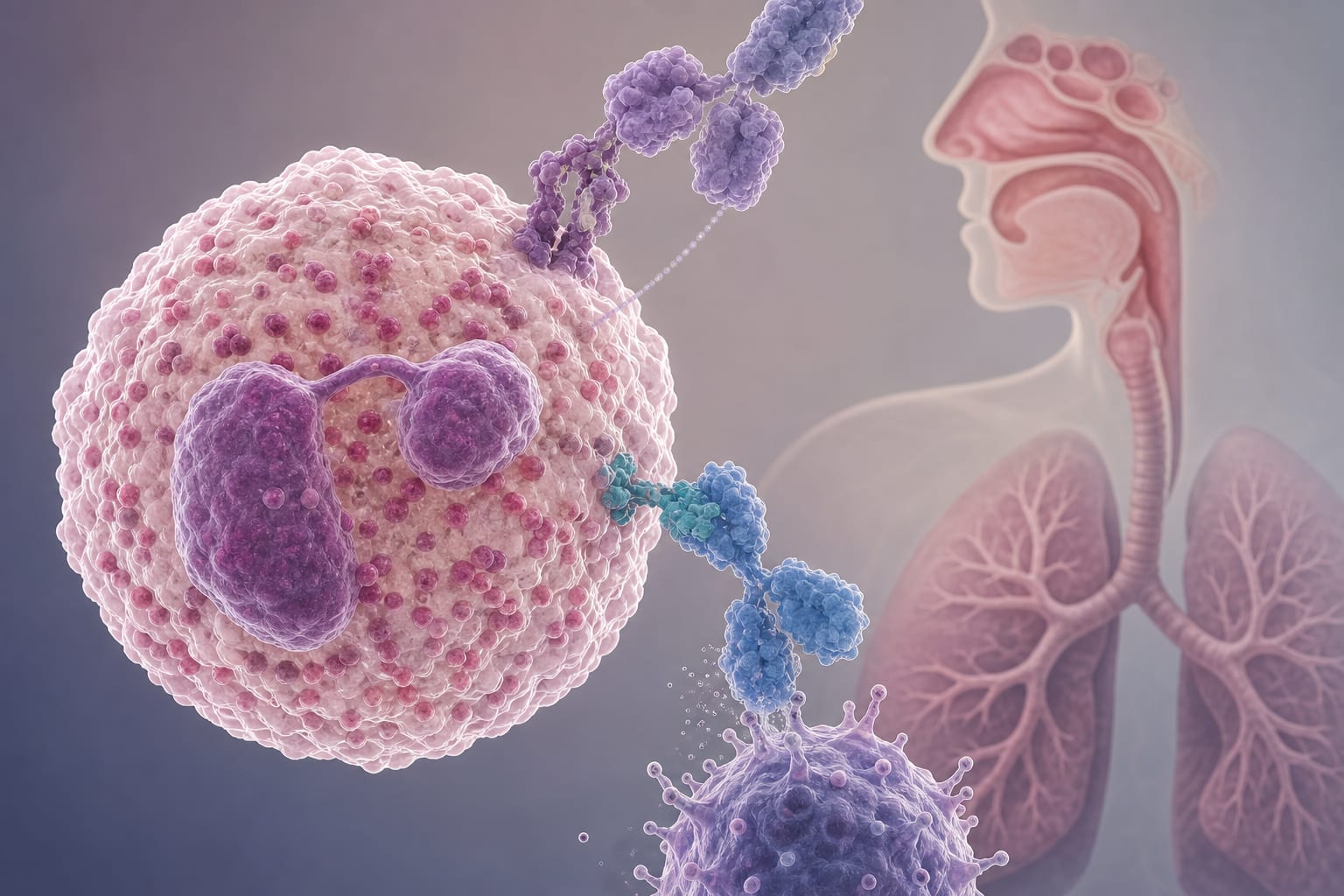
Eosinophils play a dual role in immune response and inflammation, making their regulation critical in various eosinophil-associated diseases. The IL-5/IL-5Rα pathway has emerged as a vital therapeutic target, leading to the development of biologics that have transformed treatment approaches. Understanding the efficacy and safety of these agents is essential for optimizing patient outcomes in eosinophilic disorders.
Data Highlights
No specific numerical data provided in the source material.
Key Findings
IL-5 is crucial for eosinophil differentiation and survival, making it a target for therapy.
Mepolizumab is effective in reducing exacerbations and is approved for SEA, CRSwNP, EGPA, and HES.
Reslizumab improves exacerbation rates and lung function in SEA and is FDA and EMA approved for this condition.
Benralizumab induces rapid eosinophil depletion and is effective in SEA and EGPA, with a strong safety profile.
Depemokimab offers a long-acting treatment option, approved for SEA and CRSwNP, with reduced exacerbation rates.
Safety data indicate most adverse events are mild to moderate, with no consistent major safety signals identified.
Clinical Implications
Healthcare professionals should consider IL-5/IL-5Rα inhibitors as core treatment options for patients with eosinophilia-related disorders, particularly those with severe asthma and chronic rhinosinusitis. Ongoing assessment of patient response and potential switching between biologics may enhance treatment efficacy and safety.
Conclusion
IL-5/IL-5Rα inhibitors represent a significant advancement in the management of eosinophilia-related disorders, with demonstrated efficacy and a favorable safety profile. Continued research and clinical application will further refine their use in practice.