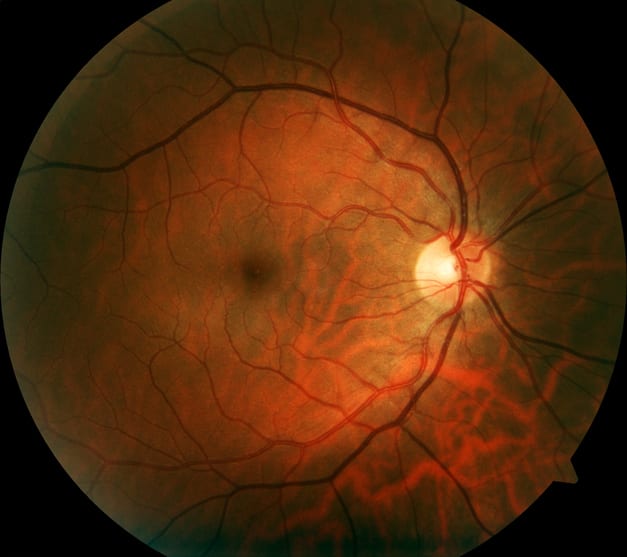
Clinical Report: Creation of a nomogram for assessing the risk of rapidly advancing diabetic retinopathy
Overview
A nomogram for predicting rapidly progressive diabetic retinopathy (PDR) in type 2 diabetes mellitus (T2DM) was developed and validated. The model incorporates multiple risk factors.
Background
Rapidly progressive diabetic retinopathy is a severe complication of type 2 diabetes mellitus, leading to significant visual impairment and blindness. Understanding the multifactorial nature of PDR progression is essential.
Data Highlights
Model
AUC
Random Forest
0.780
Gradient Boosting Machine
0.741
Multivariable Logistic Regression
0.698
Key Findings
Six independent risk factors for rapidly progressive DR were identified: diabetes duration, HbA1c, 24-hour urinary protein, GDF15, DRSS grade, and foveal avascular zone area.
The Random Forest model achieved the highest validation AUC of 0.780.
Calibration curves indicated good consistency between predicted and observed probabilities.
Decision curve analysis showed high clinical net benefit for the nomogram model.
All identified predictors were statistically significant (P < 0.05).
Clinical Implications
The developed nomogram can aid clinicians in identifying patients with T2DM who are at high risk for rapidly progressive diabetic retinopathy.
Conclusion
The integration of multiple clinical parameters into a nomogram provides a method for risk stratification in rapidly progressive diabetic retinopathy among individuals with type 2 diabetes mellitus.
A retrospective database study found a low absolute incidence but higher relative hazard of ischemic optic neuropathy following semaglutide initiation.