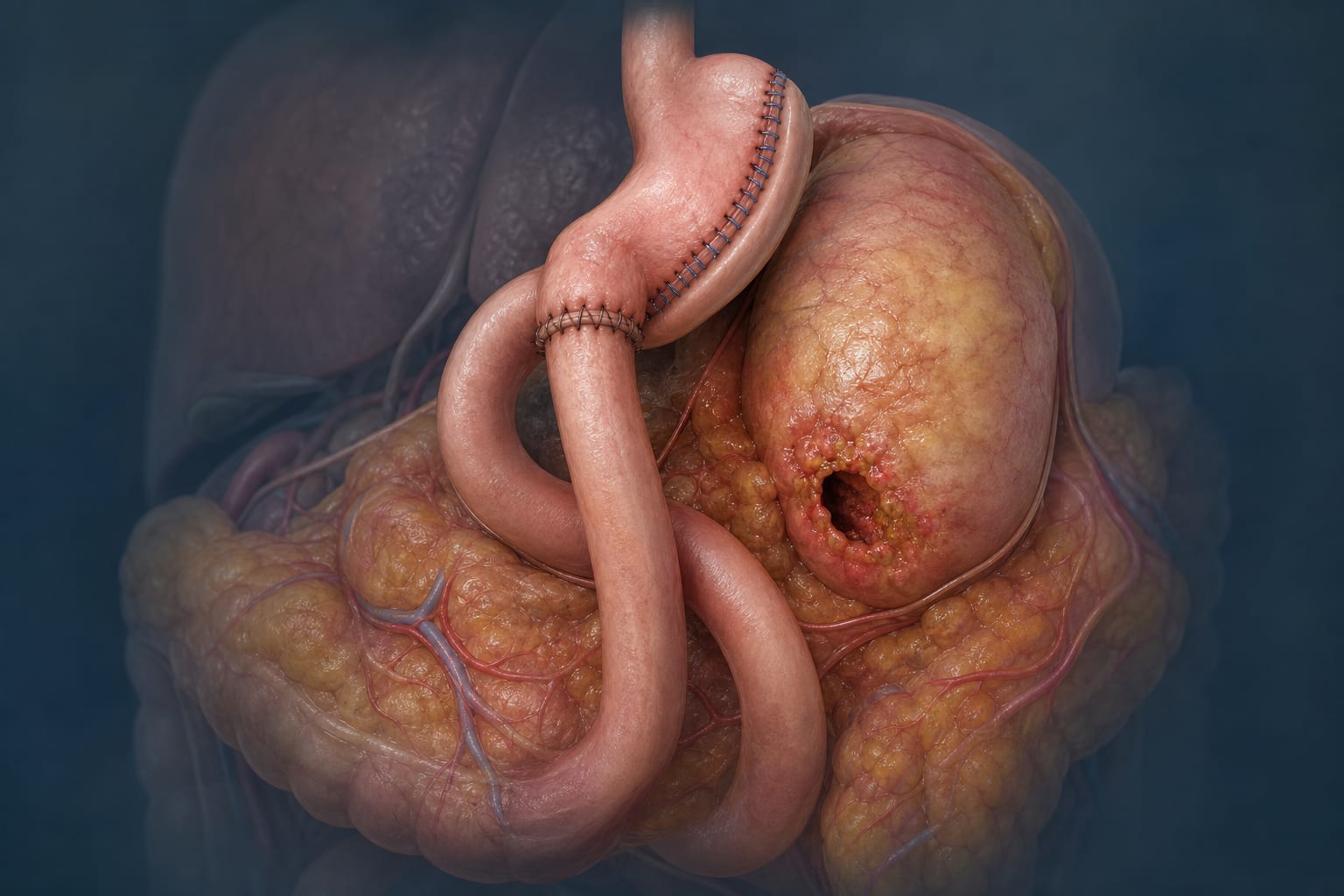
Changes in the Composition of Oral and Intestinal Microbiota After Sleeve Gastrectomy and Roux-En-Y Gastric Bypass and Their Impact on Outcomes of Bariatric Surgery - Report - MDSpire
Advertisement
Changes in the Composition of Oral and Intestinal Microbiota After Sleeve Gastrectomy and Roux-En-Y Gastric Bypass and Their Impact on Outcomes of Bariatric Surgery
Alterations in Oral and Gut Microbiota After Sleeve Gastrectomy and Roux-En-Y Gastric Bypass
Overview
This study assessed changes in oral and gut microbiota composition 6 months after sleeve gastrectomy (SG) and Roux-en-Y gastric bypass (RYGB) in patients with morbid obesity. It also explored the relationship between these microbiota changes and weight-loss outcomes, highlighting potential microbial influences on bariatric surgery success.
Background
Obesity is associated with altered gut microbiota that increases intestinal permeability and chronic inflammation, contributing to obesity-related comorbidities. Bariatric surgery, particularly SG and RYGB, is the most effective treatment for morbid obesity, inducing weight loss through multiple mechanisms. Previous studies, mostly in animal models, have shown that bariatric surgery alters gastrointestinal microbiota, but data on human oral and gut microbiota changes post-surgery remain limited. Understanding these microbial shifts may reveal new strategies to optimize bariatric surgery outcomes.
Data Highlights
The study included patients aged 18-65 years with BMI ≥35 kg/m2 with comorbidities or BMI ≥40 kg/m2 undergoing SG or RYGB. Biological samples (oral swabs and feces) were collected preoperatively and 6 months postoperatively. Weight-loss outcomes were measured by % total body weight loss (%TBWL), % excess weight loss (%EWL), and % excess BMI loss (%EBMIL). Patients were classified as successful (≥50%EWL) or unsuccessful (<50%EWL) responders at 6 months. Rigorous sample collection, storage, and DNA sequencing protocols were employed to ensure data integrity.
Key Findings
Bariatric surgery induced significant changes in the composition of oral and gut microbiota 6 months postoperatively.
Differences in microbiota alterations were observed between SG and RYGB, reflecting their distinct anatomical and physiological impacts.
Patients achieving successful weight loss (≥50%EWL) exhibited distinct microbiota profiles compared to those with less favorable outcomes.
Alterations in specific bacterial taxa in the oral cavity and large intestine correlated with weight-loss efficacy, suggesting a role of microbiota in mediating bariatric surgery benefits.
Strict exclusion criteria and standardized sample handling minimized confounding factors such as recent antibiotic or probiotic use and oral or gastrointestinal diseases.
Clinical Implications
Monitoring changes in oral and gut microbiota may provide valuable biomarkers for predicting and enhancing bariatric surgery outcomes. Tailoring perioperative management to modulate microbiota composition could optimize weight loss and reduce obesity-related complications. Further research is warranted to develop microbiota-targeted interventions as adjuncts to bariatric procedures.
Conclusion
This study demonstrates that SG and RYGB significantly alter oral and gut microbiota composition, with these changes associated with weight-loss success at 6 months. Understanding microbiota dynamics post-bariatric surgery may inform personalized treatment strategies to improve patient outcomes.
References
1 -- Gut microbiota and obesity-related inflammation
2,3,4 -- Bariatric surgery as effective treatment for morbid obesity
5 -- Prevalence of SG and RYGB procedures
6 -- Mechanisms of weight loss after bariatric surgery
7 -- Animal studies on microbiota changes post-bariatric surgery
8 -- Microbiota studies in large intestine and animal models
9 -- Anatomical differences in SG and RYGB affecting microbiota
10 -- Bariatric surgery eligibility criteria
11 -- STROBE checklist for observational studies
12,13 -- Definitions of successful weight loss after bariatric surgery
14,15 -- Protocols for sample storage and DNA stability
16 -- Previous protocol testing for sample handling