Clinical Report: The Role of Platelet Activity Following Major Trauma
Overview
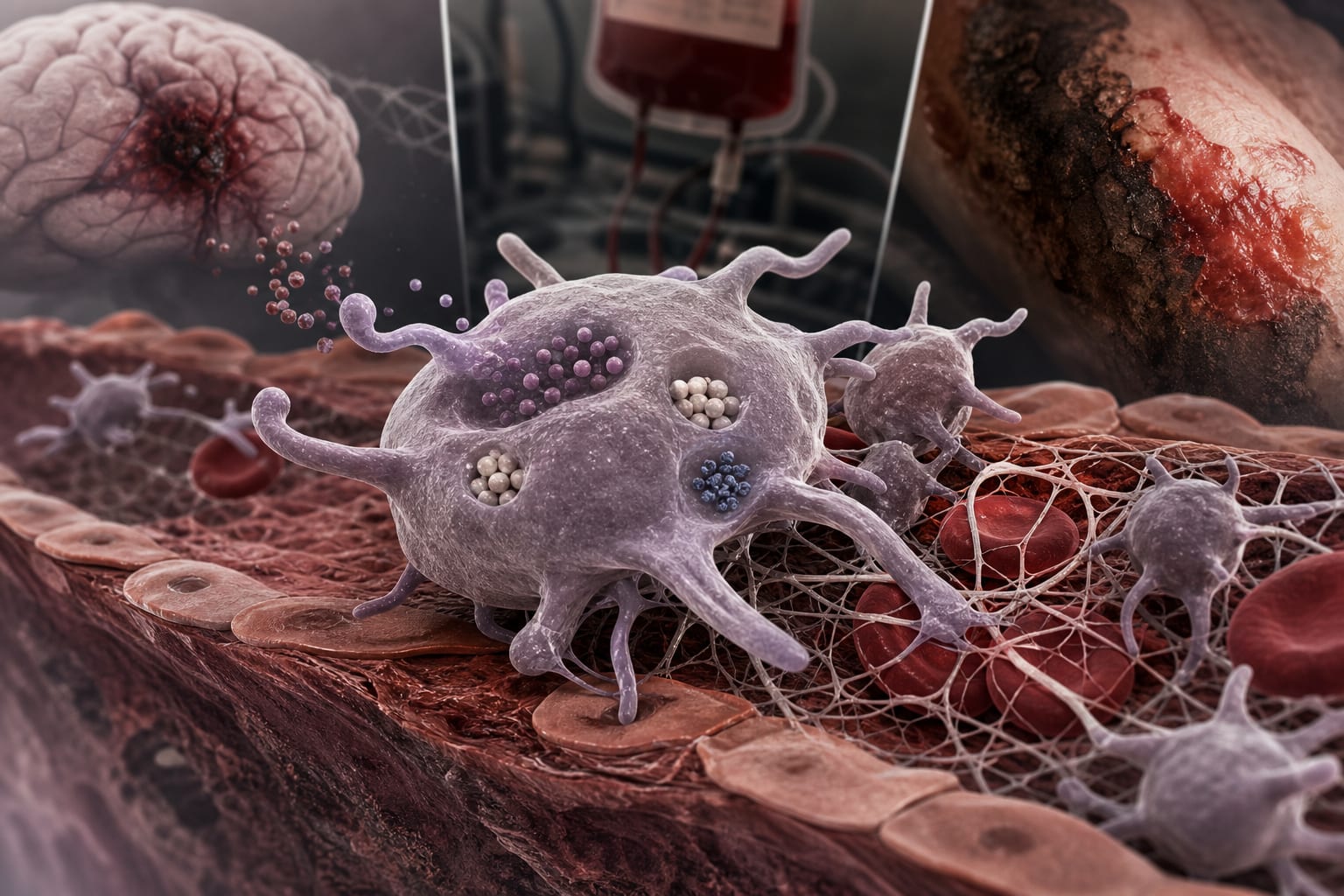
This review examines the impact of various traumatic injuries on platelet function and the resulting dysfunctions. It highlights the interconnected pathways through which trauma affects hemostatic and immune responses.
Background
Trauma is a leading cause of mortality and disability worldwide, significantly affecting hemostatic balance and immune responses. Trauma-induced coagulopathy (TIC) is prevalent among trauma patients, leading to increased mortality. Understanding the mechanisms behind trauma-related platelet dysfunction is crucial.
Data Highlights
No numerical data or trial data presented in the article.
Key Findings
Platelets play a critical role in both hemostasis and inflammation following trauma.
Different types of trauma, such as traumatic brain injury and hemorrhagic shock, lead to distinct platelet dysfunctions.
Traumatic brain injury is associated with localized hyperfibrinolysis and platelet dysfunction.
Hemorrhagic shock often presents with consumptive coagulopathy and dilutional thrombocytopenia.
Severe burns result in platelet hyperactivation followed by exhaustion and suppression of bone marrow production.
Clinical Implications
Understanding the specific platelet dysfunctions associated with different types of trauma is important for trauma care.
Conclusion
The review provides an overview of trauma-related platelet abnormalities.