Validation of a portable video head impulse test using an iPod touch and an oral stabilization three-dimensional (3D) - printed mount: a method-comparison study - Report - MDSpire
Advertisement
Validation of a portable video head impulse test using an iPod touch and an oral stabilization three-dimensional (3D) - printed mount: a method-comparison study
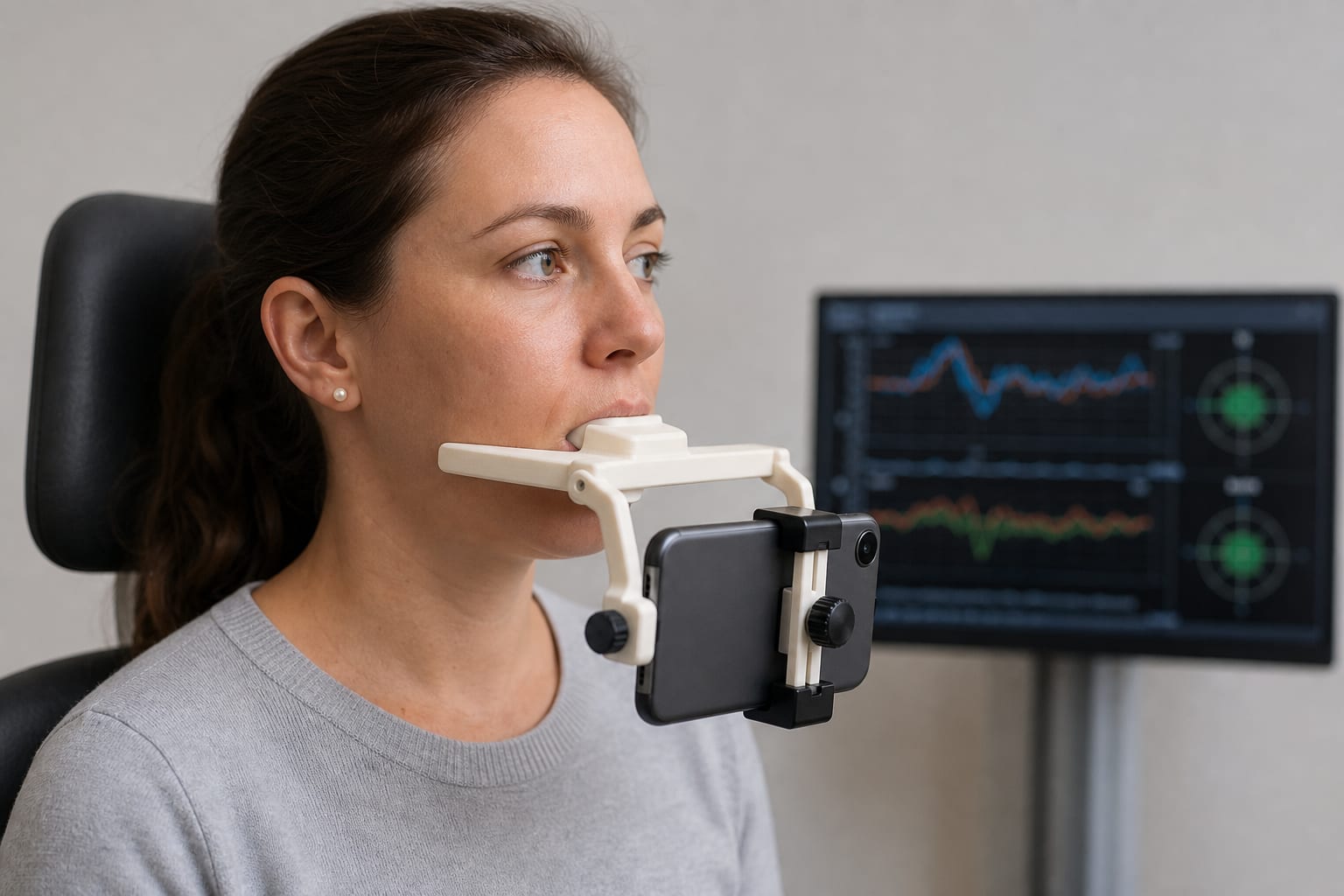
Clinical Report: Assessment of a Portable Video Head Impulse Testing System
Overview
This study evaluates a portable video head impulse testing (vHIT) system using an iPod touch and a custom 3D-printed oral stabilization mount. The portable system demonstrated a mean laterality difference of 0.453, compared to 0.518 for a medical-grade device, with a between-device difference of -0.065 (95% CI: -0.149 to 0.018).
Background
Video head impulse testing (vHIT) is crucial for assessing vestibular function, particularly in patients with suspected unilateral vestibular hypofunction. Access to quantitative vestibular testing is often limited due to equipment costs and availability.
Data Highlights
Device
Mean Laterality Difference
Between-Device Difference
False Positive Rate
Medical-grade
0.518 ± 0.180
-
0/28 ears
Portable vHIT
0.453 ± 0.118
-0.065 (95% CI: -0.149 to 0.018)
2/28 ears (7.1%)
Key Findings
The portable vHIT system detected laterality in unilateral vestibular hypofunction.
Mean laterality difference was 0.518 for the medical-grade device and 0.453 for the portable system.
The between-device difference was -0.065, supporting noninferiority.
In healthy volunteers, the false-positive rate was 0% for the medical-grade device and 14.3% for the portable system.
Bland–Altman analysis showed a bias of -0.065 with limits of agreement from -0.337 to 0.207.
Clinical Implications
Further studies are needed to refine quality control and improve individual-ear agreement.
Conclusion
The portable vHIT system meets noninferiority criteria compared to a medical-grade device. Larger studies are warranted to further validate these findings.
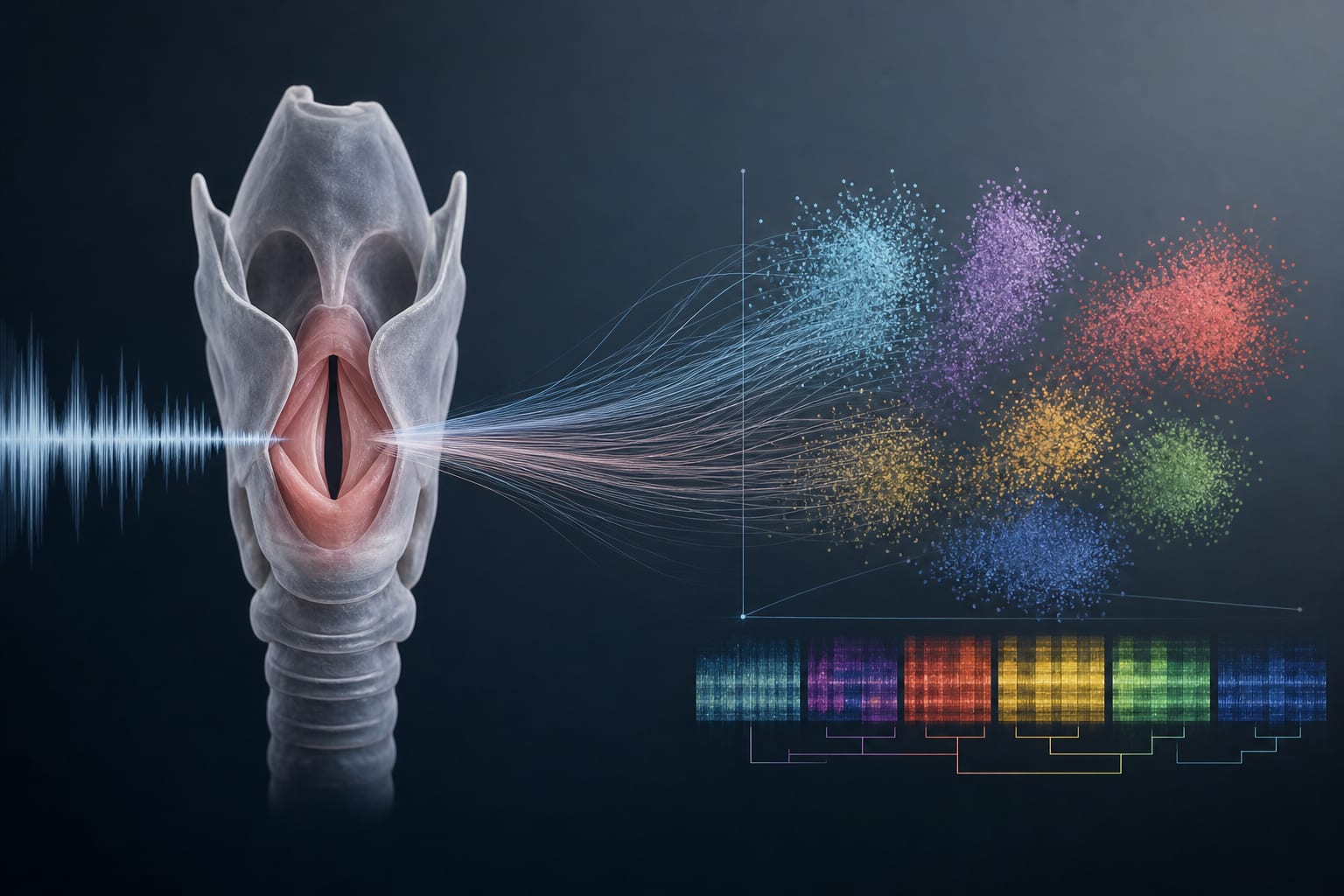
Review of 88 studies found AI systems achieved high accuracy for identifying abnormal voices, but performance declined among higher-level laryngeal disorder classifications.