Clinical Report: Genetic Variants Associated with Vitamin D and Breast Cancer Risk
Overview
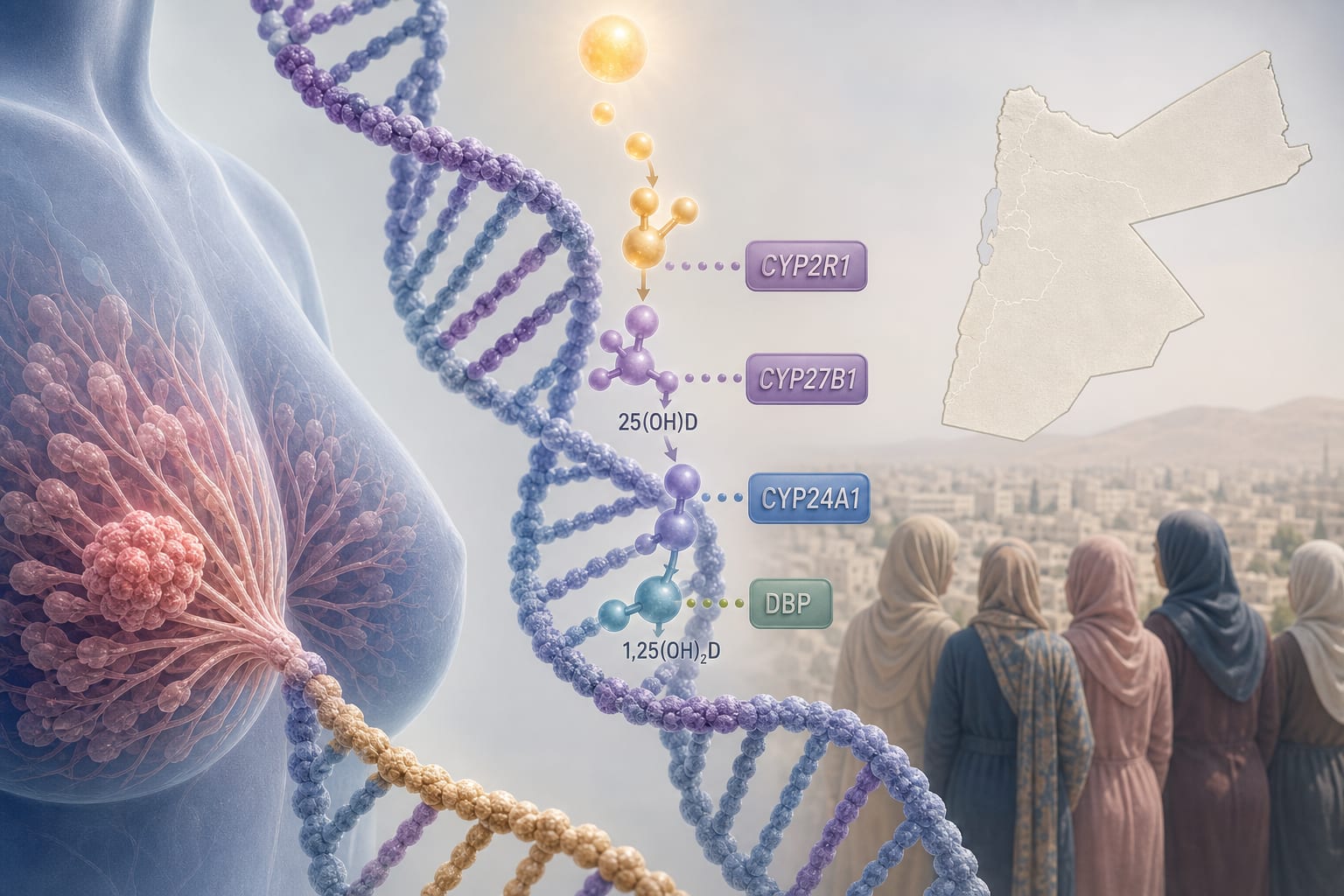
This study identifies significant associations between specific genetic variants in CYP2R1 and CYP27B1 and breast cancer risk among Jordanian women. The findings suggest that these variants may influence vitamin D metabolism and provide protective effects against breast cancer.
Background
Vitamin D plays a crucial role in various health conditions, including cancer. Genetic factors significantly influence vitamin D metabolism, and understanding these associations can help in identifying individuals at risk for breast cancer. This study focuses on the genetic variants that may alter vitamin D levels and their potential link to breast cancer susceptibility.
Data Highlights
Gene
Variant
Association
CYP2R1
rs12794714
GG genotype associated with reduced breast cancer risk
CYP27B1
rs10877012
TG genotype associated with reduced breast cancer risk
CYP2R1
rs10741657
No significant association
CYP24A1
rs2248359
No significant association
DBP
rs7041
No significant association
DBP
rs4588
No significant association
Key Findings
Significant association of CYP2R1 rs12794714 GG genotype with reduced breast cancer risk.
CYP27B1 rs10877012 TG genotype linked to lower breast cancer susceptibility.
No significant associations found for CYP2R1 rs10741657, CYP24A1 rs2248359, or DBP variants.
Genetic variants may influence vitamin D metabolism and its protective role against breast cancer.
Further studies are needed to validate these findings in larger populations.
Clinical Implications
Understanding the genetic variants associated with vitamin D metabolism can aid in identifying women at higher risk for breast cancer. These findings may inform future genetic screening and personalized prevention strategies.
Conclusion
The study highlights the potential role of specific genetic variants in influencing breast cancer risk through vitamin D metabolism. Further research is warranted to confirm these associations and their clinical relevance.
by Laith N. Al-Eitan, Maryam K. Alasmar, Mohammed S. Alorjani, Lina M. Sarhan, Sakher S. Sammour, Farah N. Aladwan, Hadil A. Al Refai, Sara S. Hasanat, Mira S. Quran, Mansour A. Alghamdi