Clinical Report: Salivary Proteomic Profiling Indicates Alterations Linked to Colorectal Cancer
Overview
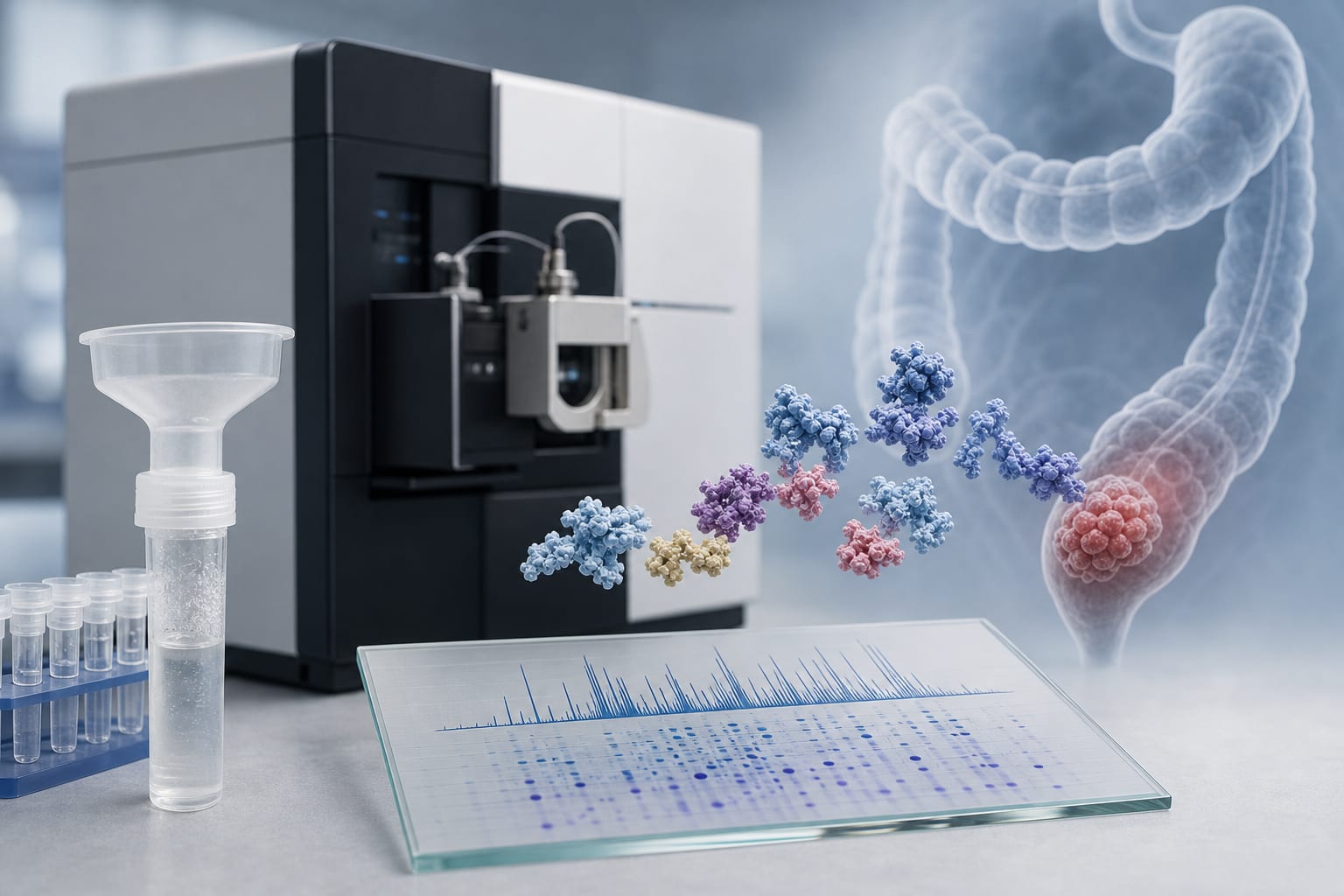
This study identifies salivary proteins with significant abundance differences between colorectal cancer (CRC) patients and non-cancer controls in an Iranian population.
Background
Colorectal cancer (CRC) is a leading cause of cancer-related mortality worldwide, with early detection being crucial for improving survival rates. Current screening methods, such as fecal immunochemical testing, have limitations.
Data Highlights
Parameter
Value
Total salivary proteins identified
2,456
Proteins with altered abundance
181
Key Findings
181 salivary proteins showed significantly different abundance between CRC patients and non-cancer controls.
Members of the small proline-rich protein (SPRR) family were identified as core markers for CRC.
Demographic subgroup analyses revealed protein abundance differences associated with age, sex, and smoking.
Gene set enrichment analysis indicated suppression of cytoskeletal and epithelial structural pathways.
Ingenuity Pathway Analysis identified an immune–metabolic network linked to inflammatory signaling and oxidative stress.
Clinical Implications
The findings suggest the potential of salivary proteomics as a non-invasive method for early CRC detection.
Conclusion
Salivary proteomic profiling may reflect systemic tumor–immune interactions associated with early-stage CRC.