Immunoglobulin G N-glycosylation predicts outcome in sepsis caused by pathogenic Gram-negative bacteria and Gram-positive bacteria: a nested case-control study - Report - MDSpire
Advertisement
Immunoglobulin G N-glycosylation predicts outcome in sepsis caused by pathogenic Gram-negative bacteria and Gram-positive bacteria: a nested case-control study
N-glycosylation of Immunoglobulin G as a Predictor of Outcomes in Sepsis
Overview
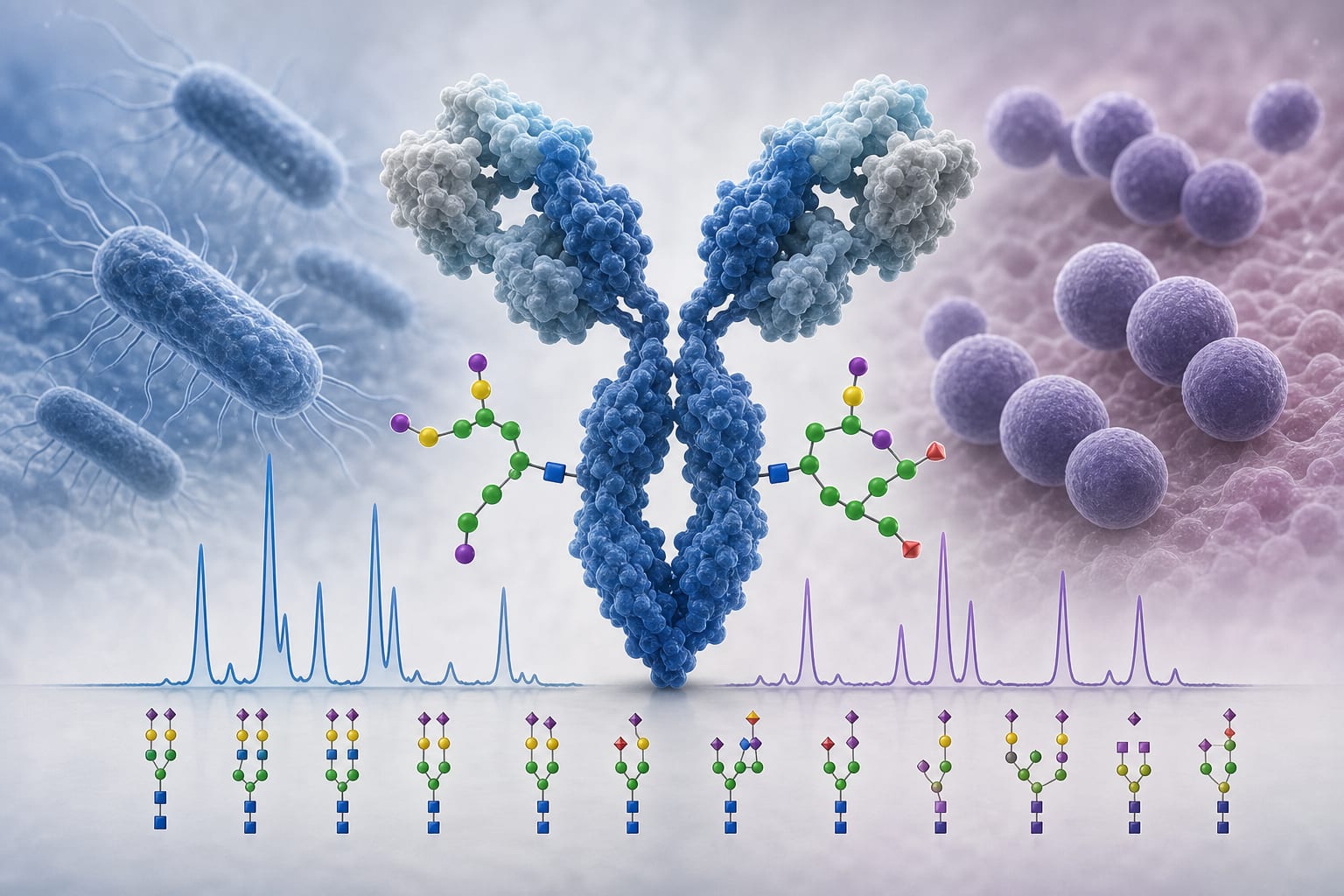
This study identifies IgG N-glycosylation profiles as biomarkers for distinguishing between Gram-negative and Gram-positive sepsis.
Background
Sepsis is a significant global health issue characterized by a dysregulated response to infection, leading to high mortality rates. Accurate differentiation between Gram-negative and Gram-positive bacterial infections is crucial for appropriate antibiotic therapy, yet reliable biomarkers for this distinction are currently lacking. The study explores the potential of IgG N-glycosylation as a biomarker for sepsis outcomes.
Data Highlights
Glycan Peaks
Gram-negative Sepsis
Gram-positive Sepsis
A2B
Decreased
Normal
M5
Decreased
Normal
FA2
Increased
Normal
FA2G2
Decreased
Normal
Key Findings
12 glycan peaks were significantly decreased in Gram-negative sepsis compared to Gram-positive sepsis.
Glycan FA2 was identified as a strong independent predictor of 90-day mortality (AUC = 0.792).
The combined model of FA2 and SOFA score improved predictive accuracy for mortality (AUC = 0.820).
Significant differences in fucosylation, sialylation, agalactosylation, and digalactosylation levels were observed between septic survivors and non-survivors.
The model incorporating glycan peaks and clinical markers showed excellent discrimination (AUC = 0.931 in training, 0.917 in validation).
Clinical Implications
IgG N-glycosylation profiles may serve as biomarkers for differentiating between Gram-negative and Gram-positive sepsis.
Conclusion
IgG N-glycosylation serves as a biomarker for pathogen differentiation and mortality prediction in sepsis.