Microglial Energy Source: The Role of Fructose Metabolism in Brain Function
Overview
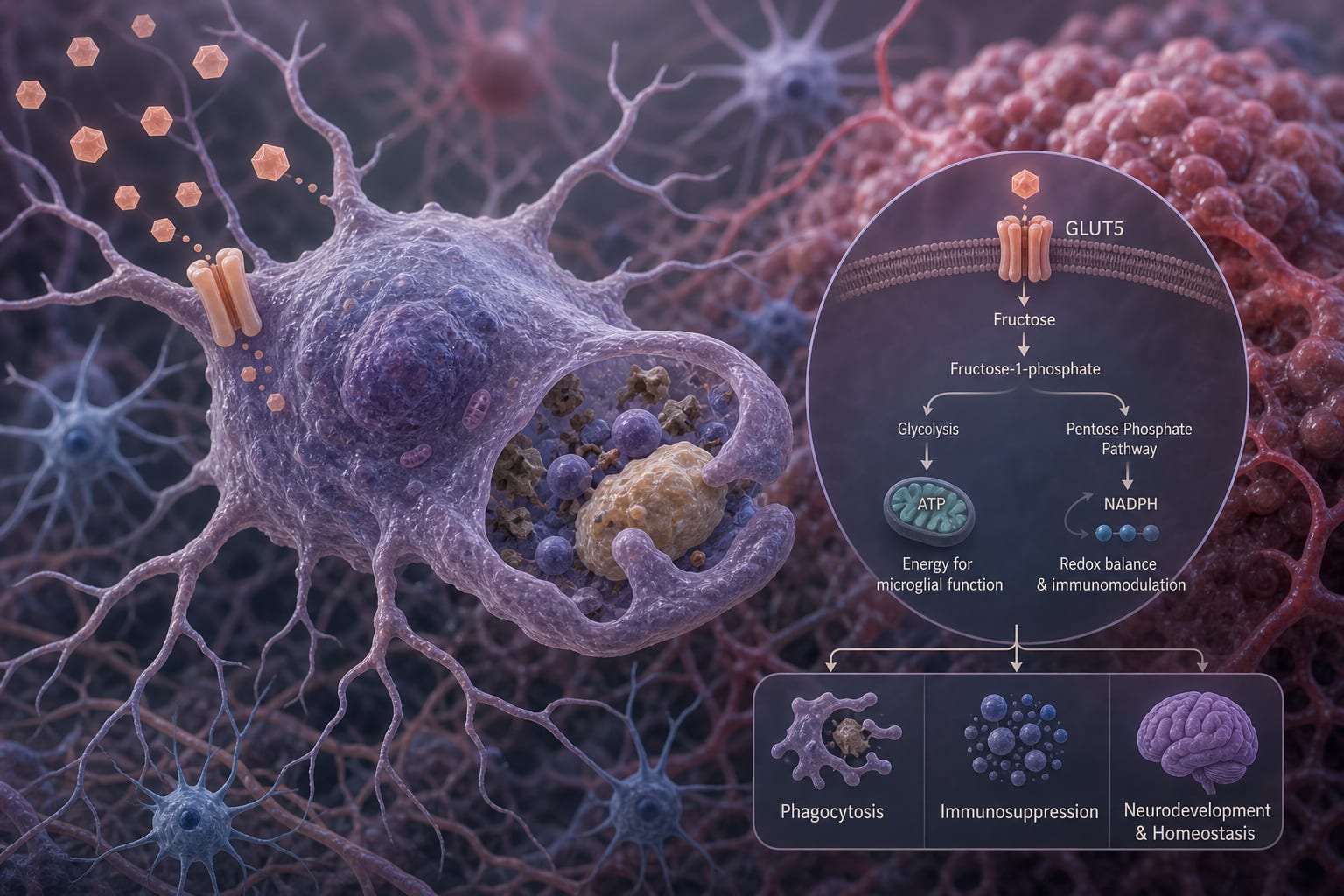
This review discusses the role of fructose metabolism in microglial function and its implications for brain health. It highlights the significance of the fructose transporter GLUT5 in shaping microglial behavior.
Background
Microglia are essential immune cells in the central nervous system (CNS) that play critical roles in maintaining homeostasis and responding to injury. Understanding their metabolic pathways, particularly regarding fructose metabolism, is crucial as it may influence microglial behavior. The expression of GLUT5 in microglia is noted.
Data Highlights
No numerical data or trial data presented in the source material.
Key Findings
GLUT5 is a selective and conserved microglial marker associated with both homeostatic and disrupted CNS states.
Fructose metabolism in microglia can reshape their behavior, affecting phagocytosis and immune signaling.
In glioblastoma, microglial fructose metabolism drives an immunosuppressive state.
Fructose levels in the CNS are locally regulated and higher than in the periphery.
Microglia exhibit metabolic flexibility, utilizing alternative substrates like fructose when glucose is scarce.
Clinical Implications
The findings indicate that understanding microglial fructose metabolism could provide insights into CNS disorders.
Conclusion
Microglial fructose metabolism is a significant feature of CNS physiology with implications for development, injury, and disease.