Clinical Report: Extracellular Vesicles in Hepatitis B and C Infections
Overview
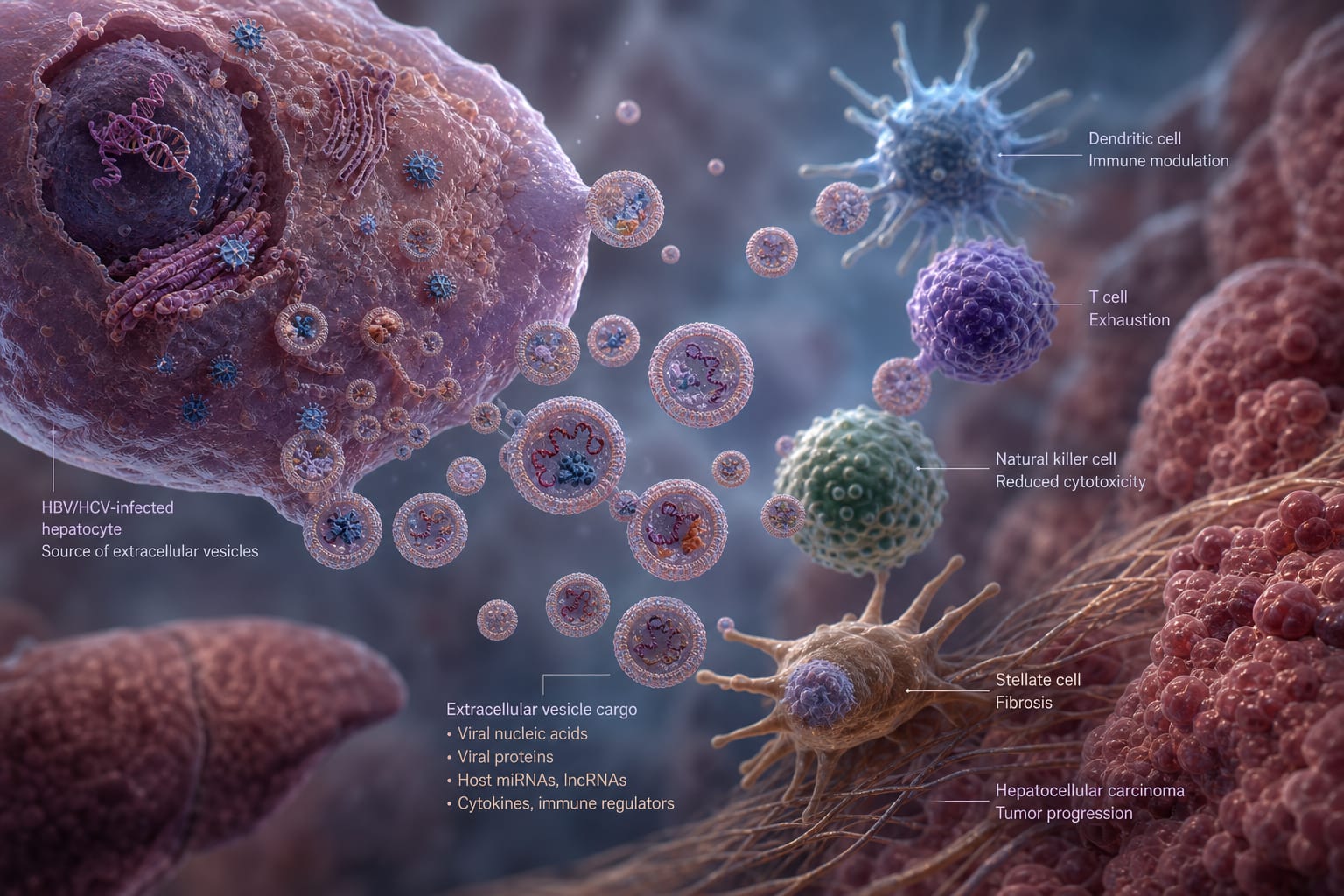
Extracellular vesicles (EVs) play a crucial role in mediating intercellular communication during hepatitis B virus (HBV) and hepatitis C virus (HCV) infections. They influence viral dissemination, immune regulation, and disease progression.
Background
Hepatitis B and C are significant global health concerns, with millions affected and high mortality rates due to liver-related complications. Understanding the mechanisms of viral persistence and immune evasion is essential for developing effective treatments. EVs have emerged as key players in these processes.
Data Highlights
No numerical data or trial data provided in the source material.
Key Findings
EVs can carry viral nucleic acids, proteins, and regulatory RNAs, influencing immune responses.
EV-associated cargos can modulate antiviral immunity, impacting interferon signaling and T-cell exhaustion.
Some EV populations may enhance innate antiviral responses.
EVs contribute to liver fibrosis and hepatocarcinogenesis by regulating hepatic stellate cell activation.
EV-derived RNAs and proteins have potential as noninvasive biomarkers for liver disease.
Clinical Implications
The roles of EVs in viral persistence and immune responses suggest they are important in the context of hepatitis B and C infections.
Conclusion
Extracellular vesicles represent a significant area of research in understanding hepatitis B and C infections.
The goal of this clinical trial is to learn if Adaptive Radiation Therapy (ART) is safe and effective in treating patients with locally advanced pancreatic cancer.
The goal of this clinical trial is to find out if giving extra adaptive radiation therapy after standard chemoradiation treatment is safe and helpful for people with rectal cancer.