ASL perfusion radiomic heterogeneity is associated with early mortality in IDH-wildtype glioblastoma, beyond tumor volume: a time-varying effect with tumor-aware DTI-ALPS - Report - MDSpire
Conexiant’s news site is now MDSpire News. Learn more
Advertisement
Radiomic Heterogeneity of ASL Perfusion Correlates with Early Mortality in IDH-Wildtype Glioblastoma, Independent of Tumor Volume: Insights from Time-Varying Effects Using Tumor-Aware DTI-ALPS
Radiomic Heterogeneity of ASL Perfusion Correlates with Early Mortality in IDH-Wildtype Glioblastoma
Overview
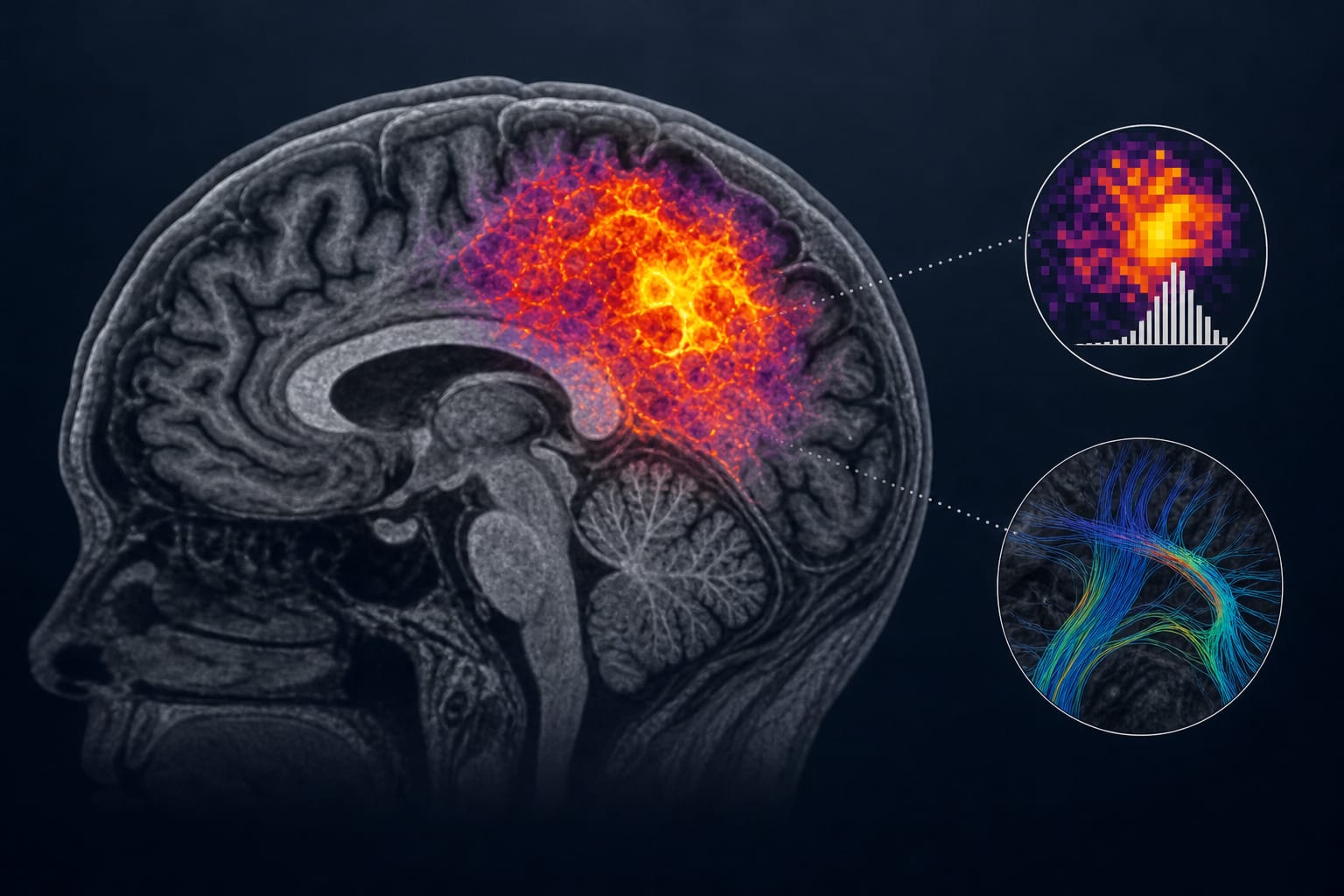
This study investigates the relationship between ASL perfusion heterogeneity and early mortality in patients with IDH-wildtype glioblastoma.
Background
Glioblastoma is the most aggressive primary brain tumor, with a poor prognosis and limited survival rates. This study aims to clarify the relationship between ASL radiomics and early mortality.
Data Highlights
The study analyzed a cohort of 322 patients with IDH-wildtype glioblastoma, focusing on the relationship between ASL radiomic features and early mortality.
Key Findings
Greater ASL heterogeneity was associated with increased mortality within 365 days (HR 1.39, p=0.015).
The association persisted after adjusting for tumor volume and clinical variables.
Machine-learning classification did not show incremental value of ASL radiomics beyond a volume-aware clinical baseline.
DTI-ALPS did not enhance classifier performance or show an independent association with survival.
The effect of ASL heterogeneity on mortality was most pronounced within the first 180 days post-imaging.
Clinical Implications
The findings indicate the association of ASL perfusion heterogeneity with early mortality in glioblastoma patients, but the influence of tumor volume on overall survival necessitates careful volume-adjusted analyses.
Conclusion
ASL perfusion heterogeneity correlates with early mortality in IDH-wildtype glioblastoma, but its prognostic value is limited when accounting for tumor volume.
by Rafail C. Christodoulou, Georgios Vamvouras, Platon S. Papageorgiou, Evros Vassiliou, Elena E. Solomou, Sokratis G. Papageorgiou, Michalis F. Georgiou