Link Between Neutrophil Percentage-to-Albumin Ratio and 90-Day Mortality in Patients with Acute-on-Chronic Liver Failure
Overview
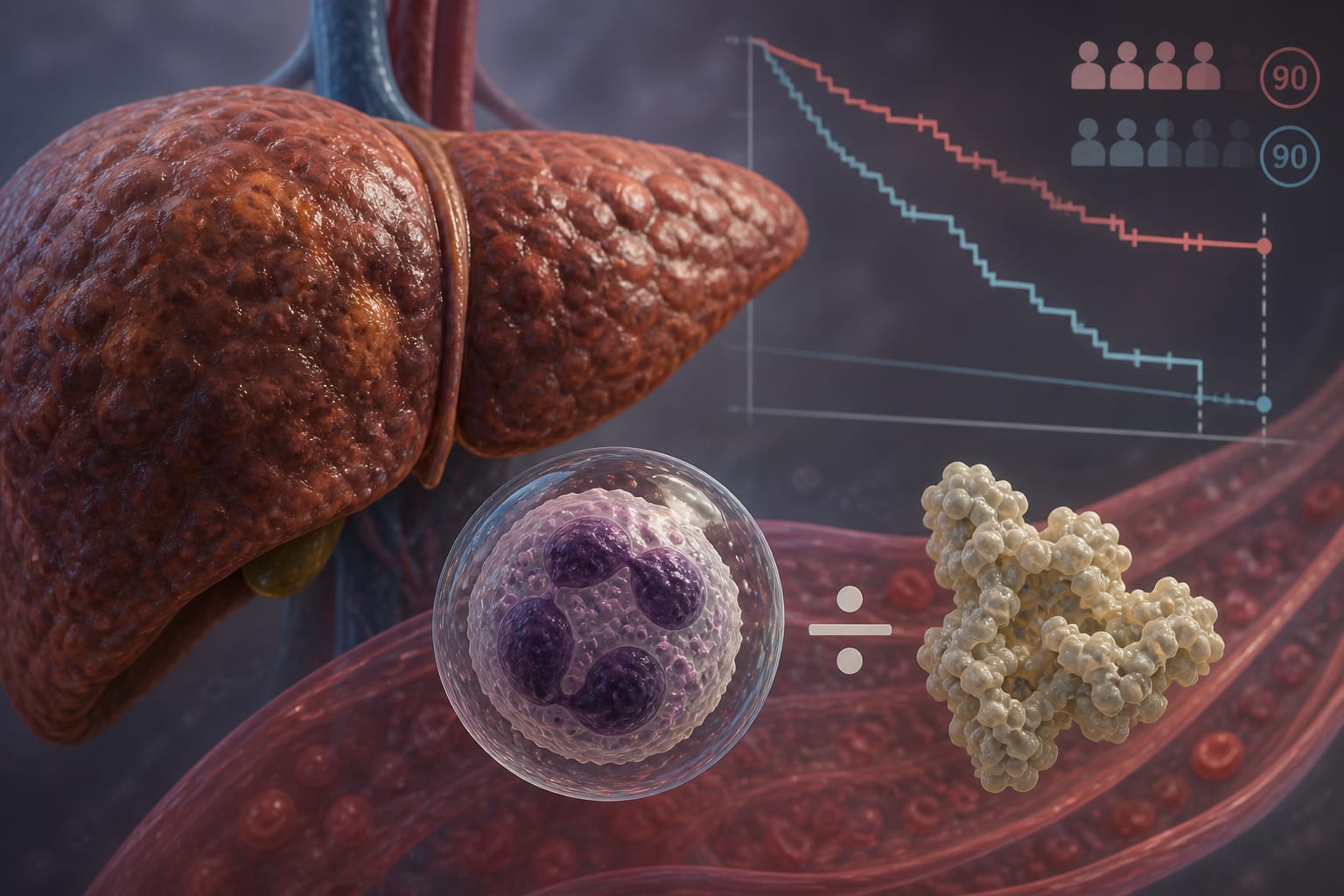
This study investigates the relationship between the neutrophil percentage-to-albumin ratio (NPAR) and 90-day mortality in patients with acute-on-chronic liver failure (ACLF).
Background
Acute-on-chronic liver failure (ACLF) is a critical condition characterized by high short-term mortality rates, necessitating effective prognostic biomarkers. The neutrophil percentage-to-albumin ratio (NPAR) may reflect both inflammatory and nutritional status.
Data Highlights
Outcome
NPAR (Median)
P-value
Non-survivors
2.51 (IQR: 2.17–2.82)
< 0.001
Survivors
1.88 (1.61–2.29)
Key Findings
29 out of 104 patients (27.9%) died within 90 days of admission.
NPAR was significantly higher in non-survivors compared to survivors (P < 0.001).
Univariate analysis showed an odds ratio (OR) of 2.67 for each 1-unit increase in log-transformed NPAR (P = 0.041).
After adjusting for MELD score, the association between NPAR and mortality was no longer statistically significant (adjusted OR: 1.66, P = 0.484).
No significant effect modification was found based on sex, age, or ascites status.
Clinical Implications
The findings indicate that NPAR may correlate with mortality in ACLF, but its prognostic value is diminished when accounting for established severity scores like MELD.
Conclusion
The study concludes that NPAR does not independently predict 90-day mortality in ACLF patients after adjusting for MELD score.