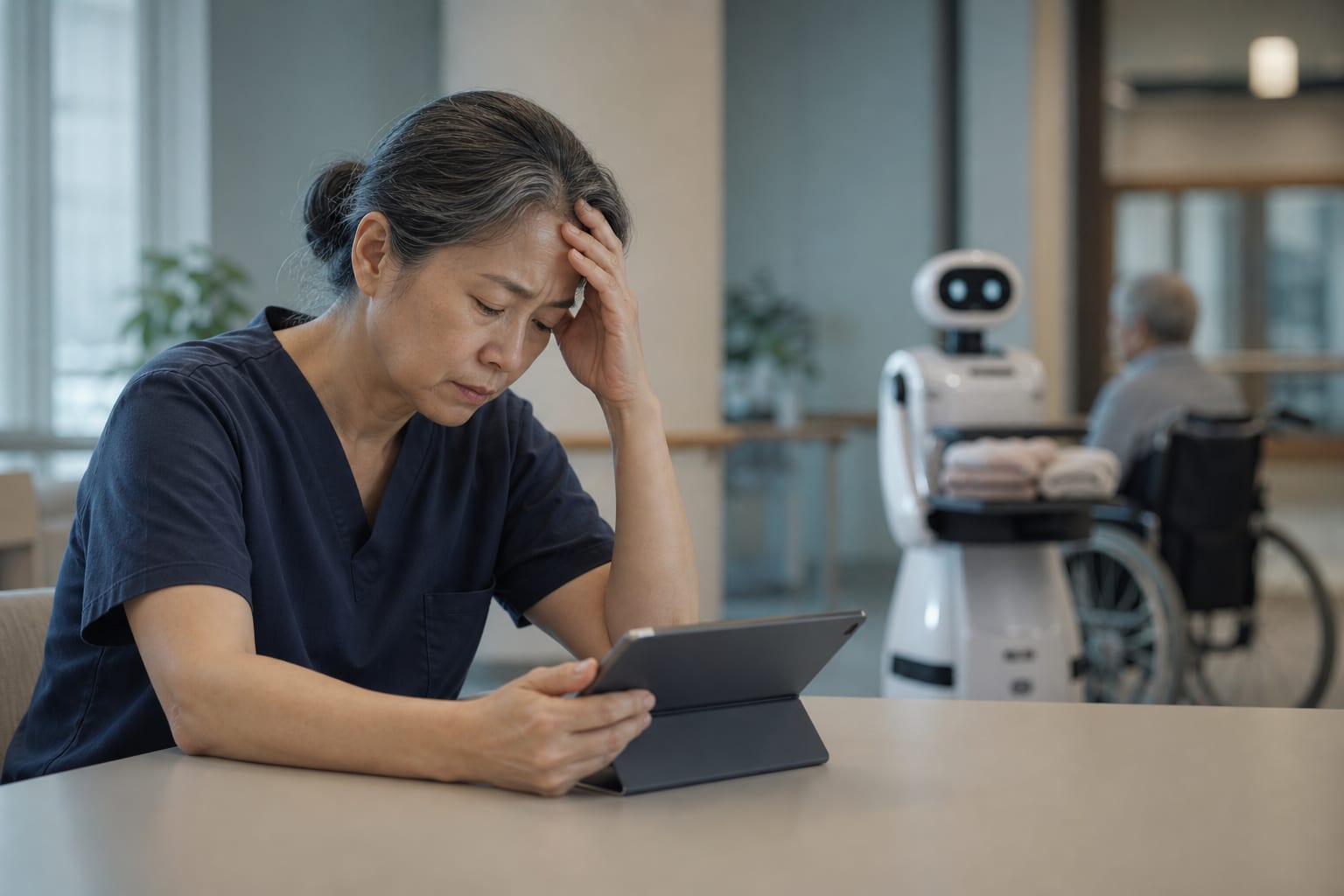
Clinical Report: Technostress Among Senior Healthcare Professionals
Overview
This report examines the impact of technostress on senior healthcare professionals and its implications for the acceptance of care robots. As the workforce ages and faces increasing demands, understanding these dynamics is crucial for effective integration of technology in healthcare settings.
Background
The aging population presents significant challenges for long-term care systems, particularly in countries like South Korea, where a substantial portion of healthcare workers are over 60. This demographic shift necessitates innovative solutions, such as care robots, to alleviate workforce shortages and enhance care quality. However, the acceptance of these technologies is hindered by technostress, which can affect older healthcare workers' ability to adapt to new tools.
Data Highlights
No numerical data available in the source material.
Key Findings
Technostress is a significant barrier to technology adoption among healthcare workers.
Five dimensions of technostress include techno-overload, techno-complexity, techno-insecurity, techno-uncertainty, and techno-invasion.
41% of healthcare practitioners reported moderate technostress, while 36% experienced high levels.
Acceptance of care robots is influenced by factors such as self-efficacy, anxiety, and perceived usefulness.
Older healthcare workers may have varied responses to technology based on their professional roles and responsibilities.
Clinical Implications
Healthcare organizations should prioritize strategies that reduce technostress among senior staff to facilitate the acceptance of care robots. Training and support systems are essential to enhance digital literacy and alleviate anxiety related to technology use.
Conclusion
Addressing technostress is critical for the successful integration of care robots in healthcare settings, particularly as the workforce ages. By fostering a supportive environment, organizations can improve both worker satisfaction and patient care quality.