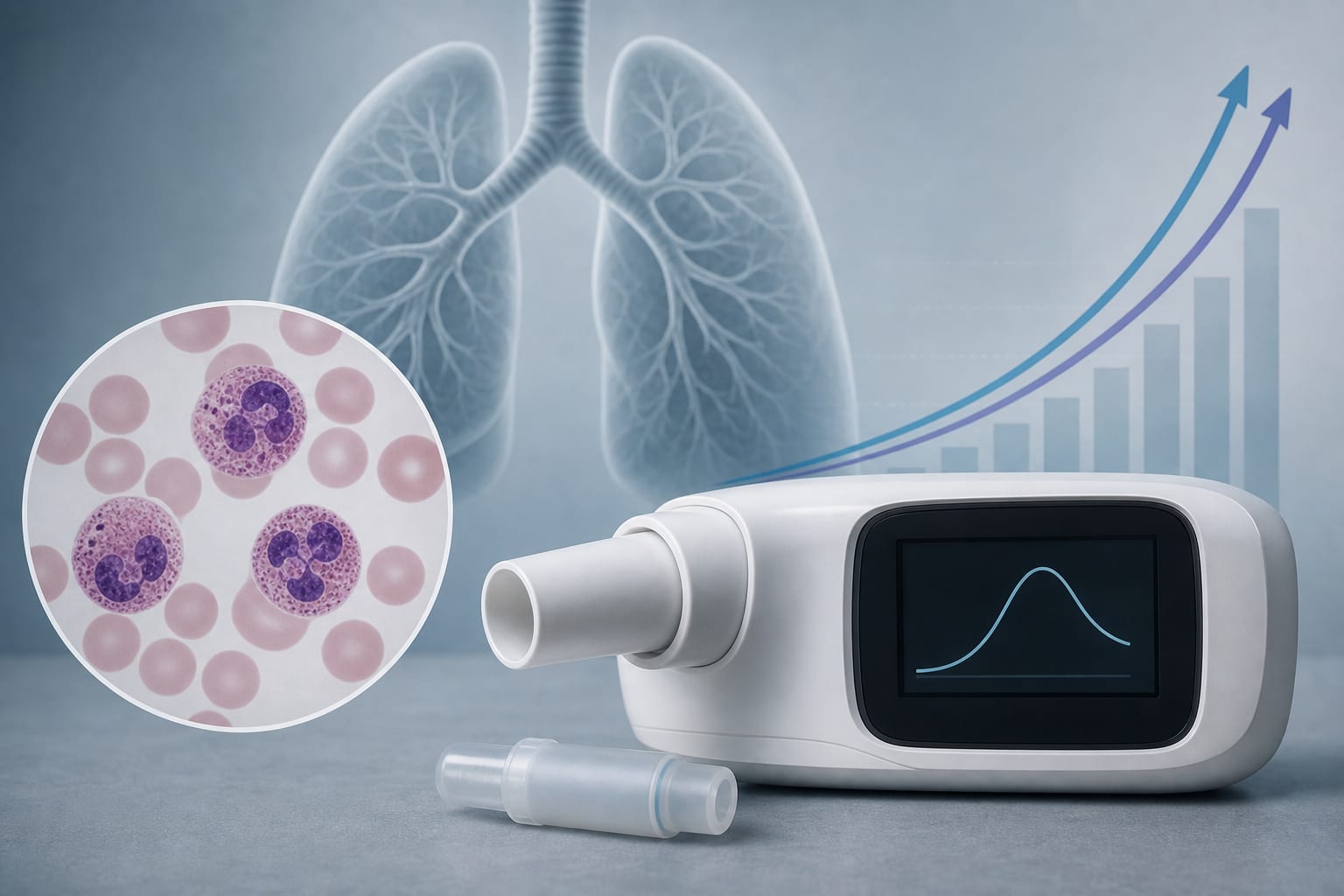
Clinical Report: Efficacy Comparison of Mepolizumab and Benralizumab
Overview
This retrospective cohort analysis compares the efficacy of mepolizumab and benralizumab in patients with severe eosinophilic asthma. The study highlights differences in clinical outcomes, including exacerbation rates and eosinophil counts, between the two biologics.
Background
Severe eosinophilic asthma is a challenging condition that often requires advanced therapeutic options beyond standard inhaled corticosteroids. Anti-IL-5 monoclonal antibodies, such as mepolizumab and benralizumab, have emerged as important treatments, yet their comparative efficacy in real-world settings remains unclear. Understanding the differences in their mechanisms and clinical outcomes is crucial for optimizing patient management.
Data Highlights
No numerical data was provided in the source material.
Key Findings
Mepolizumab directly neutralizes IL-5, while benralizumab targets the IL-5 receptor α on eosinophils.
Previous studies have shown comparable efficacy between mepolizumab and benralizumab, but results vary by region.
Benralizumab may lead to greater reductions in acute exacerbations and eosinophil counts compared to mepolizumab.
Both agents are recommended as add-on therapies for patients with severe eosinophilic asthma not controlled by conventional treatments.
Long-term efficacy and safety data support the use of both biologics in managing severe asthma.
Clinical Implications
Clinicians should consider the distinct mechanisms of action of mepolizumab and benralizumab when selecting treatment for patients with severe eosinophilic asthma. Ongoing assessment of treatment response is essential to optimize therapy and improve patient outcomes.
Conclusion
This study underscores the need for further real-world research to clarify the comparative efficacy of mepolizumab and benralizumab in severe eosinophilic asthma. Understanding these differences can enhance treatment strategies for affected patients.