Understanding cardiac toxicity and immune responses to thoracic radiation therapy in non-small cell lung cancer – implications for future research - Report - MDSpire
Advertisement
Understanding cardiac toxicity and immune responses to thoracic radiation therapy in non-small cell lung cancer – implications for future research
Clinical Report: Cardiac Toxicity and Immune Reactions to Thoracic RT in NSCLC
Overview
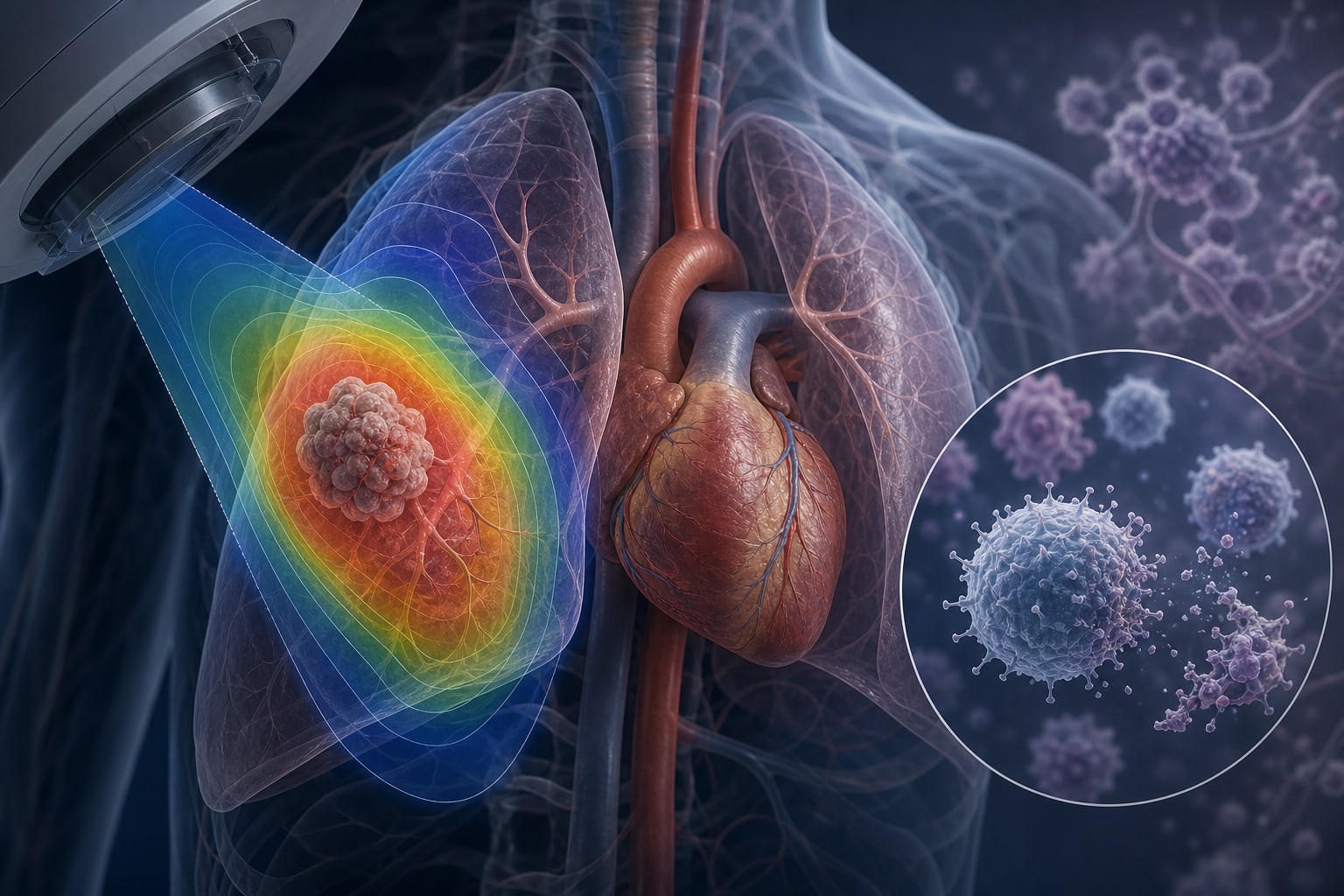
This report examines the significant long-term cardiac and immune toxicities associated with thoracic radiation therapy (RT) in non-small cell lung cancer (NSCLC). It highlights the correlation between cardiac radiation exposure and overall survival, as well as the potential for immunosuppression due to radiation effects on lymphocyte-rich tissues.
Background
Thoracic RT is a key treatment for locally advanced NSCLC, yet it poses risks of long-term cardiac and immune system damage. Understanding these toxicities is crucial as they can significantly impact patient survival and treatment efficacy, particularly in the context of emerging immunotherapies. This report aims to elucidate the relationship between thoracic RT, cardiac toxicity, and immune responses.
Data Highlights
Study
Findings
RTOG 0617
High-dose RT (74 Gy) led to inferior OS (20.3 months) compared to standard-dose (60 Gy, 28.7 months).
Retrospective Studies
Higher mean heart dose (MHD) correlates with increased high-grade cardiac events and all-cause mortality.
McWilliam Study
RT dose to the base of the heart significantly correlated with poor survival.
SA Node Analysis
Dmax to the SA node predicted atrial fibrillation and worse survival outcomes.
Key Findings
Higher radiation doses to the heart are linked to increased mortality in NSCLC patients.
Mean heart dose (MHD) serves as a surrogate for cardiac dose, correlating with adverse cardiac events.
Specific cardiac substructures, including the left atrium and sinoatrial node, are critical in assessing cardiac toxicity.
Thoracic RT may induce lymphopenia, compromising immune function and reducing immunotherapy efficacy.
Preserving immune integrity is essential in radiation planning for NSCLC.
Clinical Implications
Clinicians should prioritize minimizing cardiac exposure during thoracic RT to improve long-term outcomes for NSCLC patients. Additionally, awareness of potential immunosuppressive effects is vital for optimizing immunotherapy strategies following radiation treatment.
Conclusion
Thoracic RT in NSCLC presents significant challenges due to its impact on cardiac health and immune function. Future research should focus on integrating immune-sparing techniques in radiation planning to enhance patient outcomes.