The plasmacytoid dendritic cell paradox in cancer: impaired type I interferon responses in a nucleic acid–rich tumor microenvironment - Report - MDSpire
Advertisement
The plasmacytoid dendritic cell paradox in cancer: impaired type I interferon responses in a nucleic acid–rich tumor microenvironment
Clinical Report: The Dilemma of Plasmacytoid Dendritic Cells in Oncology
Overview
This review discusses the paradoxical role of plasmacytoid dendritic cells (pDCs) in tumors, where they fail to produce type I interferons despite the presence of nucleic acids. It highlights mechanisms contributing to pDC dysfunction.
Background
Plasmacytoid dendritic cells (pDCs) are crucial for initiating immune responses through type I interferon production. In the context of cancer, the accumulation of nucleic acids from tumor cell death suggests that pDCs should be activated. However, their impaired function in the tumor microenvironment raises important questions about their role in anti-tumor immunity.
Data Highlights
No numerical data or trial data presented in the article.
Key Findings
PDCs typically exhibit impaired IFN-I production in the tumor microenvironment.
Accumulation of nucleic acids from tumor cell death does not activate pDCs as expected.
PDCs can adopt an immunosuppressive phenotype in tumors.
Functional state of pDCs is associated with prognosis in various cancer types.
Understanding pDC dysfunction is critical for harnessing their therapeutic potential in cancer.
Clinical Implications
Understanding the mechanisms of pDC dysfunction may inform future immunotherapy approaches.
Conclusion
This review highlights mechanisms that impair pDC responses in tumors.
Dana-Farber Cancer Institute's Dr. Sara Tolaney from the ASCENT-03 stud in breast cancer. The data further strengthens the case for approval of sacituzumab govitecan as first-line treatment for patients with advanced triple-negative breast cancer.
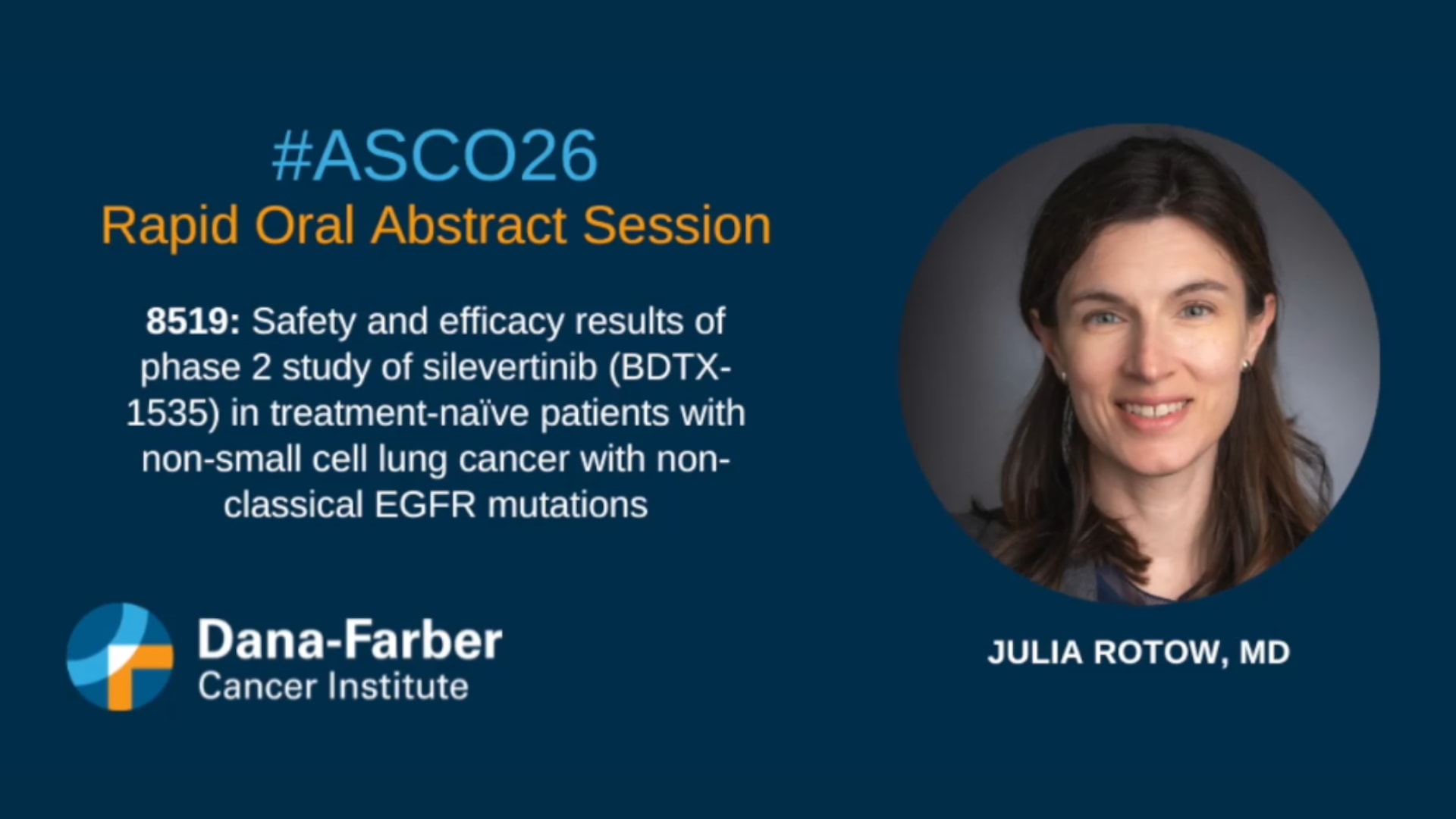
Dana-Farber Cancer Institute's Dr. Julia Rotow reported on a study looking at silevertinib, with data showing it may offer a new first-line option for hard-to-treat EGFR non-small cell lung cancer variants, with encouraging brain activity and manageable side effects.